
Haitian food spent decades quietly and brilliantly feeding its own communities while the rest of America ate around it, and that era is over. New restaurants are opening in cities that never had a Haitian dining scene, and American diners are finally catching up to a cuisine that has been this good for a very long time. This is what it looks like when a food culture stops waiting to be discovered by people who couldn’t have named a single Haitian dish two years ago.
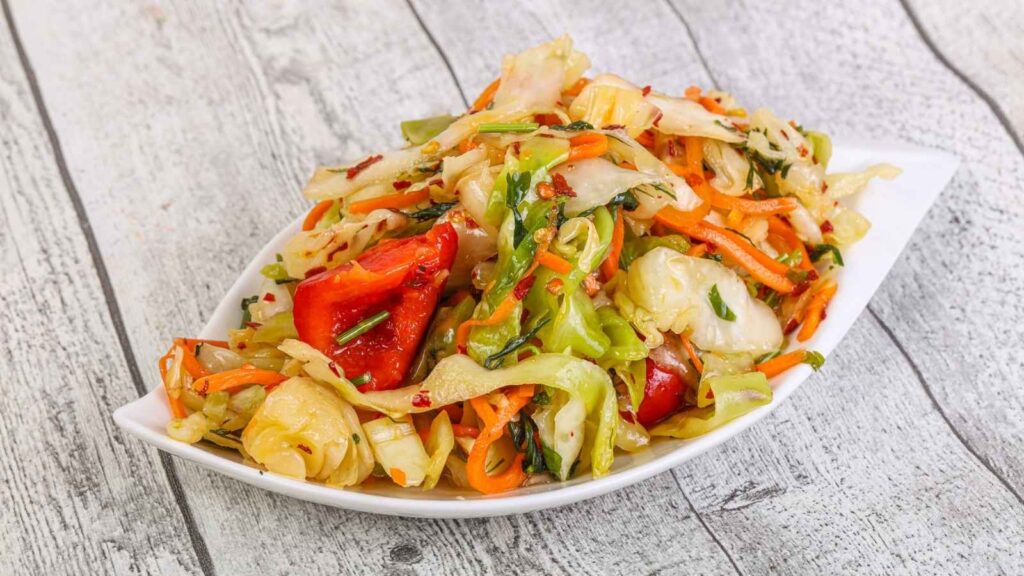
Haitian cuisine built its American foundation in South Florida and New York, where diaspora communities created a restaurant culture that rarely got national attention. With Haitian food now recognized as one of the 11 biggest food trends of 2026, new restaurant openings and growing demand for Haitian condiments are bringing it to a much wider audience.
The fine-dining proof of concept
Before the neighborhood openings, there was Kann. Chef Gregory Gourdet’s live-fire Haitian restaurant in Portland, Oregon, opened in 2022 and quickly became the clearest argument that Haitian cuisine could hold national fine-dining attention far outside any Haitian population center.
Kann earned the James Beard Foundation’s Best New Restaurant in 2023 and landed 27th on the inaugural North America’s 50 Best Restaurants list in 2025. Gourdet, the son of Haitian immigrants born in Brooklyn and raised in Queens, built his menu around traditional Haitian flavors, Pacific Northwest ingredients, and wood-fired techniques that draw destination diners from across the country. Kann proved the national appetite existed. What came after proved it wasn’t limited to Portland.
Boston gets its first Haitian brick-and-mortar
Chef Nathalie Lecorps grew up in the kitchen of her parents’ Miami restaurant, pressing plantains and memorizing the spice blends that define Haitian home cooking. She launched Gourmet Kreyol in 2021 as Massachusetts’ first Haitian food truck, serving chicken stew, rice and beans, and fried pork to a Boston audience with few options for the cuisine.
In May 2025, Lecorps opened the brand’s first takeout restaurant on Blue Hill Avenue in Mattapan, with Mayor Michelle Wu and City Council President Ruthzee Louijeune at the ribbon-cutting. A sit-down location in Dorchester’s Codman Square, named Doune & Pepe after Lecorps’ two grandmothers, was in development with a planned menu of Haitian, Dominican and Cuban fusion tapas. Two permanent locations advancing in a single year, from a founder who started with a food truck four years earlier. Boston had been underserved, and the market made that clear quickly.
Houston finds its Haitian kitchen
Houston had no established Haitian restaurant scene before Griot Gardens opened in the city’s Spring Branch neighborhood. The restaurant was founded by a mother-daughter duo from Miami who brought their family cooking traditions to the Gulf Coast, and it draws a crowd that skews heavily toward first-time diners.
Houston Chronicle food critic Bao Ong covered it as one of the city’s notable new openings, the kind of mainstream press attention Haitian restaurants in smaller diaspora cities rarely receive. The menu centers on griot, marinated fried pork and Haiti’s most recognized dish, alongside bouillon, lalo, and diri djon djon. That last one is a black rice prepared with dried djon djon mushrooms, and regulars say it is the item most likely to stop a first-time visitor cold.
New Orleans makes the connection official
New Orleans has always carried Haitian DNA in its food, a legacy strengthened by the arrival of thousands of Haitian refugees in 1809 who helped shape the city’s Creole culture. That connection found its first dedicated public celebration during Haitian Heritage Month, when the inaugural Haitian Food Crawl, Ann Manje!, ran across four days and four neighborhoods, organized by Reviv Ayiti, with support from Replenish 509. Restaurants served Haitian-inspired dishes and cocktails alongside a passport program encouraging diners to visit multiple venues. Framing it as a recovery of shared history rather than a novelty food event says something about where Haitian food stands right now.
The condiment on the shelf
A food trends report released in 2025 specifically called out pikliz, not griot, not diri djon djon, as the Haitian item grabbing home chefs’ attention at retail. Pikliz is the spicy, crunchy pickled slaw that appears on nearly every Haitian table, and it is now moving fastest into places where Haitian cuisine has not previously reached. Artisanal jarred brands have reached specialty retailers and online platforms, marketed to consumers who have never eaten in a Haitian restaurant.
The condiment’s versatility is part of its appeal, with a tangy, vegetable-forward flavor that works with eggs, tacos, grilled meats and rice bowls, making Haitian cuisine more approachable for new eaters. When a pantry staple from one community starts showing up in other people’s grocery carts, that is no longer a trend. That is a handoff.
Where this goes next
The cuisines that cross over fastest in American dining tend to follow a familiar arc: a defining chef earns national recognition, neighborhood restaurants open in new cities, a signature ingredient goes retail, and within a few years, no one calls the cuisine emerging anymore. Haitian food has the chef. It has the neighborhood restaurants. The condiment is on the shelf. The question for the rest of 2026 is not whether the cuisine has arrived but how many more cities get a Griot Gardens or a Gourmet Kreyol before the arc completes.
Jennifer Allen is a retired professional chef and long-time writer. Her work appears in dozens of publications, including MSN, Yahoo, The Washington Post and The Seattle Times. These days, she’s busy in the kitchen developing recipes and traveling the world, and you can find all her best creations at Cook What You Love.