
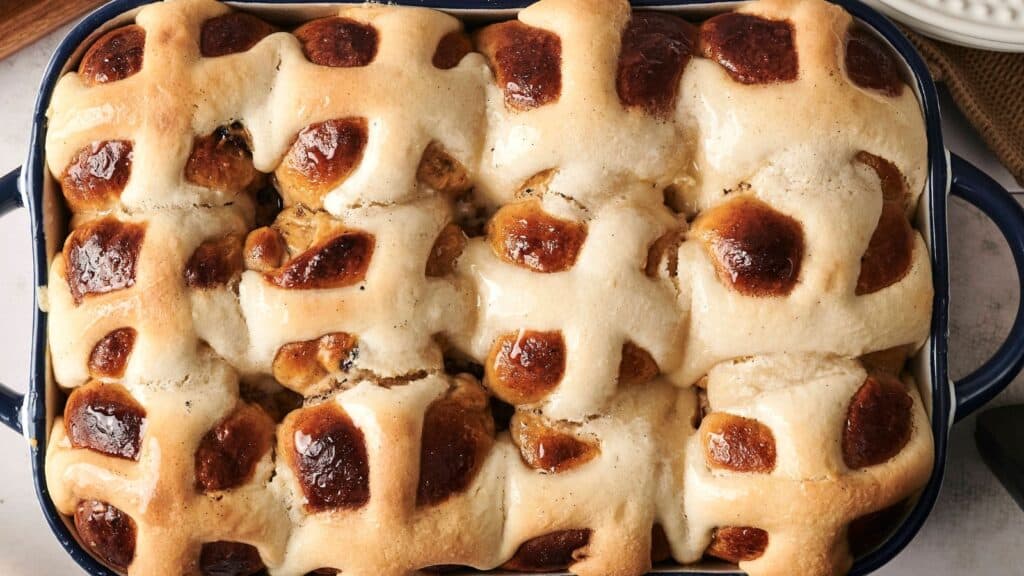
Hot cross buns go beyond one standard batch as bakers bring new flavor variations and serving options to the Easter staple. The classic bun still carries the spice, dried fruit and cross that people expect, but recipe collections now place chocolate, citrus and sourdough versions beside the standard bake. The result is a familiar Easter staple, now reworked to suit how people bake and gather today.
This post may contain affiliate link(s). As an Amazon Associate, I earn from qualifying purchases. See Disclosures.
Nearly 80% of consumers buy baked goods for social gatherings, giving hot cross buns a strong reason to appear in portions and formats that are easier to serve, carry and share. Such demand keeps the bun active beyond a single tray of individual rolls and opens room for bakers to think about crowd use as much as tradition.
Flavor changes widen appeal
Hot cross buns still carry strong holiday recognition, which gives bakers room to experiment without losing the features people expect. Bake Mag’s Global Bakery Trends 2025 found that 4 in 5 consumers like sweet baked goods that remind them of childhood, making the category a good fit for updates that stay close to the original idea.
Recipe roundups now include chocolate chip, double chocolate, lemon-and-marzipan, cranberry-orange and sourdough versions in addition to the classic spiced bun. The range suggests hot cross buns are no longer limited to one standard flavor profile, even as the base recipe remains easy to recognize.
New forms fit gatherings
Form matters when hot cross buns are made for brunch or a family meal because the serving format can matter almost as much as the recipe itself. Recipe collections now comprise muffin-style versions, bun rings and bread-and-butter puddings, giving the Easter staple more workable ways to be portioned across a table or served beyond a standard tray of individual buns.
Those newer formats suit how spring food is often shared. A ring or pudding can be set out for several people at once, while muffin-style versions can cut down on prep time and make the bun easier to fit into a busy holiday morning. In that setup, the bake works less like a single serving plan and more like a flexible part of the meal.
Leftover buns can also move into a next-day brunch dish instead of being left on the counter after the first serving. One breakfast casserole recipe repurposes them in an overnight strata with eggs, cheese and bacon, and notes that slightly stale buns work especially well because they absorb the custard during a long rest in the refrigerator. Used this way, the extra buns become part of an easy morning meal rather than a batch that dries out before anyone gets back to it.
Dough choices help travel
Dough style matters once buns leave the oven. A standard hot cross bun formula from a major baking publisher uses milk, eggs and butter, the kind of enriched dough that keeps the crumb tender. On the other hand, a sourdough version adds starter, longer fermentation and overnight chilling for a neater finish and fuller flavor. These options are significant for bakers who bring food to brunch or make it ahead at home.
One hot cross bun recipe collection flags some chocolate versions as freezable, and a sourdough version notes that an overnight chill can improve flavor and give the buns a neater form. Buns that hold well after cooling are easier to pack, carry and serve on someone else’s schedule.
Recipe culture keeps it current
Recipe culture keeps older seasonal breads in circulation by giving them new ways to return each year. A 2025-2026 home cooking report found that 52% of Americans look to social media for new recipe inspiration, while 56% get ideas from cookbooks, cooking shows or websites, and 55% turn to friends and family.
Hot cross buns fit that environment as the bake can change without losing its identity. A home baker can stay with the classic version, try citrus or chocolate in the dough or turn leftover buns into a brunch casserole the next morning. Food videos, recipe roundups and seasonal baking features keep those options in steady view.
That kind of recipe exposure matters for a bake that relates to one holiday; instead of returning in the same form each spring, the bun now comes back with small adjustments that make sense for current kitchens and existing schedules. The recipe stays recognizable, yet it keeps finding room in new routines.
Familiar bake for modern gatherings
Hot cross buns no longer have to stay in one form or serve one moment at the table. Bakers can rely on the familiar bun for the holiday itself, then carry the same batch into brunch, shareable breakfast baking or a next-day casserole that cuts waste and extends its use. As seasonal baking continues to favor recipes that travel well, serve easily and adapt with little effort, hot cross buns remain a dependable fit for how Americans cook and gather in spring.
Zuzana Paar is the visionary behind five inspiring websites: Amazing Travel Life, Low Carb No Carb, Best Clean Eating, Tiny Batch Cooking and Sustainable Life Ideas. As a content creator, recipe developer, blogger and photographer, Zuzana shares her diverse skills through breathtaking travel adventures, healthy recipes and eco-friendly living tips. Her work inspires readers to live their best, healthiest and most sustainable lives.