
Back-to-college spending will top $100 billion for the first time this year, at a forecast of $103.5 billion. Most of it is locked in before move-in: tuition is published, housing is assigned, the dining contract is bundled into the lease. Food is the one line a student still controls, and the one where the arithmetic has changed most.
The growing numbers are not a sign of eagerness. K-12 spending is also forecast to reach $43.3 billion, up from $39.4 billion in 2025, according to Retail Dive, but families are bracing, not splurging.
The record reflects prices, not enthusiasm
The clearest tell is among higher earners. In Deloitte’s 2026 Back-to-School Survey, upper-middle-income families earning $100,000 to $199,000 plan to spend 9% less than last year, and households earning $200,000 or more expect to spend 20% less. Most cite worry about the economy.
“Financial concerns are leading them to sharpen their budgets,” said Natalie Martini, Deloitte’s U.S. retail and consumer products sector leader, in the press release. Deloitte expects overall back-to-school spending to stay essentially flat at $30.4 billion. The families with the most room to spend are the ones pulling back.
Housing and food now cost more than tuition at public universities
Published charges for housing and food at public four-year institutions reached $13,900 for in-state students in 2025-26, compared with $11,950 in tuition and fees, according to the College Board’s Trends in College Pricing and Student Aid 2025. At private nonprofit four-year institutions, housing and food costs $15,920 against $45,000 in tuition and fees.
For a student at a public university, room and board is the largest single line on the bill. It is also the only line with a plausible substitute.
The meal plan gap runs to thousands of dollars
The average college meal plan for 2025-26 costs $5,656 per year, based on an Education Loan Finance review of 150 institutions reported by Money. That works out to about $628 a month across a nine-month academic year.
The federal benchmark for feeding one adult sits far below that. The USDA’s Thrifty Food Plan, its lowest-cost tier, estimates roughly $309 per month for a man aged 20 to 50 and $247 for a woman, in its most recent report. Over nine months, that’s about $2,780 and $2,220. The spread between an average meal plan and cooking at the federal benchmark runs from roughly $2,900 to $3,400, depending on the student, about a quarter of a year’s in-state tuition at a public four-year institution.
Grocery prices are also rising more slowly than restaurant and dining-hall prices. Food at home increased 2.7% over the year ended June 2026 while food away from home rose 3.4%, against 3.5% for all items, the Bureau of Labor Statistics reported. The gap has been consistent enough to make cooking the cheaper option in most markets.
Capturing that spread depends on planning more than on cooking skill. Most of what students lose on food goes to waste and unplanned purchases rather than to prices, which is why the standard advice for them to save time and money is to batch-cook on weekends and shop against a written list.
The fire marshal has a say
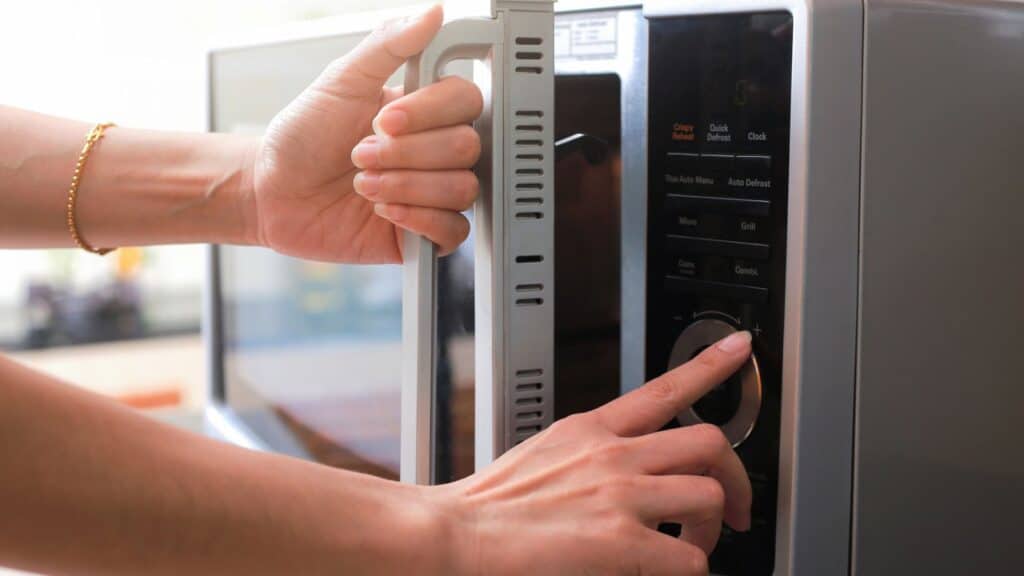
There’s a complication in the dorm-kitchen plan, and it isn’t budget or skill: an actual hot plate is banned in most residence halls. The University of Rochester, for one, prohibits hot plates, crock pots and even induction cooktops, allowing only in-room appliances with no open heating element and an automatic shutoff. This includes microwaves, compact refrigerators, electric kettles and coffee makers. Comparable rules exist at schools from Wesleyan to Whitworth.
The reason is fire risk. Cooking equipment is the leading cause of fires in college housing, and those fires cluster at the start of the school year, when students first set up their rooms. That’s what pushes a real hot plate off campus and into apartments, where a burner is already installed. In a residence hall, the working kitchen has a microwave, a kettle and a compact fridge.
That equipment covers more ground than its reputation suggests. A microwave mug cake made from boxed cake mix, milk and oil takes about 90 seconds and costs cents per serving, which is the sort of thing a dining hall charges at the register. The appliance list is short, but the menu does not have to be.
What a microwave and a kettle will actually cook
Dried red lentils are the most efficient thing in a dorm pantry; they soften in about 12 minutes in a covered microwave-safe bowl with water and salt, and they take on whatever seasoning is added at the end. A 1-pound bag runs a fraction of the per-meal cost of a dining plan and yields several servings.
Boiling water handles more than tea. Couscous, fine bulgur and instant polenta all cook by hydration in a covered bowl, no burner required. Rolled oats do the same, though oats do not strictly need heat at all. A jar of strawberry cheesecake overnight oats built on Greek yogurt and cream cheese takes five minutes to assemble the night before.
Canned beans need heat but not cooking, and a good example is drained chickpeas, which can be warmed in the microwave with olive oil and whatever spice blend is on hand. They hold their shape well enough to sit on top of grains. Frozen vegetables cook faster in a microwave than on a stove, and they hold their price better than fresh through the winter.
Eggs cook in a mug in under a minute, and silken tofu needs no heat at all. A 14-ounce block spooned into a bowl and dressed with soy sauce, chili crisp, rice vinegar, grated garlic and sesame oil becomes a five-minute chili-garlic silken tofu that requires no appliance beyond a refrigerator.
None of it requires a burner, which is the point. The microwave and the kettle stay on the permitted list even where open-element appliances are banned.
What a student can actually control
Of every big number on the college bill, food is the one still decided by the student, not the registrar. The meal plan is the default, not the only option, and the two appliances a dorm does allow are enough to turn a bag of red lentils, a box of couscous and a block of silken tofu into meals that cost a fraction of a dining hall swipe. The hot plate may be off-limits, but the cooking isn’t.
Shruthi Baskaran-Makanju is a food and travel writer and a global food systems expert based in Seattle. She has lived in or traveled extensively to over 60 countries, and shares stories and recipes inspired by those travels on Urban Farmie.