
Vegetable prices in April were up 3.1%, more than what shoppers spent in March 2026, and fruit prices by 1.2%. Grocery costs continue to climb, and fresh produce is no exception. Using imperfect summer produce in your meals is a great way to stretch your grocery budget and reduce food waste.
This post may contain affiliate link(s). As an Amazon Associate, I earn from qualifying purchases. See Disclosures.
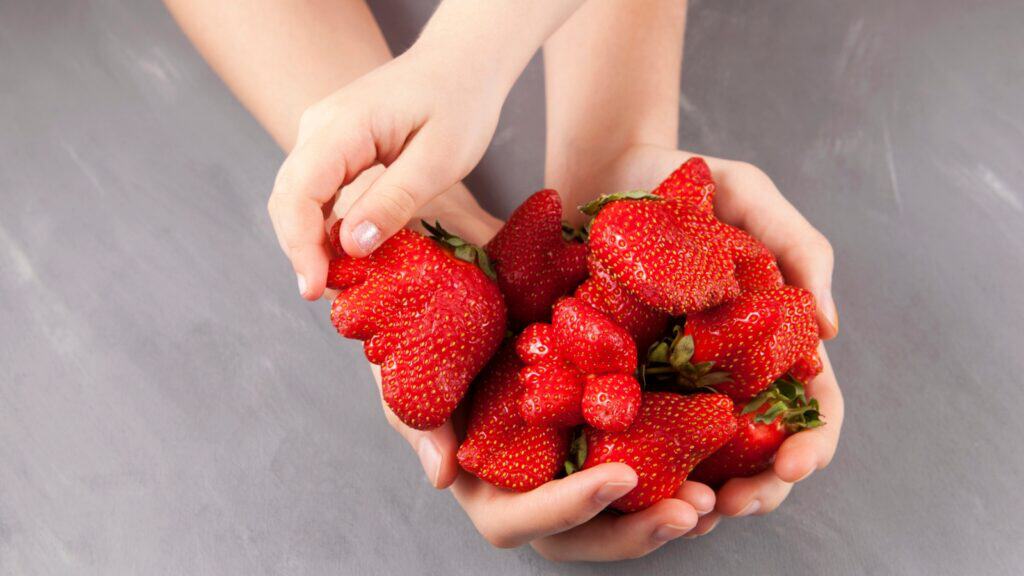
Crooked carrots and misshapen strawberries that once went overlooked are gaining visibility, and the growth in interest makes sense. Even when shared humorously, the attention shows that imperfections don’t impact taste or nutrition.
With the United States Department of Agriculture’s food price prediction of further inflation, the cost-saving potential of imperfect fruits and vegetables is apparent now more than ever. According to the USDA, prices for fresh vegetables are predicted to increase 7.8% in 2026.
Government efforts may boost interest in imperfect produce. According to food waste nonprofit ReFED, in an article for Food Logistics, federal bipartisan efforts to redirect, reduce or repurpose surplus food are expected to grow in 2026. Combined with rising grocery prices, increased awareness about food waste is normalizing the use of ugly fruits and vegetables.
Understanding imperfect produce
Sometimes the freshest fruits and vegetables never make it to grocery store shelves. Curved cucumbers are no strangers to being cast aside. In other cases, surplus produce is left behind simply because supply exceeds demand.
What counts as imperfect produce
Imperfect, ugly or wonky produce generally refers to fruits and vegetables that are bruised, oversized, oddly shaped, or overabundant. Common imperfections include scuffed squash, bruised peaches, peppers with uneven coloring and bumpy citrus. Oversized zucchini and undersized tomatoes are also frequently overlooked.
The USDA sets the U.S. Grade Standards for fruit and vegetables. They primarily address cosmetics, size and weight expectations. While voluntary, the standards are intended to provide consistency in produce quality in the marketplace. For example, USDA standards for cucumbers specify a maximum diameter of 2 3/8 inches and a minimum length of 6 inches.
Climate variability and climate change often cause imperfections that develop during the growing process. Damage during transportation can also lead to produce being rejected for sale through traditional retail channels. That does not mean the produce is spoiled. While mold, punctures or signs of rot should still be avoided, the freshness and nutritional value of ugly produce is the same as its perfect counterpart.
Where to find it
Shoppers looking for imperfect produce have more options than ever before. Check with your local farmers market to see if vendors offer imperfect or surplus produce. Shopping near the end of the market day can increase the chances of finding extra fruit and vegetables that farmers are eager to sell.
If a farmers market is not nearby, online retailers such as Imperfect Foods and Misfits Market partner with farmers and grocery stores to save food from being wasted. A Community Supported Agriculture group, which connects consumers directly with farmers, is another potential source.
Sometimes, produce will become imperfect in your own home. While a carrot isn’t going to be suddenly crooked, bananas can turn brown overnight. It’s helpful to know how to properly store produce to prolong its life and understand when it is no longer safe to eat.
Ways to use imperfect summer produce
Warm summer months mean an abundance of fresh fruits and vegetables. It’s the perfect opportunity to take advantage of produce of all shapes and sizes in recipes.
Strawberries
Strawberries are commonly misshapen, but their unusual shape has no impact on flavor or texture. Color still matters. For the sweetest flavor, look for berries that are ripe and mostly red. While perhaps not the best choice for chocolate-dipped strawberries, ugly strawberries are great for smoothies or homemade jam. Chopped strawberries also work well as a topping for strawberry crostini.
Peaches and nectarines
Stone fruits like peaches, nectarines and plums are picked at their peak. These soft, delicate fruits bruise easily and must be enjoyed in a short window of time. The good news is that a bruise indicates the fruit is ripe and ready to enjoy. Slightly bruised peaches and nectarines are especially well-suited for baking, smoothies, sauces and infusing fruit flavor in summer pancakes.
Zucchini and summer squash
Zucchini grows rapidly; it doesn’t take long for it to become overgrown if not harvested promptly. If you have an oversized zucchini, shred it.
Zucchini is especially useful in baking because shredded zucchini adds moisture to breads, muffins and brownies. Zucchini can also be incorporated into savory dishes such as zucchini fritters.
Tomatoes
Scarring, uneven coloring and unusual shapes are common in summer tomatoes. These differences simply make certain tomatoes better suited for different uses in the kitchen. Chop tomatoes to an equal size for dishes like pico de gallo and salsas, or purée them to make soup. Smaller tomatoes are also excellent for roasting and can often be cooked whole.
Peppers
Sweet peppers are also prone to deformities from unusual or unpredictable weather conditions. Slightly curved, crooked and deformed peppers will taste just as good. While oddly shaped peppers may not work well for stuffed pepper recipes, they are perfect for dicing and using in salsas, stir-fries and soups. Or skip the dicing and roast them to make hummus.
Help your wallet and the environment
Imperfect produce offers an easy way to stretch your grocery budget amid rising food prices. Giving bruised, oversized or misshapen fruits and vegetables a chance this summer can also inspire new recipes and reduce unnecessary food waste. By embracing produce that looks less than perfect, shoppers can enjoy fresh, nutritious food at a lower cost while helping normalize a broader standard for what belongs on the table.
Sarah Pilley is a vegan food blogger who focuses on approachable plant-based recipes and sustainable living. She shares vegan and allergy-friendly alternatives to your favorite dishes at Alternative Dish.