
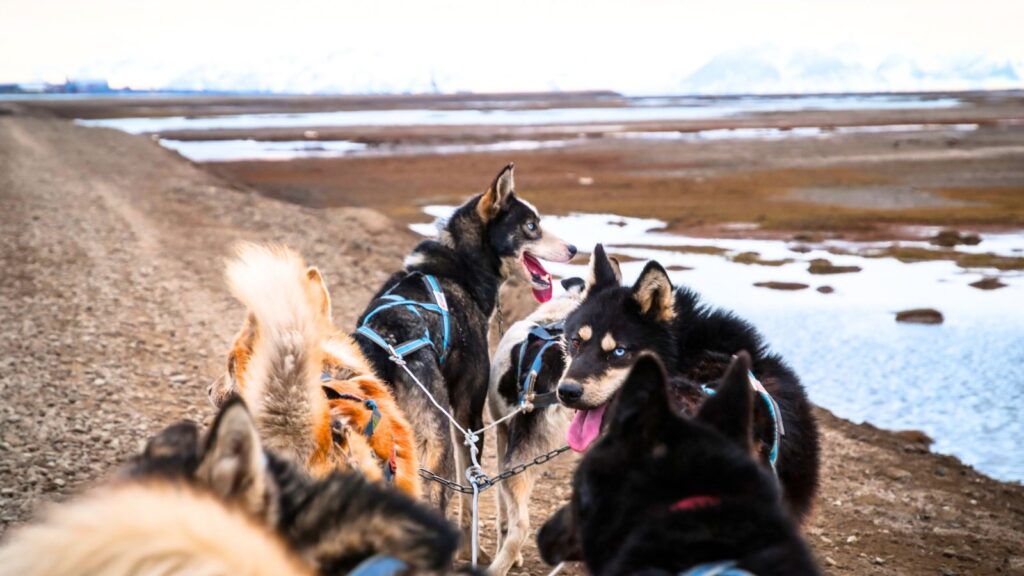
Dog sledding usually needs snow, but Indigenous-owned outfitters are keeping the tradition alive all summer, swapping runners for wheels the moment the ground thaws. It’s one of several land-based, hands-on Indigenous tourism experiences popping up across the continent this year, timed right alongside International Day of the World’s Indigenous Peoples. Snow or no snow, this corner of travel isn’t slowing down.
This post may contain affiliate links that may earn us a commission. For more information, see our Disclosures.
Guide-led experiences connect travelers with people who live these traditions instead of performing them on a fixed bus tour schedule. International Day of the World’s Indigenous Peoples, which the United Nations set as Aug. 9 back in 1994, adds a reason to look closer, though much of this work has been underway well before any date on the calendar.
Dog carting and beading circles in Manitoba
In Churchill, Manitoba, Wapusk Adventures swaps sled runners for wheeled carts once the snow melts, pulling visitors along the same Hudson Bay coast trails its dog teams run all winter. The Indigenous-owned outfitter has been guiding travelers through Métis culture and storytelling since 2001, with dog carting standing as the warm-weather version of its better-known winter tours.
Winnipeg backs up the region’s reputation with real numbers. At just over 102,000 people, the city holds the largest Indigenous population of any census metropolitan area in Canada. Elsewhere in the province, Borealis Beading, based in Sainte Genevieve, runs circle-style workshops in two-needle beading, quilting and finger weaving, taught by local Indigenous teachers, while Beyond Boreal Expeditions, based in Churchill and guided by Tiffany Spence, runs land and photography tours through the same region.
Indigenous Tourism Manitoba, the group representing many of these operators, marked the day with a statement from its own team. “Here in Manitoba, we take pride in the diversity of the Indigenous peoples who call this land home — the Anishinaabeg, Anishininewuk, Dakota Oyate, Denesuline, Nehethowuk Nations, the Red River Métis, and the Inuit. We believe that tourism is one of the most powerful vehicles for reconciliation in Canada. On this International Day of the World’s Indigenous Peoples, Indigenous Tourism Manitoba is proud to shine a light on the important ways our province celebrates the vital contributions of our Indigenous communities. Through sharing authentic stories that carry forward traditions, and creating meaningful cultural experiences, tourism gives a voice to our people, the land, and its rich history,” said Renée Simcoe, marketing manager for Indigenous Tourism Manitoba.
Tracking brown bears on Chichagof Island
On Chichagof Island in Alaska, John and Marilyn Hillman, both Tlingit, launched Wilderness Island Tours in 2021, making it the region’s only Indigenous-owned tour operator working entirely on land. Their driving excursions take visitors through Chichagof’s brown bear habitat, one of the densest bear populations anywhere, while covering traditional foods like sockeye salmon and Sitka black-tailed deer, plus medicinal plants like devil’s club and nagoonberries.
Hoonah, the largest Tlingit village in Alaska, added its first cruise ship dock in 2016, and visitor numbers climbed into the hundreds of thousands within a few years. The Hillmans opened their tours in 2021, right as that growth was accelerating, giving travelers already passing through an Indigenous-led option that hadn’t existed before.
Hoonah’s roots run deeper than the cruise industry that discovered it. The Huna Tlingit lived among the glaciers of what is now Glacier Bay National Park for generations before advancing ice forced clans out in the 1700s, sending them by canoe to a new settlement they named “Hoonah,” meaning where the north wind doesn’t blow. Glacier Bay remains the Huna Tlingit’s ancestral homeland today, even as most of the community now lives across the strait in Hoonah itself. Chichagof Island, the fifth-largest island in the U.S., is also home to one of the densest brown bear populations anywhere, at close to three bears per square mile.
Carving ceremonial pipes in southwest Minnesota
In southwestern Minnesota, the Keepers of the Sacred Tradition of Pipemakers represent 23 affiliated Plains tribes and lead multi-day experiences at Pipestone National Monument, including guided catlinite pipe-carving, storytelling, dances and ceremonies, with the option to stay overnight in a traditional dwelling. People have quarried pipestone at the site for roughly 3,000 years, and Congress established the monument in 1937 specifically to preserve Native American quarrying rights there. Permits are limited to enrolled tribal members today, and the waiting list for a permanent quarry can run eight to ten years.
Bud Johnston, a member of the Bad River Band of Lake Superior Chippewa Indians, has led the Keepers since its founding, serving as president every two years since 1996 and putting the organization’s 30th anniversary in the same year as this one. Its membership spans 40 states and six countries, including Germany, Switzerland and Australia. The group hosts an annual pipe feast where members gather to share what the pipe has meant in their lives. Three spiritual leaders, one Lakota and two Anishinaabe, built what’s billed as the world’s largest peace pipe just outside the monument grounds, sharing a common vision for the site.
What’s still ahead
Guides across all three regions describe wanting the same thing from visitors who stay long enough to actually learn something, not just snap a photo and move on. As more Indigenous-owned operators build out land-based, hands-on experiences instead of quick roadside stops, more of this kind of travel is likely to work its way onto mainstream itineraries instead of staying a niche detour.
Jennifer Allen is a retired chef turned traveler, cookbook author and nationally syndicated journalist; she’s also a co-founder of Food Drink Life, where she shares expert travel tips, cruise insights and luxury destination guides. A recognized cruise expert with a deep passion for high-end experiences and off-the-beaten-path destinations, Jennifer explores the world with curiosity, depth and a storyteller’s perspective. Her articles are regularly featured on the Associated Press Wire, The Washington Post, Seattle Times, MSN and more.