
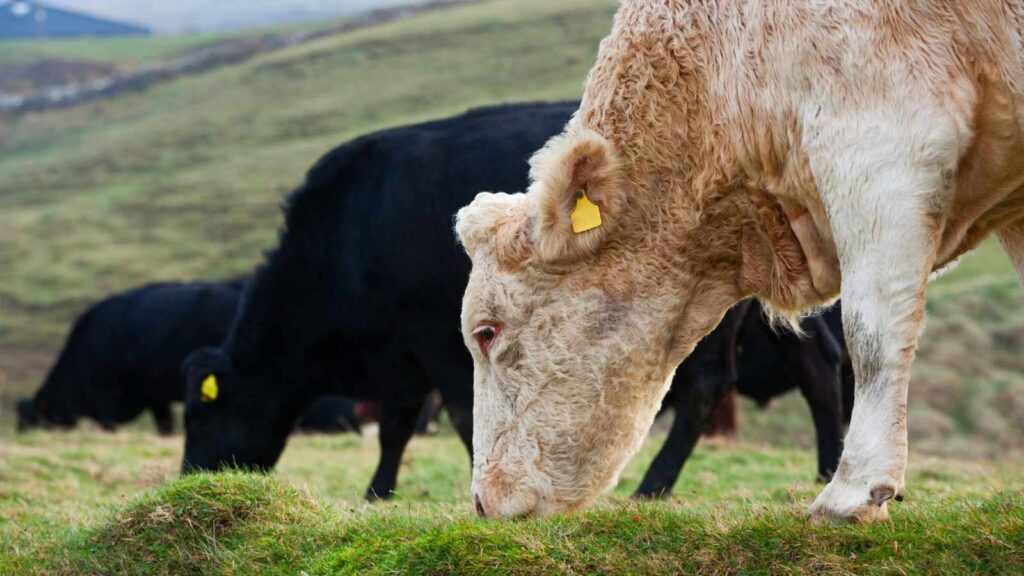
Cows swimming from the Irish mainland to offshore islands have gone viral on TikTok and Instagram, racking up millions of views, and now travelers are booking trips to Connemara specifically to see it happen. It may look like a spectacle to outsiders, but for the farmers of Connemara, it is simply how summer grazing works. Cattle are loaded onto boats and guided to swim the final stretch to offshore islands, and the practice has been part of the landscape here for generations.
Sean Power, managing director of Irish Experience Tours, has felt the surge directly. “We’ve had more requests in the last few weeks to see the cattle swim than I can ever really remember, which tells you something about how quickly word has travelled,” he said. “People tend to assume it’s something that’s been put together for visitors, but farmers in Connemara have been doing this for generations.”
The tradition runs from Connemara north to County Mayo’s Inishkea Islands, from late spring through early autumn. Irish Experience Tours builds sightings into bespoke Wild Atlantic Way itineraries, though Power is clear it can never be guaranteed. “The farmers know exactly when the conditions are right and they won’t move the cattle until they are, so if you’re lucky enough to be there when it happens, that’s really what makes it special.”
That unpredictability is the point. According to American Express Travel’s 2026 Global Travel Trends report, 83% of millennials and Gen Z travelers now prioritize unique, authentic experiences over popular tourist attractions. The cattle swim is not designed for visitors; it happens to be visible to them. That distinction drives a broader turn toward encounters around the world where the animal sets the terms.
Wild ponies, wild coast — Virginia
Every July since 1925, wild ponies living on Assateague Island, Virginia, have made the same crossing. At slack tide, when currents pause, and conditions are safe, Saltwater Cowboys herd the feral Chincoteague ponies across the Assateague Channel to neighboring Chincoteague Island, where the foals are auctioned to support the local volunteer fire company.
The herd has lived wild on the island for centuries and is managed under a U.S. Fish and Wildlife Service grazing permit. The swim happens when the tide allows, not when the calendar says. Up to 50,000 spectators line the shores each July for what locals call Chincoteague Christmas. The 101st annual pony swim takes place in late July 2026.
Gentle giants on Florida’s Gulf Coast
In Crystal River, Florida, West Indian manatees make the same migration every winter without prompting. Between November and March, up to 800 travel from the Gulf of Mexico to the spring-fed waters of Kings Bay, where temperatures hold at 72 degrees year round.
Crystal River National Wildlife Refuge is the only federal refuge in the country created specifically to protect manatee habitat, and the only place in the United States where regulated, in-water encounters with wild manatees are permitted. The rule is non-negotiable: any contact must be initiated by the manatee. Swimmers float passively. The animals, naturally curious, frequently close the distance themselves.
Where whales seek out humans
Off the Pacific coast of Baja California Sur, eastern Pacific gray whales migrate each winter to San Ignacio Lagoon to calve in its protected waters. More than 1,000 pass through each season. Of those, hundreds choose to approach the small panga boats permitted inside a tightly regulated viewing zone, a behavior that San Ignacio is best known for among Baja’s calving lagoons.
The tradition of friendly contact dates to 1972, when local fisherman Pachico reached out to a whale that surfaced beside his boat, and it pushed gently into his hand. Encounters run mid-January through mid-April. The whales approach, or they do not. The boats wait.
The animal’s schedule, not yours
Connemara, Chincoteague, Crystal River, San Ignacio; different species, different continents, same condition. None of these experiences can be purchased outright. The cattle may not swim the day a traveler arrives, the ponies cross when the tide permits, the manatees initiate contact or they do not and the whale approaches the boat or keeps its distance. For a growing number of travelers, that uncertainty is no longer a drawback. It is the reason to go.
Jennifer Allen is a retired chef turned traveler, cookbook author and nationally syndicated journalist; she’s also a co-founder of Food Drink Life, where she shares expert travel tips, cruise insights and luxury destination guides. A recognized cruise expert with a deep passion for high-end experiences and off-the-beaten-path destinations, Jennifer explores the world with curiosity, depth and a storyteller’s perspective. Her articles are regularly featured on the Associated Press Wire, The Washington Post, Seattle Times, MSN and more.