
Under pressure from health experts and shifting consumer habits, ultra-processed snacks are facing new scrutiny. What qualifies as junk food often comes down to how it’s developed for taste, shelf life and mass appeal while sacrificing nutritional value. Such formulation has prompted researchers to examine its role in rising diet-related diseases, while lawmakers consider new limits on what belongs in schools and on store shelves.
This post may contain affiliate link(s). As an Amazon Associate, I earn from qualifying purchases. See Disclosures.
Junk food’s influence extends beyond what’s on the label, shaping eating habits through pricing and strategic placement. In schools, transit hubs and corner stores, these products often crowd out healthier options and define what’s accessible.
Nutritional red flags in junk food
Convenience often comes at a cost, and nowhere is that clearer than in everyday snacks. Many popular options offer instant satisfaction but fall short on nutrition, making them easy to overeat and hard to quit. These red flags of common junk foods reveal the patterns behind their appeal.
Loaded with sugar, salt and unhealthy fats
Junk food earns its name from what it lacks just as much as what it includes. It often contains large amounts of added sugars, sodium and unhealthy fats like hydrogenated oils. These ingredients boost shelf life and flavor but also flood the body with low-quality calories. Most junk foods miss the fiber, protein and micronutrients the body needs for energy, digestion and overall function.
Full of additives and preservatives
Ultra-processed foods rely on synthetic colorings, chemical preservatives and artificial flavors to mimic freshness and boost appeal. Long ingredient lists packed with additives signal how far these products are from their original form. By contrast, whole foods stick to the basics, often needing nothing more than themselves.
Low in fiber and protein, lacking real nutrients
Junk food typically skips over fiber and protein, two nutrients that help regulate appetite and digestion. Without them, people find it easier to overeat and harder to feel satisfied. Soda, chips, instant noodles and sugary cereal are built for convenience and taste but offer little that the body can use.
How the body reacts to junk food
Junk food does more than satisfy a craving. It hijacks how the brain, hormones and gut regulate hunger, mood and metabolism. Dopamine, the brain’s reward chemical, fires when we eat sweet or salty foods, reinforcing the desire to eat more even when we’re full.
It also interferes with the body’s hunger signals. Ghrelin increases appetite, while leptin signals fullness. Junk food can lead to leptin resistance, where the brain stops responding to leptin. This can trigger overeating and persistent cravings.
Sugar-heavy snacks cause quick spikes in blood glucose, followed by steep crashes. These swings may lead to irritability and fatigue. Ultra-processed diets also raise C-reactive protein levels, a marker tied to long-term inflammation and disease.
Junk food vs. whole foods
Junk food and whole foods may have similar calorie counts, but their nutritional value isn’t even close. Whole foods like almonds and quinoa offer fiber, protein and healthy fats that support energy and digestion, while junk foods like chips and candy are mostly sugar or refined starch with little real benefit. Even when fortified with added nutrients, processed snacks rarely match the natural balance found in fruits, vegetables and grains.
Another clear gap lies in transparency. Whole foods need no label because they are the ingredients. Processed snacks, by contrast, often list 20 or more additives, including artificial dyes, sweeteners and stabilizers. This long list signals heavy processing, where natural structure is replaced with engineered texture, extended shelf life and lab-formulated flavors.
Why junk food remains popular
Junk food is carefully designed to trigger cravings by hitting the bliss point, a sensory sweet spot created by precise levels of sugar, salt and fat. Paired with convenience and affordability, these products require no prep, fit into busy routines and often undercut the cost of healthier options. Strategic marketing reinforces the appeal using kid-focused packaging and buzzwords like natural or whole grain to disguise nutrient-poor, ultra-processed contents and keep these foods top of mind and within reach.
Common junk foods and their traits
Pantry staples like chips, noodles and sodas often carry more hype than health. These everyday choices might feel harmless, but they quietly load the body with sugar, sodium or chemical extras.
Sugary drinks
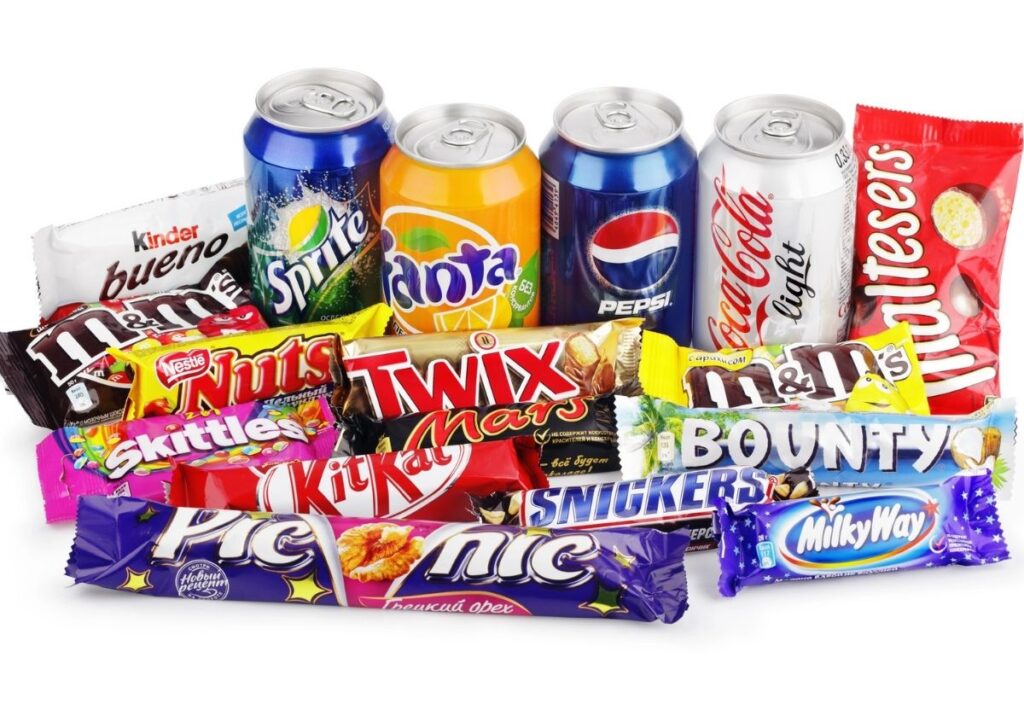
Sugary drinks lead the pack as top contributors to excess added sugar. A single soda can contain up to 10 teaspoons of sugar, absorbed rapidly without fiber to slow the spike in blood glucose. Energy drinks push the impact further with high caffeine levels, artificial sweeteners and food dyes.
Chips and fried snacks
Chips, cheese snacks and fried items often start with refined starches, then get blasted with salt and oil for flavor and crunch. These snacks deliver fast energy but little lasting fullness. Most lack fiber and protein, which makes it easy to keep eating without ever feeling satisfied.
Candy and chocolate bars
Candies and chocolate bars hit fast with sugar and processed carbs that flood the bloodstream and trigger a short energy burst. That quick spike fades fast, encouraging repeat snacking without delivering useful nutrients. Over time, the habit contributes to calorie overload, blood sugar instability and a higher risk of cavities and weight gain.
Convenience meals
Packaged convenience meals like instant noodles promise warmth and speed but trade nutrition for shelf stability. These products are often low in protein and fiber, yet loaded with sodium and flavor enhancers like monosodium glutamate. While they may fill a bowl quickly, they offer little the body can use and rely on additives to extend shelf life rather than support health.
The impact of what we eat
Junk food maintains its hold through a mix of engineered flavor, convenience and strategic marketing, but shows up in poor nutrition, disrupted appetite control and long-term health risks. To push back, consumers need a clearer view of how these products work against the body’s needs. Reading labels, recognizing heavily processed ingredients and choosing snacks with fiber or protein can support better energy and help rebuild lasting, healthier habits.
Zuzana Paar is the visionary behind five inspiring websites: Amazing Travel Life, Low Carb No Carb, Best Clean Eating, Tiny Batch Cooking and Sustainable Life Idea. As a content creator, recipe developer, blogger and photographer, Zuzana shares her diverse skills through breathtaking travel adventures, healthy recipes and eco-friendly living tips. Her work inspires readers to live their best, healthiest and most sustainable lives.