
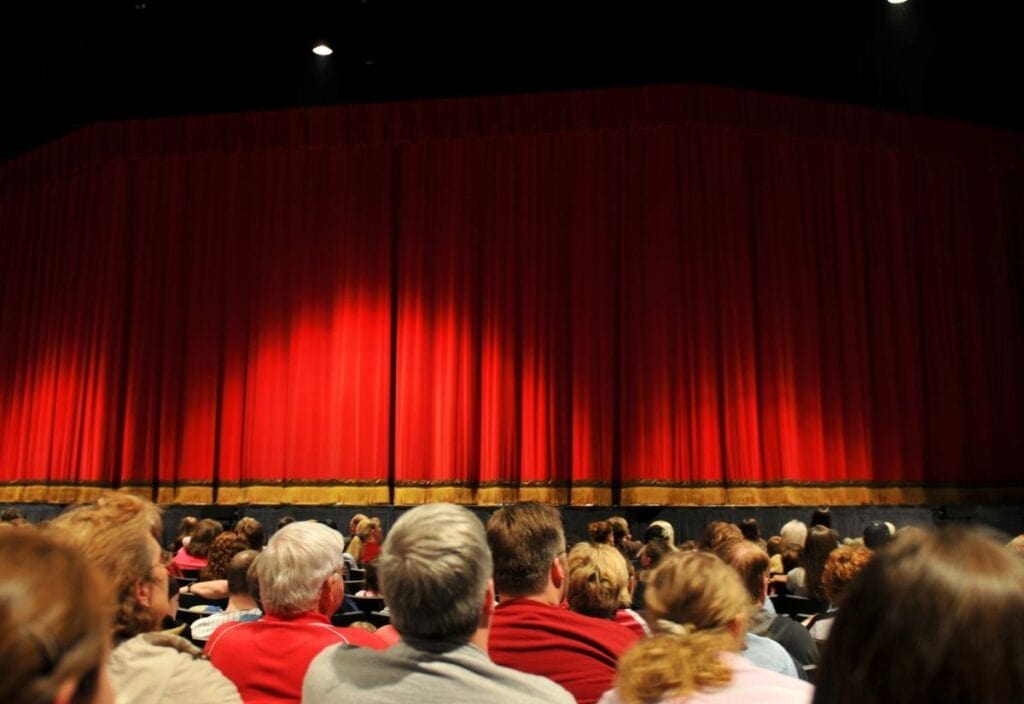
Streaming services have made entertainment easier to access, but live theater still gets people out of the house, offering an experience that happens in public and cannot be relived the same way. When the lights go down, there is no pause button, no second screen and no saving the moment for later; the audience meets the story as it begins. In a culture built around convenience, that kind of attention solidifies theater’s staying power in the digital age.
This post may contain affiliate link(s). As an Amazon Associate, I earn from qualifying purchases. See Disclosures.
People keep buying tickets because each performance carries a small degree of unpredictability. A laugh can travel across the house differently from one night to the next, and a pause can tighten the room in a way no replay can preserve. For audiences, the result is a night built on presence rather than convenience.
Broadway still draws paying audiences
Broadway remains a live business with paying customers at scale and a solid place in current consumer spending. The Broadway League reports the 2024-2025 season reached $1.89 billion in grosses and 14.7 million admissions, making it the highest-grossing season in Broadway history and the second-best attended season on record.
The current season is still selling at scale, with large weekly crowds and strong ticket sales. For the week ending March 1, 2026, Broadway’s 27 productions brought in over $26 million and drew more than 221,000 people, showing that Broadway attendance remains strong on a regular week, not only during holiday surges.
Top shows keep crowds coming
Broadway performs best when a production feels worth seeing now rather than saving for later. For the week ending March 8, 2026, “Harry Potter and the Cursed Child” led Broadway with about $2.4 million and “Hamilton” followed at nearly $1.8 million, while “Just in Time,” “The Lion King,” “Wicked” and “Hadestown” each cleared about $1.3 million or more. “Hamilton” and “Harry Potter” played at 100% capacity that week, while “Just in Time” and “Hadestown” ran above full capacity.
These weekly leaders came from different kinds of productions, from franchise-driven titles to long-running musicals and newer entries benefiting from strong word-of-mouth. Even so, they all translated audience interest into major sales.
Community stages keep producing shows
Live theater continues to thrive well beyond Times Square. The American Association of Community Theatre says the United States has well over 6,000 community theaters, and each one typically produces four to six or more shows a year. That level of activity keeps stage work visible on local calendars well outside the commercial market.
Community companies also develop new material instead of relying only on familiar titles. AACT’s 2026 Season Survey found that half of the respondents had produced an original script within the previous three years. Among those productions, 40% were considered financially successful.
AACT’s NewPlayFest offers another sign that community theaters continue to develop and produce new work. The organization says its 2026 NewPlayFest drew more than 450 script submissions, and judges selected six winning plays for premiere productions during the 2025-2026 season.
The draw of a live audience
The theater keeps its place because it asks something different from the people in the room. When a performance begins, the audience follows the story in real time with the cast and with everyone seated around them. Many ticket buyers still want that kind of night, as they want to feel different emotions: laughter until their stomachs hurt, silence that hangs in the room after a heavy line and the sense that even a familiar script can feel immediate when actors and audiences move through it at the same moment. Broadway attendance totals suggest live performance still matters to people willing to plan an evening around it.
Theater still turns stories into events
Broadway numbers and community-stage activity make clear that live performance still holds a firm place in American entertainment. Its relevance is not limited to legacy institutions or familiar titles because audiences still pay to be part of something happening in front of them. In a market full of easy viewing options, that ongoing demand keeps the theater alive.
Mandy writes about food, home and the kind of everyday life that feels anything but ordinary. She has traveled extensively, and those experiences have shaped everything, from comforting meals to small lifestyle upgrades that make a big difference. You’ll find all her favorite recipes over at Hungry Cooks Kitchen.