
A velvety soup doesn’t need cream — it needs a game plan. With the right mix of ingredients and techniques, you can turn any pot of broth into a smooth, rich masterpiece. If you’d rather skip the dairy, grab a blender because the secret to creamy soup is already in your kitchen.

This post may contain affiliate link(s). As an Amazon Associate, I earn from qualifying purchases. See Disclosures.
The secret to creamy texture without cream
We all love a cozy bowl of creamy soup, especially during the colder months, but cream isn’t necessarily the only way to make soup silky. It’s how the ingredients break down and blend together. The right combination of starches, fats and emulsification can create the same rich texture without dairy. You can achieve that smooth, velvety consistency with nothing but whole foods using vegetables, nuts, grains or legumes.
Some of the best ways to thicken soup naturally include:
- Pureed vegetables: Starchy options like potatoes, cauliflower and squash create a naturally creamy base.
- Nuts and seeds: Blended cashews, almonds or tahini add body and subtle richness.
- Beans and legumes: White beans, chickpeas or red lentils blend into a thick, smooth consistency.
- Grains and bread: Cooked rice, oatmeal or soaked bread break down into a soft, creamy texture when blended.
Best vegetables for thickening soups
Vegetables with natural starches or creamy textures can turn any soup into a smooth, rich bowl. When cooked and blended, they create a thick base without needing dairy or added thickeners. The trick is choosing the right ones and knowing how to use them.
- Potatoes break down easily and create a naturally silky consistency. Boil or roast them before blending for the best results.
- Cauliflower has a mild flavor that takes on whatever seasonings you add, resulting in a smooth, creamy texture.
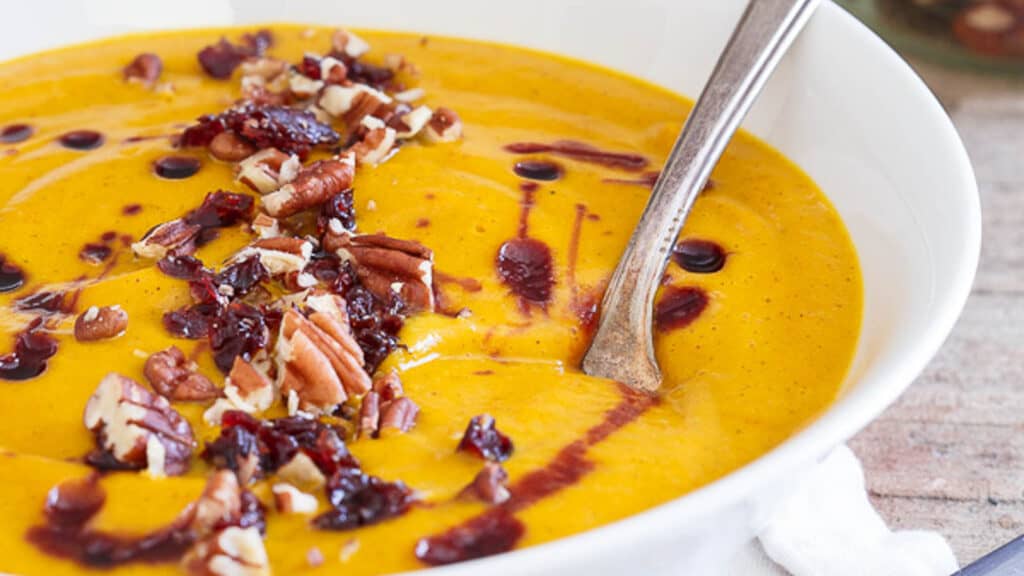
- Squash and sweet potatoes add body with a hint of natural sweetness, making them perfect for hearty fall soups.
- Carrots and parsnips bring a touch of sweetness and blend into a thick, velvety base when cooked, like in this root vegetable soup.
“I love making creamy soups with pureed cauliflower. Its mild flavor and smooth texture when blended make a perfect dairy substitute.”
— Lisa Wells, Cook Eat Well
For deeper flavor, roast the vegetables before blending or let them simmer in broth until soft. Mixing different vegetables can create more complex textures, making the soup feel even richer.
Plant-based fat for richness
Fat adds depth and silkiness to soup, and plant-based options can do just as well as cream. A small amount of blended nuts, seeds or oils can make a broth feel luxurious without overpowering the flavors. The key is choosing fats that emulsify smoothly into the soup.
- Nuts and seeds like cashews, almonds and sunflower seeds blend into a thick, dairy-free cream substitute. Soak them before blending for the smoothest texture.
- Coconut milk or coconut cream brings a rich consistency, though it adds a hint of coconut flavor that works best in spiced or tropical soups like this winter-themed delicata squash soup.
- Avocado blends into warm soups for a buttery texture or works well in chilled soups for a smooth, creamy finish.
- Nut butter like tahini or almond butter mix in easily and add depth without being too heavy.
To get the best texture, blend fats with a bit of broth before adding them to the soup. Stirring in a drizzle of olive oil or a spoonful of nut butter at the end will add an extra layer of richness.
Alternative thickening agents
Some unexpected ingredients can also work as natural thickeners, creating a smooth texture without dairy. Simple pantry staples like beans, grains and bread can add body while making the soup more satisfying. These ingredients break down when blended, giving the soup a rich consistency.
Zuzanna Paar from Best Clean Eating says her trick to a creamy non-dairy soup is “taking half of the soup and blending all the veggies and everything in it before transferring back to the pot.”
- Beans and lentils blend into a smooth, hearty base that adds protein and fiber. White beans and red lentils work especially well.
- Rice and oats soften as they cook, then break down into a silky texture when blended. A small handful can thicken an entire pot.
- Bread has been used for centuries to thicken soups. Soaking a piece of stale bread in broth before blending gives the soup a soft, velvety texture.
- Cornstarch or arrowroot powder thickens quickly when mixed with a small amount of cold water and added at the end of cooking.
For the best results, cook grains and legumes until fully tender before blending. If using starches, make a slurry and add them gradually while stirring to avoid lumps.
Blending techniques for ultimate smoothness
How you blend a soup can make or break its texture. The right method will transform simple ingredients into a velvety, restaurant-quality bowl. Both high-powered blenders and handheld immersion blenders can work, but technique matters.
- A high-powered blender creates the smoothest soup by fully emulsifying ingredients. Always blend in batches to avoid overfilling and making a mess, and let the soup rest before serving for the best texture.
- An immersion blender is more convenient and great for blending directly in the pot, though it may leave a slightly chunkier consistency.
- Straining through a fine mesh sieve is usually unnecessary, but if you have the time, it takes the texture to an entirely new level. This extra step removes any lingering bits and results in an incredibly silky soup that feels almost luxurious.
For the smoothest result, blend in stages rather than all at once. Let the soup sit for a minute after blending to release air bubbles, which helps achieve a denser, creamier texture.
Flavor boosters to make up for the lack of cream
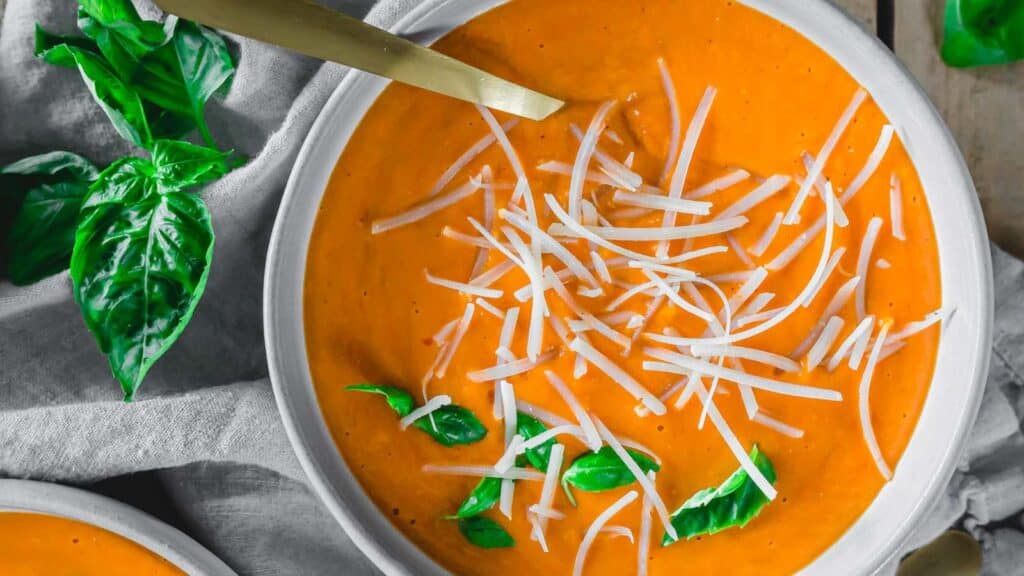
Without cream, a soup’s flavor needs more depth to feel rich and satisfying. Roasting ingredients, adding umami-packed seasonings and finishing with a splash of acid can create a more complex taste. Small tweaks can differentiate between a good soup and a great one.
- Roasting vegetables first deepens their natural sweetness and intensifies the overall flavor.
- Umami boosters like miso paste, nutritional yeast, sauteed mushrooms and smoked paprika add depth and richness.
- Acid for balance brightens flavors and prevents a soup from tasting flat. A splash of lemon juice, vinegar or even a spoonful of mustard at the end can round everything out.
- Finishing touches like a swirl of olive oil, infused oils or crispy toppings like toasted nuts or croutons add both richness and texture contrast.
Crafting creamy soups without cream
Dairy doesn’t define a velvety soup — the technique does. A soup without cream doesn’t have to taste one dimensional. Layering flavors and adding contrast guarantees that every spoonful is as satisfying as the traditional version. Blending the right vegetables, nuts or grains creates a silky texture, while smart flavor boosters will bring depth and richness. With the right approach, a dairy-free soup can be just as smooth, hearty and satisfying as any cream-based classic.
Gina Matsoukas is the writer, photographer and recipe creator of Running to the Kitchen. Focusing on healthy, seasonal, whole-food recipes, her work has been featured in various online and print publications including Food Network, Prevention Magazine and Women’s Health. Gina lives in central New York, where she enjoys an active outdoor life.