
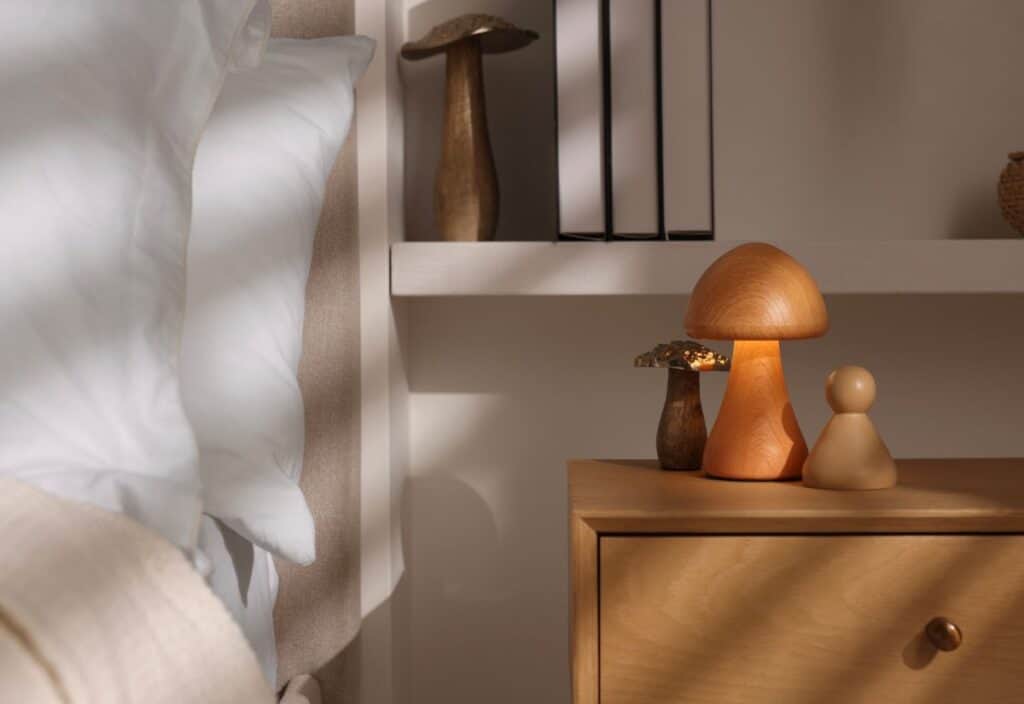
Mushrooms find new life indoors as decorators draw inspiration from the fungi’s earthy aesthetic. In line with biophilic and wellness design, luxury and everyday spaces turn to mushroom-inspired forms to create a closer connection to nature. The motif adapts easily across styles, appearing in curved furniture, textured surfaces and natural color palettes that make rooms feel inviting for the fall season.
This post may contain affiliate link(s). As an Amazon Associate, I earn from qualifying purchases. See Disclosures.
Across social platforms, mushroom themes show up through lamps, stools and accent pieces that add a playful edge to everyday spaces. Creators share these setups to inspire others to curate homes that express their own style.
Why mushrooms feel right at home
Many homes embrace the mushroom motif for its mix of natural form and vintage charm. Its curved shapes and warm tones fit well with biophilic design, which focuses on bringing nature indoors. The look also ties to the retro revival trend, where color and form from the 1970s make interiors playful yet polished.
Mushroom decor taps into a sense of childhood wonder, turning everyday rooms into spaces that feel a bit magical. The pieces remind people of fairytales, forest paths and the kind of imagination that turns ordinary corners into cozy retreats. Their storybook-like shapes and natural tones bring warmth and charm while keeping the look simple.
Mushrooms find a place everywhere
Mushroom-inspired elements now appear across every level of interior design, from bespoke studios to casual homes. In luxury settings, decorators use sculptural lighting and tailored furniture to give the theme a refined edge. Retailers have followed with ceramic decor, wallpapers and lamps that make the trend easy to bring into daily spaces.
For those exploring the look, online guides and DIY projects make it simple to start small. Accent tables, framed prints and throw pillows introduce the motif without overhauling a room. Thrifted pieces, such as vintage lamps or ceramics, add personality and fit naturally with the aesthetic. The theme’s flexibility keeps it relevant across different budgets and styles.
How mushrooms guide designers
Designers translate the motif into architecture, furniture and decor through form and texture. Rounded doorways and built-in alcoves resemble the gentle curve of mushroom caps. Chairs, tables and stools take on soft outlines that follow natural shapes, while wallpaper and textiles use mycelium and fungi prints to add visual depth.
Texture and material further define the look. Velvet upholstery, ribbed ceramics and mycelium-based wall panels give surfaces a handcrafted quality. Decorators often use a palette inspired by forest hues such as taupe, olive, rust and soft brown to create warmth without clutter. Some interiors lean fully into the theme with bold sculptural forms, while others apply subtle curves and tones for a quieter touch.
Viral trends inspire cozy design
Social media has helped drive the trend’s reach. The #mushroomcore tag on TikTok features short clips of DIY projects, painted fungi art and cozy shelf styling inspired by the forest floor. The broader #cottagecore movement focuses on slow living, vintage touches and handmade details that naturally pair with mushroom colors and shapes. What began as a quirky idea has become a familiar design element suited to modern interiors.
Online creators now use these themes to guide how they decorate. Many posts feature mushroom stools used as side tables, lamps that cast a soft glow beside reading chairs and mushroom-shaped cat towers that double as decor for pet owners. These pieces bring comfort and playfulness to small corners, making everyday rooms feel more personal and relaxed.
Many homeowners are moving away from minimalism in favor of spaces that feel fuller and more expressive, making mushroom-inspired pieces a natural fit. Their rounded shapes, warm colors and retro charm blend easily into rooms designed to be lived in, not curated. The look adds character without clutter, striking a balance between nostalgia and comfort.
Subtle steps toward the trend
The key to using mushroom-inspired decor is restraint. Starting with one focal piece, such as a lamp, vase or chair, keeps the look balanced. Sticking to an existing color palette lets organic forms stand out naturally without clashing.
Layered materials add depth and character. Mixing velvet, ceramic and wood brings contrast to soft curves and neutral tones. Mushroom colors, such as soft browns or muted greens, can be introduced through art or textiles to tie a room together. Larger pieces like lighting or tables work best when supported by smaller accents that keep the space calm and cohesive.
Cozy spaces with mushrooms
Curved shapes and earthy tones add calm to rooms that once felt too plain. Mushroom-inspired pieces bring softness and ease, creating spaces that feel more lived-in and inviting. Their simple lines take the edge off modern design and make it more approachable, resulting in a style that feels personal, grounded and livable.
Mandy writes about food, home and the kind of everyday life that feels anything but ordinary. She has traveled extensively, and those experiences have shaped everything, from comforting meals to small lifestyle upgrades that make a big difference. You’ll find all her favorite recipes over at Hungry Cooks Kitchen.