
June 20 is National Dog Dad Day, the day before Father’s Day, and for many men, it acknowledges a responsibility that predates other traditional milestones of adulthood. Dog dads have become the fastest-growing segment of dog owners in the country, and their spending has already reshaped product development, travel and pet healthcare across an industry on track to reach $165 billion this year. The people calling themselves dog dads are not a niche the industry stumbled on; they are the primary reason it grew.
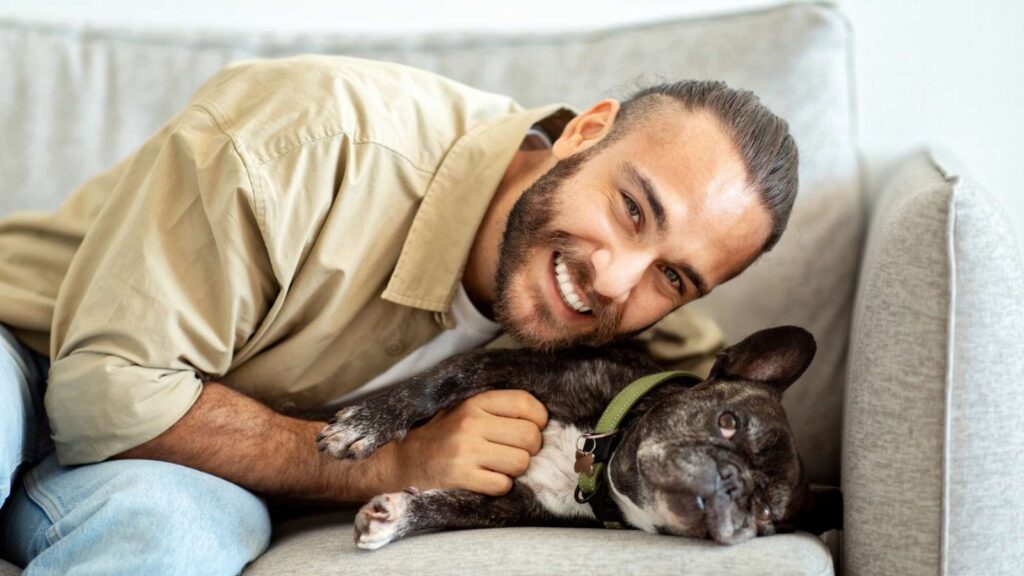
Dog ownership in the United States rose from 51% of households in 2024 to 53% in 2025, adding roughly 4 million dog-owning households in a single year, with men driving a significant share of that growth. Among Gen Z dog owners, 58% are men, and that number increases to 63% in millennials. It’s a figure that represents the most pronounced demographic realignment in pet ownership that the American Pet Products Association has recorded. Most of them did not start out feeling like dog people.
Dad became the dog’s person
Ask most dog dads how it started, and the answer follows a familiar arc: the kids lobbied, mom agreed and dad lost the vote. What happened next is harder to explain but easy to recognize. Within weeks, the water bowl was always full because Dad filled it. He was the one who figured out which spot behind the ears the dogs liked best. On road trips, he checked the back seat first, yet he still does not call himself a dog person.
The data suggests dogs are hardly the only ones invested in the relationship. A recent survey found that 88% of owners say their dog is part of the family, and 94% say having a pet is essential to their personal fulfillment. That bond extends well beyond time spent together, with 87% of pet parents saying they think about their pet often or constantly when apart and 84% ranking their dog’s love among the most important contributors to their overall happiness.
The younger generation does it differently
What separates the current wave of dog dads from their own fathers is not just the devotion but how early it started. Millennial pet parents are 17 times more likely than boomers to have delayed having children and gotten a pet first, according to the same survey. For a lot of them, the dog was never a family pet that happened to become theirs. The dog was always theirs, from the first apartment, before the relationship, before any of the traditional markers of adulthood arrived.
When a dog is part of adulthood from the beginning, owners tend to approach care differently. Pet supplement sales reached $2.9 billion in 2025 as this cohort invested in nutrition and long-term health the way their own fathers invested in Little League fees and orthodontia. The standard of care has changed. So has the idea of what it means to be responsible for another life.
The devotion shows up in spending
For the men who got attached to a dog they did not ask for, the evidence tends to accumulate quietly in the household budget. A recent pet insurance study found the average pet parent spent $2,360 on their pet in 2025, up from $2,086 the year before, with health-related expenses alone accounting for $1,135.
When costs rose, 65% of owners said they would cut their own spending before reducing what they spent on their animal. These are not the choices of someone indifferent to the dog. They are the choices of someone who quietly crossed a line from tolerating a family pet to actively caring for a companion. The dog does not care that Dad claimed neutrality in 2021. The dog just knows who feeds him the good stuff and sneaks him bites at the dinner table.
The next generation inherits the standard
What the dog dad trend points to, more broadly, is a consumer identity that has become self reinforcing. The men who built their adult lives around their dogs are now the fathers of children who grew up watching that happen, which means the next generation of pet owners will enter adulthood with a higher baseline expectation of what responsible ownership looks like. That is not a sentiment trend. That is a structural one, and it compounds.
The pet industry has spent the last decade catching up to what dog dads were already doing. The more useful question now is what those owners expect next, because the category roadmap tends to follow them.
Mandy writes about food, home and the kind of everyday life that feels anything but ordinary. She has traveled extensively, and those experiences have shaped everything, from comforting meals to small lifestyle upgrades that make a big difference. You’ll find all her favorite recipes over at Hungry Cooks Kitchen.