
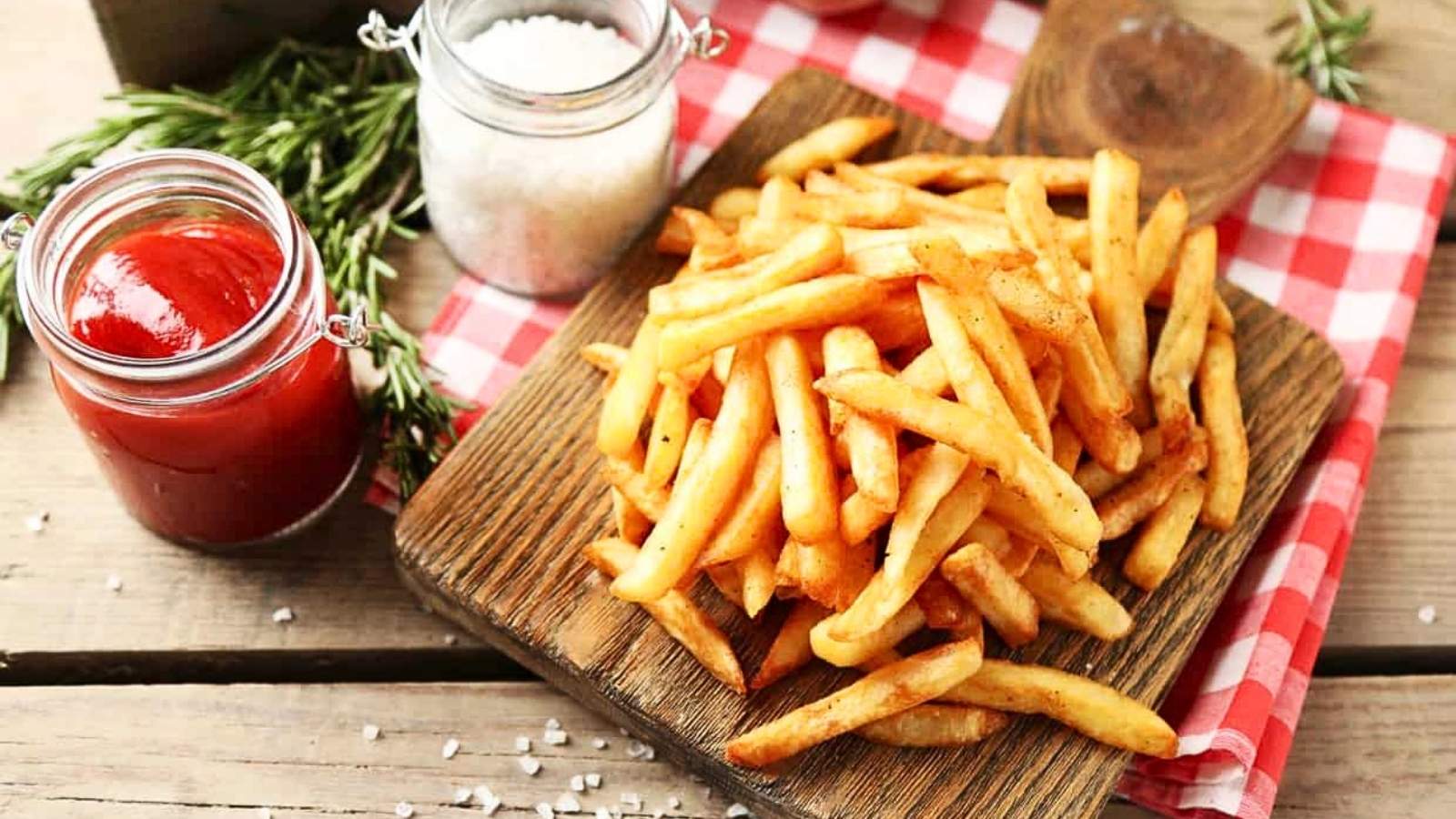
Nobody thinks twice about french fries, which is exactly what the best fry kitchens in America are counting on. While most diners treat the fry as a given and order it without deliberation, a growing number of chefs have decided it deserves the same obsession they bring to everything else on the menu. That obsession has been building quietly for years, and National French Fry Day on July 10 is as good a time as any to go looking for the proof.
This post may contain affiliate link(s). As an Amazon Associate, I earn from qualifying purchases. See Disclosures.
Chefs are now choosing their potato variety with the same care they bring to sourcing proteins, obsessing over frying fat the way pastry cooks obsess over butter, and treating the finished fry as a measure of what a kitchen actually values. The gap between a plate of fries that disappears without comment and one that stops the table is not luck. It’s craft.
America really does run on fries
Potatoes reach American plates at a rate of about 58 pounds per person a year in frozen form alone, and roughly half of the country’s entire potato supply now arrives frozen, most of it cut into fries. Fresh potatoes have been losing ground for two decades while the frozen share climbed, which means the fry is no longer a way Americans eat potatoes. It is close to the default. That kind of volume tells the restaurant industry something it figured out years ago: the fry has outgrown its supporting role. The chefs who saw that coming built their menus around it.
The fat makes the fry
The change drawing the most attention in American fry kitchens right now has nothing to do with the cut; it’s the oil. Beef tallow, the rendered fat that gave fast-food fries their distinctive richness before chains switched to vegetable oils in the 1990s, has returned with a conviction that goes well beyond nostalgia.
Steak ‘n Shake completed a full-chain switch to 100% beef tallow fries across all 436 locations by February 2025, one of the most visible national bets on the fat’s flavor and richness as a draw for serious fry eaters. Whole Foods named the trend a “Tallow Takeover” in its annual food forecast for 2026, pointing to the high smoke point and crisp exterior that have made tallow a favorite of cooks who take their fries seriously. The fat itself has become a philosophy; a proof that a kitchen is thinking carefully about what goes into the fryer, not just what comes out.
Chicago’s fry is worth the wait
Au Cheval on West Randolph Street in Chicago, Illinois, is best known for its cheeseburger, which has earned the kind of word-of-mouth that produces lines before the doors open. The crispy fries, served with mornay sauce, garlic aioli and a fried farm egg, work as a co-lead instead of a side. They come out with crisp edges and creamy centers, the kind of texture that makes the wait feel like the correct decision. Regulars who know better order them first.
Idaho’s fry as its own argument
At Boise Fry Company in Idaho, the premise is that the potato itself is the story. Diners choose their variety, their cut, their seasoning, their salt and their sauce, a level of customization that reads less like a menu and more like a map. The potatoes come from King’s Crown Organic Farms in Glenns Ferry, about 70 miles from the restaurant, which means what’s in the fryer changes with the season. Most fry programs are built around consistency. This one is built around the potato.
The composed fry in fine dining
At J&G Steakhouse inside The Phoenician in Scottsdale, Arizona, the fries get the same attention as the steak. Executive chef Jacques Qualin uses Kennebec potatoes, a variety prized for producing a crisp exterior and a soft, creamy interior, thin-cut and fried to golden perfection, then finished with truffle oil, truffle salt and Parmigiano Reggiano. Two housemade sauces arrive alongside: a black garlic aioli and a black truffle-infused ketchup. It is, by any definition, a composed dish. The potato just happens to be the vehicle.
The fry has always been here
For most of its life in America, the french fry asked for nothing and got exactly that: a spot at the edge of the plate, eaten without ceremony, credited to no one. What’s changed is who’s paying attention, and what they’re doing with the fat, the potato and the heat when no one is watching. The result is a country where the best fry in America might be waiting in a Scottsdale steakhouse, a Chicago restaurant with a two-hour wait or a small Idaho shop that gets its potatoes from a farm 70 miles away. That fry exists. It is worth the detour.
Jennifer Allen is a retired professional chef and long-time writer. Her work appears in dozens of publications, including MSN, Yahoo, The Washington Post and The Seattle Times. These days, she’s busy in the kitchen developing recipes and traveling the world, and you can find all her best creations at Cook What You Love.