
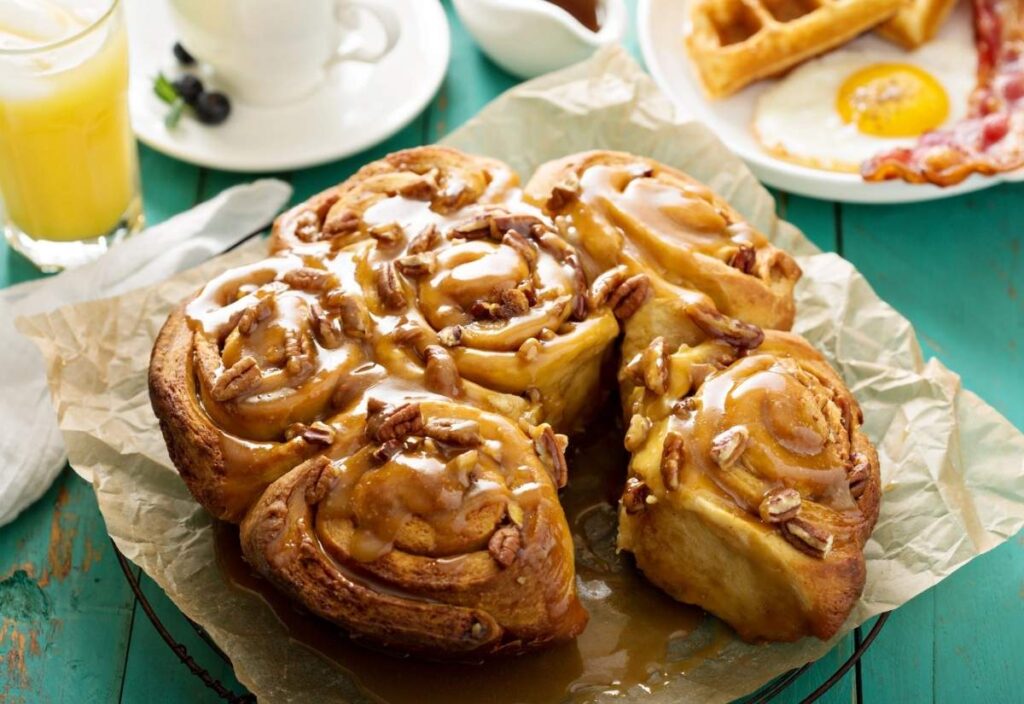
National Sticky Bun Day on Feb. 21 comes with caramel drips, pecans tumbling and a race for the corner piece. The sweet roll that began as Germany’s schnecken crossed the Atlantic with early settlers and found a new following in American kitchens. Bakers added brown sugar and pecans for that glossy top, and today’s bakeries and home cooks lift warm trays from the oven that rarely sit untouched for long.
This post may contain affiliate link(s). As an Amazon Associate, I earn from qualifying purchases. See Disclosures.
Americans celebrate National Sticky Bun Day by experimenting with flavors that go beyond the classic caramel-and-pecan formula. Nut swaps, citrus glazes, savory touches and seasonal fillings invite people to bake more batches that disappear just as fast as the first.
German origins of sticky buns
Sticky buns, known in Germany as schnecken, trace their origins to medieval baking traditions in Europe. Early recipes used enriched dough layered with honey, chopped nuts and dried fruit before being rolled and baked. European settlers carried these techniques to North America, where the pastry took hold in German and Dutch communities during the 18th century.
In the United States, bakers began topping the rolls with brown sugar and pecans, creating the glossy layer now linked to the American style. Over time, regional kitchens added cinnamon, raisins or caramel for extra flavor. These adaptations helped turn sticky buns into a familiar breakfast staple across the country.
New versions get inventive
Home kitchens continue to reinvent the sticky bun with simple ingredient swaps and bold flavor ideas. Some bakers trade pecans for walnuts, almonds or mixed nuts to change the texture of the topping. Others add citrus zest or brush on an orange glaze to cut through the richness of the caramel layer. A drizzle of maple syrup in place of brown sugar can create a deeper, woodsy sweetness.
For those who lean toward dessert, chocolate chips mixed into the dough add extra indulgence. Crumbled bacon on top delivers a sweet and savory contrast that has gained popularity in recent years. Seasonal versions feature pumpkin spice blends or apple fillings during the fall months. Toasted coconut scattered into the caramel base adds crunch, while a light sprinkle of sea salt after baking can sharpen the sweetness without overpowering it.
Bakeries keep tradition alive
Across the country, independent bakeries continue to draw steady lines for sticky buns. Mr. Sticky’s in Pennsylvania has built a following over more than a decade, offering a walnut-topped version baked in its signature caramel base along with smaller rolls suited for sharing. In Maine, Sweet Cheeks Bakery features the classic pastry among a broad lineup of baked goods that regularly sell out on busy mornings.
In Boston, Flour Bakery and Cafe serves a sticky bun layered with dark caramel and toasted pecans. Down the Jersey Shore, Mallon’s Homemade Sticky Buns draws crowds with a raisin and walnut option that remains its best seller.
Meanwhile, in Cambridge, Nine Winters Bakery experiments with bold flavors such as a gochujang citrus variation finished with spicy caramel. These bakeries keep the classic roll in steady demand while adding new flavors that attract a new generation of customers.
Celebrate the buns at home
National Sticky Bun Day gives households an excuse to gather around a warm tray of sweet rolls, starting with a store-bought dough. It cuts down prep time while still delivering a fresh-baked result. Some families turn the day into a small brunch at home, pairing sticky buns with coffee or hot chocolate for a simple weekend treat.
Customization adds another layer of fun. A toppings station with chopped nuts, extra caramel sauce or icing lets each person build a roll to match their taste. Others use the occasion to share a box with neighbors, teachers or coworkers as a small gesture that travels well in a bakery box. Many also choose to support a local shop by ordering a specialty version for the day. Posting photos of homemade batches online with the holiday hashtag extends the celebration beyond the kitchen.
Tradition thrives at brunch
Sticky buns fit naturally into America’s thriving brunch culture, where indulgent morning treats often lead weekend gatherings and cafe menus. Their continued presence on bakery counters and home tables keeps older regional baking traditions active in everyday life. Food holidays such as National Sticky Bun Day also give classic recipes renewed visibility, helping them stay relevant in modern kitchens.
Jennifer Allen is a retired professional chef and long-time writer. Her work appears in dozens of publications, including MSN, Yahoo, The Washington Post and The Seattle Times. These days, she’s busy in the kitchen developing recipes and traveling the world, and you can find all her best creations at Cook What You Love.