
Okra, known as lady’s fingers or the perfect villager’s vegetable, is a culinary symbol that goes beyond its distinct taste and unusual consistency. It carries a rich history and years of tradition, making it an integral ingredient of classic and modern dishes in the South. This ethnic food is celebrated for its adaptability in everything, from soups to pickles and other comfort foods we enjoy today.
This post may contain affiliate link(s). As an Amazon Associate, I earn from qualifying purchases. See Disclosures.
Here’s a closer look at why okra became a staple in Southern kitchens and how it’s used in different recipes. From its historical roots to modern-day methods, this vegetable has more to offer than it may seem at first glance.
How okra made its way to the South
Okra didn’t originate in the United States. According to a study published in Research Gate, the story begins across the Atlantic, in Africa, where okra has grown wild and been cultivated for centuries. In 1750, African slaves brought and planted okra seeds in Barbados, using their food traditions to bring a bit of home to the unfamiliar lands. As the crop spread across the South, it found a natural home in the region’s hot, humid climate, perfect for growing okra.
Southern cooks and gardeners quickly adopted okra into their own dishes, blending it with other influences, particularly from Native American, French and Spanish cuisines. Okra’s peculiar taste and texture became a perfect fit for Southern dishes, especially those cooked low and slow. Whether sliced and fried, stewed into gumbo or tossed in cornmeal, okra became an essential Southern ingredient.
Tips for cooking with okra
For many, cooking okra well boils down to one key challenge: reducing the slime. When cut, okra releases a sticky substance called mucilage, which thickens any dish it’s added to — a helpful property for hearty stews but a bit much for a side dish. Fortunately, there are a few simple ways to get around this.
“Though technically a fruit, here in Charleston, S.C., we treat okra as a vegetable because of its savory applications,” says Jenny DeRemer of Not Entirely Average. “Okra has a reputation for being slimy, and this comes from mucilage, the polysaccharide fiber that thickens when heated,” she adds.
Keep it whole
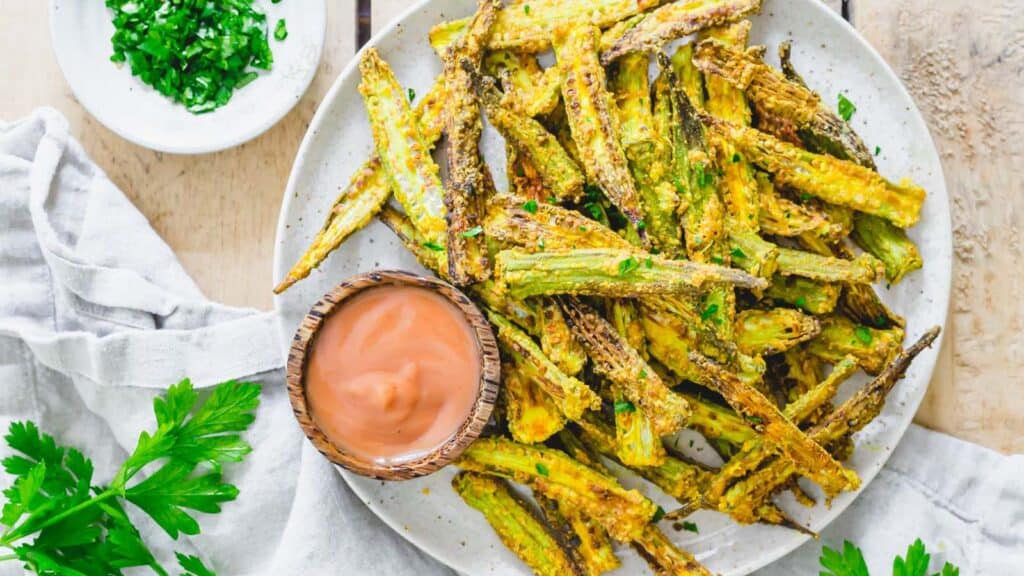
The simplest trick to avoid the slime is to keep okra pods whole. When left uncut, they don’t release as much mucilage, making them ideal for roasting or grilling. Coat whole okra in olive oil, sprinkle with salt and pepper, and throw them in a hot oven or on a grill until they’re tender with crispy edges.
Use acid
Cooking okra with acidic ingredients like tomatoes, vinegar or lemon juice can help reduce its mucilage. “To achieve a fry as crisp as onion straws, I slice the pods into matchsticks and soak them in vinegar for half an hour to break down that mucilage,” DeRemer advises. That’s one reason why okra pairs well with tomatoes in many Southern dishes. The acidity works to break down the slime and adds a bright flavor that complements okra’s earthiness.
Dry it out
Another tip DeRemer shares is to dry okra thoroughly before cooking. After washing, pat each piece dry with a paper towel, and dredge them in a cornstarch and flour mixture. This can help reduce sliminess and make it crispier when roasted, fried or sauteed. “I promise it’s a golden, snap‑crisp finish every time, and a true heirloom of African technique and Gullah Geechee heritage. Okra is just good stuff,” DeRemer says.
High heat cooking
Cooking okra quickly at high heat is a great way to reduce slime while retaining its fresh taste. Stir-frying and roasting are ideal methods, as they allow the okra to cook fast without the chance to release much mucilage.
Okra in Southern-style recipes
Once you’ve nailed down the technique for cooking with okra, it’s time to whip up some dishes that showcase this vegetable. From pickles to soups, here are five dishes that highlight okra’s versatility in Southern cuisine.
Gumbo
A dinner staple in Louisiana, gumbo is a hearty, flavorful stew or soup featuring a rich broth that combines various ingredients, ranging from vegetables to meats to seafood. The star ingredient is okra, which thickens the stew and adds a unique texture. Some popular variations are chicken and sausage gumbo and seafood gumbo. And there’s also gumbo z’herbes or green gumbo for those who can’t eat meat.
Okra and tomatoes
Another popular Southern comfort food is okra and tomatoes. It’s a simple, tasty dish made with garden-fresh or canned okra and tomatoes, often prepared to use up summer produce. The okra provides a distinct texture while the tomatoes add a rich, juicy contrast. Okra and tomatoes is a good example of how Southerners can make the most of straightforward ingredients.
Okra pickles
Pickling okra is a great option if you want to enjoy it all year long. It is a Southern snack or appetizer where the okra is preserved in vinegar and spices, like garlic and peppercorns. As the okra absorbed the tangy brine and spices, a combination of tart and heat will fill your mouth with every bite.
Okra soup
Okra soup is a perfect meal for cozying up on chilly days. It incorporates okra as a key ingredient to thicken the broth, and is typically served as a main dish with a side of rice, cornbread or crusty bread. This soup is perfect for a family meal or to serve at gatherings.
Fried okra
Fried okra is one of the South’s favorite ways to enjoy this vegetable, and it’s easy to see why. Crispy on the outside and tender inside, this dish is a go-to side at many Southern meals. As a bonus, we will teach you how to make your own.
To make fried okra
You’ll need: 1 pound of okra, sliced into half-inch rounds; 1 cup buttermilk; 1 cup cornmeal; 1 cup flour; salt and pepper to taste; oil for frying.
Start by soaking the sliced okra in buttermilk for about 15 minutes. This helps it stay moist on the inside while getting a nice crispy coating. Then, mix cornmeal, flour, salt and pepper in a large bowl. Drain the okra from the buttermilk, then toss it in the cornmeal mixture until each piece is well coated. Finally, heat the oil in a deep skillet and once it’s hot, fry the okra in batches until golden brown for about three to four minutes per batch. Drain on paper towels, season with a little more salt and enjoy.
A timeless vegetable
In Southern kitchens, okra’s adaptability and humble origins have helped it remain a favorite ingredient through generations. There are many new ways to try this age-old vegetable, and for those willing to get creative, okra’s mild flavor and unique texture can make it the star of both traditional and modern dishes. Whether you’re a lifelong fan or just starting to experiment, it’s time to try okra in a few different recipes.
Jennifer Allen is a retired professional chef and long-time writer. Her work appears in dozens of publications, including MSN, Yahoo, The Washington Post and The Seattle Times. These days, she’s busy in the kitchen developing recipes and traveling the world, and you can find all her best creations at Cook What You Love.