
The best table at a Saint-Émilion estate is not in the dining room but is out on the terrace at dusk, where the wine in the glass was grown on the slope you can see from your chair; the plate in front of you came from the kitchen garden below it. This is what the American who travels for the food and wine, not the landmarks, is after. The working wine estate itself, not the hotel with a good list, where the family, the vineyard, the kitchen and the cellar all answer to the same people.
Where a tasting-room visit once satisfied that curiosity, the same traveler now wants to sleep on the estate, eat what it grows and meet the person who makes the wine. Part of it is a simple hunger to know where things come from. And part of it is convenience. One estate that holds the history, the meals and the wine in a single place beats stitching together a week of separate day trips. The estates answering that call are not new-build resorts with a wine theme. They are farms and cellars that have worked for generations.
For producers, this is no longer a side business. About a quarter of winery revenue now comes from visitors rather than bottles sold, and two-thirds of estates call it a profitable part of their trade. That income pays for the guest rooms, the restaurants and the staff to run them, and it explains why so many working estates have moved into hospitality at all.
The winemakers who added the rooms later
Some of these places began as vineyards and built the hospitality around the wine. Château Troplong Mondot is the clearest case. A B Corp-certified Premier Grand Cru Classé estate above Saint-Émilion, it runs a Michelin-starred restaurant, Les Belles Perdrix, that cooks from its own kitchen garden. Its pastry chef was named French Dessert Champion this year, which tells you the food is not an afterthought to the label.
Priorat, in Catalonia, is doing the same thing. It is one of only two Spanish regions to hold the country’s top wine rank, and Gran Hotel Mas d’en Bruno sits in a stone farmhouse that still carries the date 1791 above its door. A 2024 restoration added 24 suites and moved the old wine press into the spa rather than clearing it out. Its restaurant, Vinum, is in the Michelin Guide, and the hotel is opening a program that takes guests to meet the region’s younger winemakers.
The tables with the deepest cellars
Others earned the name the opposite way, in the cellar and the kitchen. In the Dolomites, La Perla has belonged to the Costa family since 1956 and is part of the Ladin culture of Alta Badia. A house on the grounds, La Ciasa Vedla, dates to 1400.
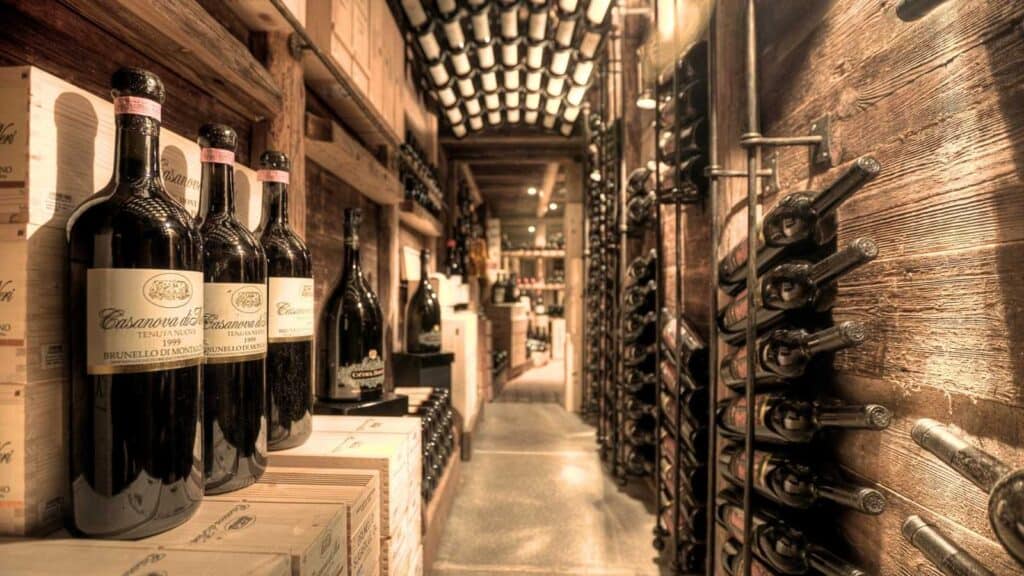
The hotel’s Mahatma cellar runs past 30,000 bottles, from local labels to Tuscany’s Sassicaia, and La Stüa de Michil holds a Michelin star under chef Simone Cantafio. The family marks the property’s 70th year in 2026.
The same holds in the Tyrolean village of Alpbach. Der Böglerhof has been an inn since the 15th century and in the Moser-Duftner family since 1933. Its 800-label cellar and three-toque Fuggerstube kitchen would carry the place on their own. In July its sommelier, Hannes Margreiter, took joint honors in an Austrian award for the country’s most innovative sommelier.
A younger guest is driving it
The people fueling this are getting younger. The core wine tourist has long been 45 to 65 years old, but travelers aged 25 to 44 are now the ones to watch, drawn less by trophy bottles than by food, sustainability and the chance to learn something. It rewards what these estates already have: a kitchen that matches the cellar and owners who have been there for generations. And none of them sit far from the airports Americans already use to reach Europe.
The difference is not the wine list, which any hotel can buy, but whether the same family grows the grapes, runs the kitchen and owns the rooms. That is the version worth the airfare, and the one no marketing budget can fake. As more estates move into hospitality, that difference is what will still set them apart.
Mandy is a luxury travel, fine dining and bucket-list-adventure journalist with expert insight from 47 countries. She uncovers unforgettable experiences around the world and brings them to life through immersive storytelling that blends indulgence, culture and discovery, and shares them with a global audience as co-founder of Food Drink Life. Her articles appear on MSN and through the Associated Press wire in major U.S. outlets, including NBC, the Daily News, Boston Herald, the Chicago Sun-Times and many more.