
The value of the global outdoor kitchen appliances market hit $8.42 billion in 2026, and is expected to more than double over the next 10 years. Once dominated by fire pits and charcoal grills, today’s outdoor kitchen market is multifunctional, super stylish, and WiFi connected.
This post may contain affiliate link(s). As an Amazon Associate, I earn from qualifying purchases. See Disclosures.
Once, man cooked by the campfire. For centuries, even after people started spending most of their time indoors, cooking was an outdoor activity. But eventually, the tradition of preparing and eating food, while sharing stories and community news, shifted to an every once in a while practice, often centered around holidays, birthdays or other celebrations.
Today, those with disposable income are returning to the great outdoors, but on their own terms. Future Market Insights predicts outdoor kitchen supplies will continue to grow in popularity, to the tune of $18.19 billion by 2036, driven by fully integrated outdoor kitchen systems featuring advanced refrigeration and cooking options as good as, if not better than, the ones in your home.
From fire pit to kitchen counter
The earliest form of modern cooking was a community affair. Nomadic tribes would not only hunt and gather in packs, but the food they brought in would be prepared and eaten communally. Leftovers weren’t really an option, so whatever couldn’t be consumed immediately was salted and dried for use later.
Even after people began settling in homes and towns, cooking was handled outdoors or in a separate building, as was the practice of the Greeks. This ensured living spaces were free of odors and stayed cool in summer, as well as mitigating the risk of fire and smoke inhalation.
Oddly enough, Henry Ford and Thomas Edison were largely responsible for concocting camp cookouts. The two inventors took friends on annual camping trips, including real estate agent Edward Kingsford. When Ford became frustrated by the waste he saw at his sawmills and parts manufacturing plant, his friends suggested a solution. A newly developed chemical process that turned sawdust, wood scraps, tar and cornstarch into charcoal briquettes. Edison built a plant and Ford began marketing road trip picnic kits with briquettes and a portable grill.
Grill, chill
In the decade following the end of World War II, Americans found themselves with more free time and money. And many, for the first time ever, owned their own homes and yards. George Stephen, an employee of the Weber Brothers Metal Works near Chicago, had the idea to crack a metal buoy in half and add legs to create a kettle-style grill that not only kept the hot dogs debris-free but also improved the heating process.
The Weber model still dominates the grill market, but it has developed and improved over the years. Dozens of other grill makers adopted the kettle design, each adding their unique flair. Biolite, for example, offers their rocket stove, a portable above-ground fire pit that doubles as a small grill.
In 2026, outdoor cooking takes on a new perspective. Backyard setups are far more complicated and connected. The introduction of smart technology, including app-connected temperature monitoring and Wi-Fi-enabled grills, creates a whole new barbecue dynamic. Additionally, outdoor refrigeration is one of the fastest-growing new tools for your backyard grill layout.
Elevated camp cooking
The latest technology isn’t just for the backyard. Whether you drive an RV, pop a pup-tent or love glorious glamping, there’s a camp cooking tool that fits your version of an outdoor lifestyle.
“We’re finding that campers are much more intentional about what they bring, which doesn’t always mean more gear, but often better gear. Tools that improve the experience,” explains Andrew Straley, gear expert at Kampgrounds of America, “Younger campers have grown up with instant access to everything, with recipes, inspiration, even entire cooking communities, right in their pockets. This access to information shapes how they approach the outdoors … People aren’t just tolerating the cooking aspect anymore — they’re leaning into it as part of the experience. For a lot of campers, it’s become one of the best parts of the trip.”
“In general, we’re finding that whether camping in an RV or fully outdoors, people are looking for as many of the comforts of home as possible,” shares Mike Williams of Kenyon Grills. “Cooking is going beyond the traditional camp stove or just over the open flame to include portable electric grills to elevate the meals campers can make on the road.”
“Modular camp kitchen systems are booming. People want fold-out prep stations, integrated storage, and gear that mirrors their home kitchen workflow,” says Chef Corso, founder of Outdoor Eats. “Portable flat-top grills, compact smokers and multi-fuel stoves are also trending because they allow for more versatile menus.”
“There’s also strong interest in dual-purpose and multifunctional equipment, pieces that can transition between daily use and overlanding and allow for flexibility,” adds Kara Thrift, marketing manager at iKamper. “We’re seeing a shift toward all-in-one systems that remove the guesswork entirely, where everything from your stove to prep space and storage is thoughtfully integrated.”
“Looking ahead to this season, full camp cooking systems will be popular in social feeds as people show off their good eats and make followers’ mouths water — and then make them want to do the same,” concludes Kevin Long, CEO at The Dyrt.
Experience matters most
Camping experts are quick to point out it’s not just the coolness factor that’s building the market. The latest gadgets need to have and provide purpose for the user.
“Camp cooking has shifted from being purely functional to becoming a core part of the outdoor experience,” explains Thrift. “There’s a greater emphasis on intention, whether that’s how food is prepared, shared, or even plated in some cases. The campsite has become an extension of the home kitchen, just in a more thoughtful, compact footprint.” That includes adding comfort foods you might not imagine in the campground, like mac and cheese cooked in the hot coals.
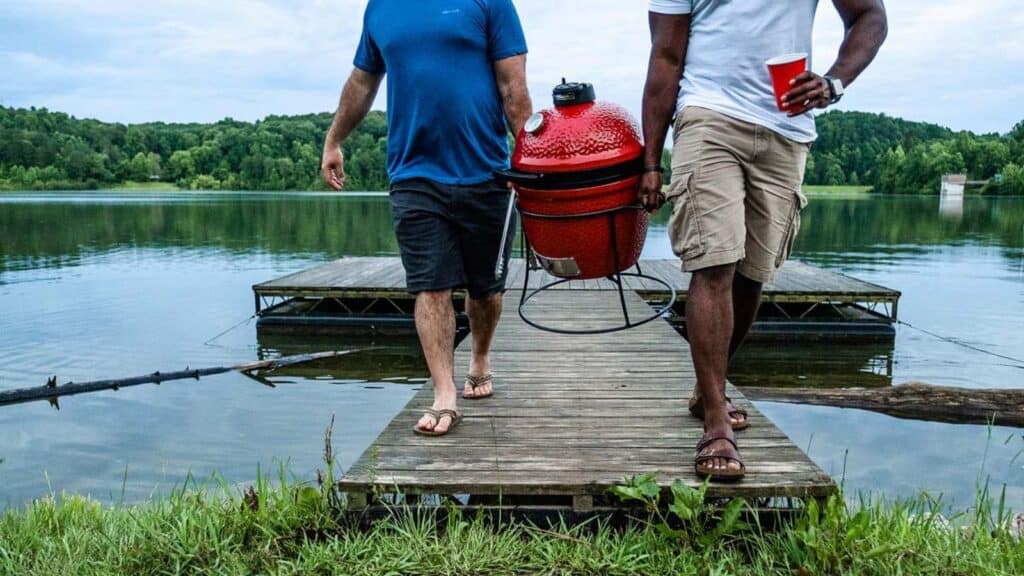
“The experiential nature of grilling and smoking under the open sky is second to none. My quest to simplify and level up my camping culinary game ultimately led me to the Kamado Joe Jr.,” shares Chef Eric Gephart, ambassador for Kamado Joe. “In a world where you are only as good as your gear, the Joe Jr. is a portable culinary adventure. Providing best-in-class low and slow smoking as well as high-temp, fast and furious searing in the same unit. The addition of the Joe Jr. to my family’s culinary arsenal expanded our menu possibilities and enjoyment tenfold!”
“I’d say the biggest growth is in experience-focused upgrades,” says Corso. “People are willing to spend on compact pizza ovens, flattop griddles, cast iron and organized camp kitchen systems because they camp more often and want the process to feel smooth and enjoyable.”
“As newer, younger campers begin taking their own trips, they’re used to convenience, to technology and to having that tech at all times. Because of that, camping isn’t as fully unplugged as it once was,” Williams concedes. “So people are really taking portable electric grills, powered coolers, more elaborate stove systems and even portable ovens with them. Electric grills are preferable to traditional gas or charcoal grills because of the safety features they offer. There’s no open flame, no fire risk and, of course, they are inherently safer without gas. This is especially important during the summer months when forest fires are more common with hot, dry conditions.”
Ash and smoke
As camping continues to grow in popularity post-pandemic, it also evolves. While some prefer the tried-and-true sleeping bag-in-a-tent model, more and more campers are exploring new options. That extends not only to how they spend the night, but also to the experiences around camping, including what and how they eat. Hot dogs are still a staple enjoyed around the campfire, but some might try campfire strawberries as a juicier, more flavorful dessert than standard s’mores.
In 2026, outdoor meals have moved from sustenance to part of the adventure. People are investing in more and varied camp cooking and grilling gear for their excursions, as well as just relaxing in their backyard. And industry projections indicate that’s not stopping anytime soon.
Bella Bucchiotti is a freelance writer with a passion for adventure, delicious recipes and authentic storytelling. Through xoxoBella and social media, she shares vibrant travel experiences, mouthwatering dishes and everyday moments that inspire connection.