
Every July 10, bartenders across the country raise a glass to a cocktail that spent decades being dismissed as a blender accident. National Piña Colada Day has always had the energy of a novelty holiday, the kind celebrated with paper umbrellas and mix from a can. But the way serious drinkers and bartenders talk about this drink has changed, and the reason has everything to do with what’s happening to rum right now.
North America is the fastest-growing rum market in the world, fueled by innovation in premium and aged expressions, surging U.S. consumer demand and rapid e-commerce expansion. The global rum category is valued at $20.6 billion in 2026 and projected to reach $29.6 billion by 2033. That growth pulls the piña colada along with it, nudging the drink out of the frozen-drink machine and into the hands of bartenders who care about what goes in the glass.
A drink born in dispute
The piña colada’s origin is as murky as the drink itself. At least three bartenders from Puerto Rico claim credit, and none of them agrees on the details. Ramón “Monchito” Marrero, working at the Caribe Hilton’s Beachcomber Bar in San Juan, Puerto Rico, is most widely cited. The hotel places the date at 1954, though Marrero himself sometimes said 1952, and a colleague at the same bar, Ricardo Garcia, also staked a claim.
A decade later, bartender Ramón Portas Mingot said he created it at the Barrachina Restaurant in Old San Juan, Puerto Rico, where a plaque still marks the spot. What’s not disputed is that Puerto Rico declared the piña colada its national drink in 1978, and July 10 has belonged to it ever since.
What the blender did
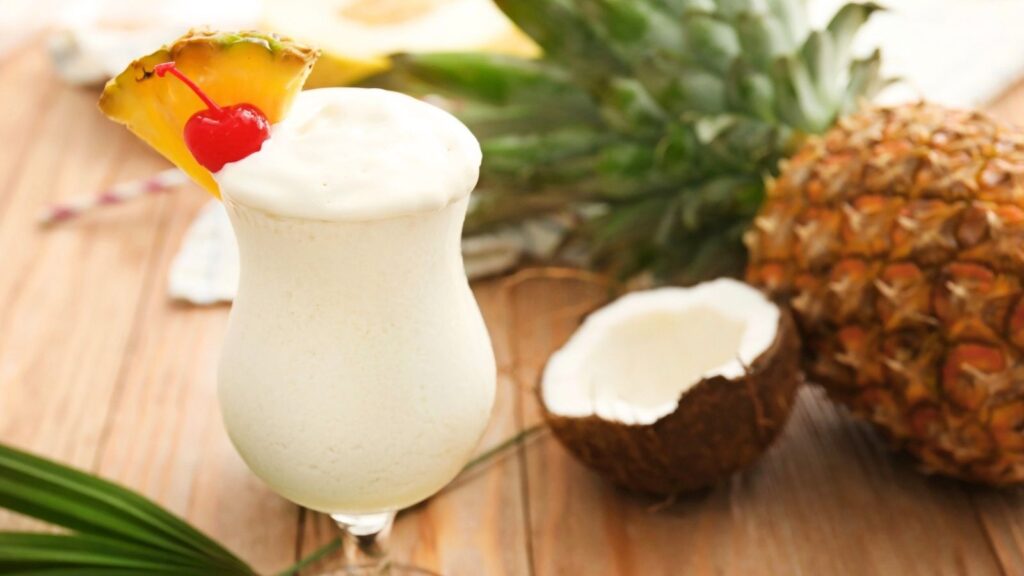
The first version wasn’t blended at all but was shaken: coconut cream, fresh pineapple juice and crushed ice, served cold without a motor in sight. Rum came later, and so did the blender, which arrived just in time to scale up production as the drink’s popularity exploded. The blender solved a logistics problem and, in doing so, created a new one. Frozen and sweet became the default, and the rum faded into the background. For decades, the quality of what went into the glass barely mattered.
Where Ron del Barrilito fits
Ron del Barrilito is a Puerto Rican aged rum with a flavor profile built around caramelized fruit, raw sugarcane and oak. That kind of character disappears in a frozen blender drink but comes forward cleanly in a shaken one.
“Because Ron del Barrilito has no added sugar and draws its character from years of aging in ex-Oloroso sherry casks, it’s remarkably well-rounded — dry, layered and balanced. That’s what makes it so versatile,” Eduardo Bacardi, director of marketing at Ron del Barrilito Rum, said.
The brand’s version of the piña colada returns to the 1954 preparation: shaken rather than blended, with the rum doing actual work instead of hiding behind sweetness. It’s a straightforward argument for what the drink can be when the base spirit is treated as the point, not the afterthought.
“It holds its own in a spirit-forward classic like a rum old fashioned or Negroni, where there’s nowhere for the rum to hide, but it’s just as enjoyable in a piña colada or daiquiri, or simply over ice,” Bacardi added.
Heidi Bruaw, owner of Real Life of Lulu, tried Ron del Barrilito for the first time, expecting a familiar, sugary rum: “The first sip, I tasted some caramel and brown sugar, but then a raisiny note snuck in and surprised me,” Bruaw said. “It’s way smoother than I thought it would be. There’s a little leather and tobacco in the middle, plus some warm spice, like nutmeg or clove. This is fancier than a poolside drink. It’s a rum you can drink on its own and enjoy.”
What bartenders do with it now
The craft evolution of the piña colada is well underway. Bartenders are building spicy versions with Ancho Reyes Verde, smoky riffs that swap in mezcal, clarified takes that strip the drink to its most precise form and low-proof builds for drinkers watching their intake. The throughline in all of them is the same: the base rum matters, and the frozen default is optional.
This July 10-12, Old San Juan’s Piña Colada Festival will put that range on full display, with local bars and restaurants pouring their own variations across the streets of the city where the drink was born.
The bigger picture
Premium and aged rums now command nearly 47% of the global rum market by volume, supported by a growing consumer appetite for complexity and craft. Flavored and experimental expressions are the fastest-growing segment, driven by younger drinkers seeking something beyond the standard well pour. The piña colada, for all its kitsch baggage, fits neatly into both currents: a drink with a legitimate history, a debated origin story and a base spirit finally getting its due. The blender isn’t going anywhere, but it’s no longer the whole conversation.
The cocktail that spent 50 years as a punchline is now a proving ground. As premium rum finds its footing in North America, the question isn’t whether the piña colada deserves serious treatment; it’s whether the rum in the glass is finally worthy of it.
Jennifer Allen is a retired professional chef and long-time writer. Her work appears in dozens of publications, including MSN, Yahoo, The Washington Post and The Seattle Times. These days, she’s busy in the kitchen developing recipes and traveling the world, and you can find all her best creations at Cook What You Love.