
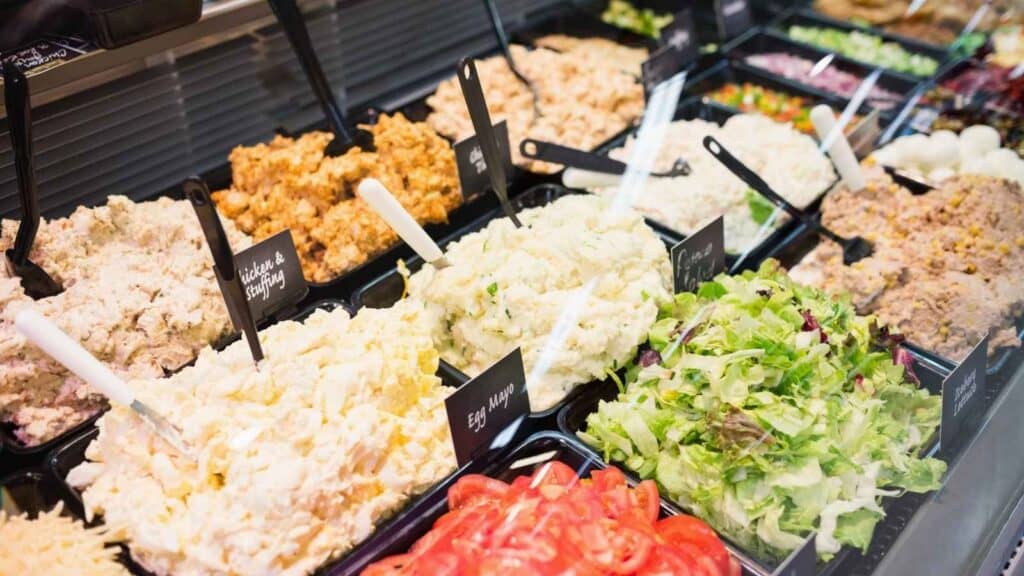
Dinner used to ask for time, ingredients and a little effort. Now it often starts under the glow of the hot bar, where rotisserie chicken, deli sides and grab-and-go meals settle the supper question before shoppers even reach the first aisle. As prepared foods sections become the busiest part of the store, supermarkets do far more than sell ingredients; they head into the nightly scramble to get a good meal on the table.
This post may contain affiliate link(s). As an Amazon Associate, I earn from qualifying purchases. See Disclosures.
The rush around ready-to-eat meals puts the modern grocery trip into perspective. Shoppers no longer enter the store with only a recipe in mind; many now arrive looking for an immediate answer for lunch or dinner. Short midday visits to wholesale clubs held flat at 2.1% from 2024 to 2025, while other grocery formats gained more of those quick lunch-hour stops, indicating stronger demand for pre-prepared and single-serving options.
Lunch traffic heads inside
Prepared foods sections draw more short midday visits as supermarkets attract shoppers who want a quick bite without a restaurant stop. Grocery stores captured a larger share of brief lunch visits in 2025, and among traditional grocers, that share rose from 15.9% to 16.6% as shoppers picked up ready-to-eat items during workdays.
This increase matters, as store delis turn into a daily food destination instead of a department linked mainly to weekly shopping trips. Quick lunch visits also change where shoppers head first once they enter the store, with many going straight to hot cases, deli counters and refrigerated grab-and-go shelves. Store-made meals now serve office workers, parents and errand runners who want a reliable meal without adding another stop to the day.
The dinner definition changes
Grab-and-go meals meet the needs of households that still eat at home, even when no one wants to cook from scratch. Research shows that 6 p.m. remains the peak dinner hour and that 36% of shoppers eat at home every night of the week, placing supermarkets in a strong position when shoppers want a home meal but rely on the store to handle most of the work.
Retailers respond to that habit by treating prepared foods as a practical dinner solution instead of a backup plan. A hot entree, deli side or heat-and-eat meal fits the kind of evening many shoppers now have when time is limited but meals still need to be on the table fast. The section carries more weight because it meets dinner demand in a format that requires less effort than cooking and is closer to home than a restaurant stop.
Value keeps shoppers close
Ready-made meals win on price perception at a moment when households are still watching every food dollar. FMI, The Food Industry Association’s The Power of Food Service at Retail Report 2025 notes that 28% of shoppers now buy deli-prepared foods from grocers instead of going to a restaurant, up from 12% in 2017. The same report found retail foodservice sales rose 1.6% year over year through Aug. 9, 2025, to $52.1 billion, a steady result for a part of the store that used to read like a convenience add-on.
Grocery meals now occupy a middle ground between takeout and cooking from scratch. The report also states that more than half of surveyed shoppers see deli-prepared foods as a good value, while 37% view them as comparable in price to restaurant options. Fewer shoppers now buy them as a replacement for home-cooked meals than they did in 2017, which points to a practical habit, as people still want dinner at home but are more comfortable letting the store handle the work.
Stores build around meals
Grocers continue to expand these meal departments as they treat them as a central part of the business rather than an extra service near the bakery. FMI said in May 2025 that prepared foods gain share across all dayparts, with dinner at 37%, lunch at 35% and breakfast at 22%, giving grocers reason to plan menus and staffing around full-day demand. Once a department can serve noon traffic, after-work pickups and early meal occasions, it earns more floor space and more attention from operators.
Large chains are already leaning into that playbook. Albertsons markets ReadyMeals as ready to eat, ready to heat and ready to cook, while Kroger reported in early March that identical sales without fuel rose 2.4% in the fourth quarter and adjusted e-commerce sales increased 20%, clear signs that grocers keep investing in convenient food access across stores and digital channels. Those numbers do not isolate deli counters, but they support the broader retail move toward easier meal solutions that meet shoppers where they are.
Prepared foods sections take over
The busiest corner of the grocery store now says a lot about how people want to eat. Shoppers expect stores to handle more of the meal preparation, and retailers that treat ready-to-eat meals as a central part of the business will be in a stronger position to keep that traffic. As dinner decisions become more immediate and shopping trips more targeted, the most important part of the store may be the one that solves the day’s meal fastest.
Zuzana Paar is the visionary behind five inspiring websites: Amazing Travel Life, Low Carb No Carb, Best Clean Eating, Tiny Batch Cooking and Sustainable Life Ideas. As a content creator, recipe developer, blogger and photographer, Zuzana shares her diverse skills through breathtaking travel adventures, healthy recipes and eco-friendly living tips. Her work inspires readers to live their best, healthiest and most sustainable lives.