
For years, the snack aisle operated on an unspoken rule: you could have flavor or you could have clean ingredients, but not both. Legacy chip brands owned the craveable end. The better-for-you options lined up on the other side, dutifully nutritious and largely forgettable. That divide is collapsing. A new crop of brands is building from a different premise: that real ingredients and bold flavor are not competing priorities, and a category worth tens of billions of dollars is moving in their direction.
The better-for-you snack market hit $50.36 billion in 2024 and is projected to grow at 7.7% annually through 2030. Two of the five forces reshaping the $148.6 billion U.S. snacking market are flavor innovation and better-for-you choices. The most competitive brands right now are operating at the intersection of both. Products with ingredient lists that hold up to scrutiny and flavor profiles that don’t read like a consolation prize are driving the category’s fastest growth.
The New Standard
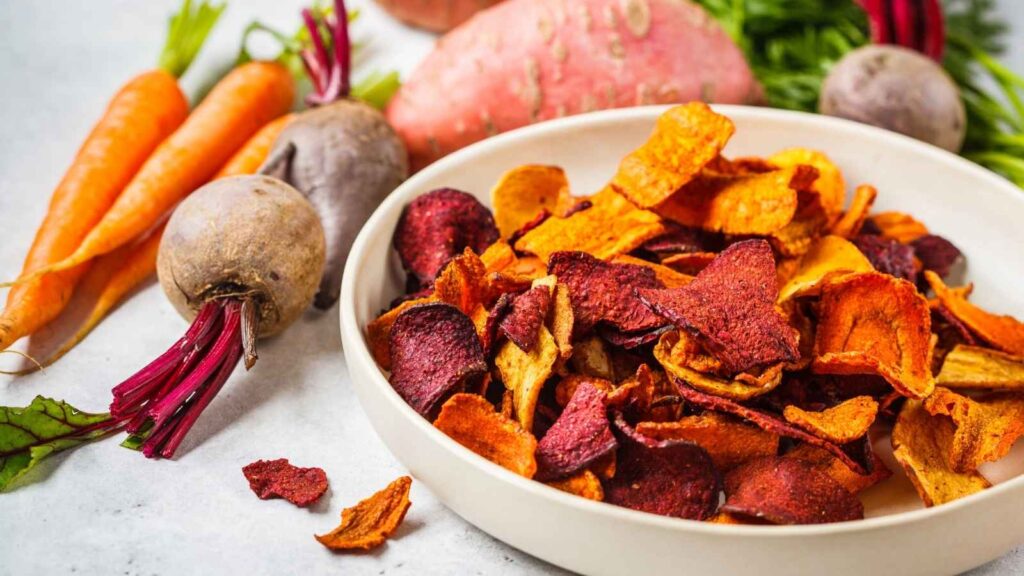
Realm, a female-founded snack brand that launched nationwide online this month, was built around a specific frustration. “The majority of the snack aisle is still somehow the same old processed stuff,” said Elise Runde Voss, the brand’s CEO and co-founder. “On the other end, a lot of the healthy options miss on flavor.” Its Savory Veggie Crisps are built from purple and orange sweet potato, cauliflower, and cassava infused with chia, popped in avocado oil, in three flavors, Saucy Pizzetta, Spicy Chipotle and Sweet Mustard, that are gluten-free, non-GMO, kosher, vegan and free of seed oils and artificial ingredients. “We didn’t want to make a crisp that people bought once for the ingredients and never wanted again,” said Lauren Benbassat, COO and co-founder. Before going direct-to-consumer, Realm built traction across airports, universities, hospitality venues and regional grocery chains, including Hy-Vee.
Flavor Without the Compromise
LesserEvil has been running the same experiment at a larger scale. The brand’s Cheezmos line, organic cheese puffs made with real organic cheddar and avocado oil and free of artificial dyes and seed oils, launched at Whole Foods in June 2025 and expanded to Kroger locations nationally by September. In November, Hershey completed its acquisition of LesserEvil, a signal that the clean-label flavor model has moved well past niche credibility. Hershey specifically cited the brand’s use of better-for-you ingredients and its appeal to younger consumers as the strategic rationale for the deal.
Investor Confidence Follows
The acquisition activity extends beyond legacy food companies moving downstream. In January 2026, investment firm MPearlRock, a strategic partnership between MidOcean Partners and Kroger, acquired The Good Crisp Company, a clean-label salty snack brand with products in more than 20,000 retail doors across the U.S., Canada, Australia and the U.K. The brand’s canister chips, cheeseballs and crinkle-cut chips carry no artificial flavorings, colorants or GMO ingredients. MPearlRock’s chief executive cited the brand’s ability to deliver on both taste and ingredient simplicity as the primary draw, the same argument every brand in this category is making, increasingly backed by data.
Where the Category Goes Next
Globally inspired snack formats recorded a 22% jump in volume over three years and better-for-you subcategories, including nuts, seeds and protein-forward options, are outpacing the broader market. The consumer driving that growth grew up reading ingredient labels and expects both things at once. That expectation has moved from the natural grocery channel into mass retail, airports and university food programs, the same footprint Realm mapped before its national launch.
The harder test comes next. Building a snack brand on real ingredients and bold seasoning is one thing. Holding shelf space, sustaining distribution and competing on price against decades-old brands with industrial-scale infrastructure is another. What the current wave of launches and acquisitions makes clear is that the category has consumer demand. Whether the supply chain catches up is the next question the market will answer.
Jennifer Allen is a retired professional chef and long-time writer. Her work appears in dozens of publications, including MSN, Yahoo, The Washington Post and The Seattle Times. These days, she’s busy in the kitchen developing recipes and traveling the world, and you can find all her best creations at Cook What You Love.