
More than 52 million households in North America went camping last year, according to Kampgrounds of America; another year above pre-pandemic levels. Millennials and baby boomers lead the charge, each providing nearly a third of campers, with people over the age of 65 representing a quarter of all new campers. The two generations connect over a shared interest in meaningful experiences, connection and wellness.
This post may contain affiliate links that may earn us a commission. For more information, see our Disclosures.
The result is a $66 billion economic impact, driven by a balanced nostalgia, using modern equipment to discover a simpler experience. Glamping continues to grow in popularity, at least among younger generations. Folks over 65 tend to enjoy roughing it a bit more, as long as they can drive their RV there.
TheDyrt.com cites 82.4 million campers in the United States, a bit higher than KOA’s annual Camping & Outdoor Hospitality Report. But when you look at the breakdown of percentages, the numbers between the two surveys are eerily similar. Kampgrounds of America has been the premiere camping resource center for 60 years, and Dyrt is the largest RV camping community in the U.S.
Wellness meets biohacking
Luxury travellers spend countless dollars on spas, hot springs and custom trips designed to improve their wellbeing. But 77% of the 4,000 people KOA surveyed say just being in the great outdoors is enough to reset their wellness. Camping is where wellness happens naturally. Fewer than one quarter of those asked claim spending money on structured activities has more benefit than just taking a pause to take in mother nature.
Technology doesn’t have to be the bad guy, though. It’s hard to improve what you are not tracking. So campers are bringing some of that tech with them to the campground. As long as devices don’t distract, they can be used to track sleep, stress and recovery. More and more people are discovering a more natural approach to biohacking: improving their sleep and reducing stress by being outside.
The approach extends to food and camp cooking as well. “Convenience still matters, especially for backpacking, but there’s a clear shift toward ‘simple but real’ cooking,” says Chef Corso, founder of Outdoor Eats. “People want fewer ultra-processed meals and recipes that can match their dietary preferences.” One food that combines both is a mix-it-yourself chocolate cherry trail mix.
Unplugged and analog
In 2026, camping continues to shift to a reset button for families. Rather than a sometimes overwhelming visit to a theme park or an activity filled cruise, 44% of parents say camping with kids is more relaxing than other family vacations. Camping is more than getting away or roughing it; it’s a chance to unplug from the world and reconnect with the entire family.
Overprogrammed vacations are on the way out as vacationers lean into skill building and the nostalgia of childhood camping experiences. Many Gen Xers and baby boomers use camping as part of their retirement, while also introducing their kids and grandkids to the memories they built.
Half of all campers are likely to plan a trip that relives a childhood camping experience. Surprisingly, that increases among Gen Z and millennials. The desire for dependable tools crosses all age gaps, one of the reasons Le Creuset continues to expand their Alpine line of cast iron outdoor cooking equipment, supplying campers for more than 100 years.
“… now, with a shift toward glamping at private campgrounds and properties, whether in RVs or provided cabins, there’s more interest in making camping a little more convenient and flexible, rather than simply roughing it in the outdoors,” adds Kenyon’s vice president of sales and marketing, Mike Williams.
Road trips return, with RVs
Even with higher gas prices, Americans can’t help but hit the open road. In fact, as other travel options become costlier, they have even more appeal. And really, it’s hard to imagine a better year than 2026 to bring back the great American road trip. For starters, we’re celebrating the 250th anniversary of the signing of the Declaration of Independence that founded our great nation. Plus, it’s also the 100th birthday of the American Mother Road, Route 66.
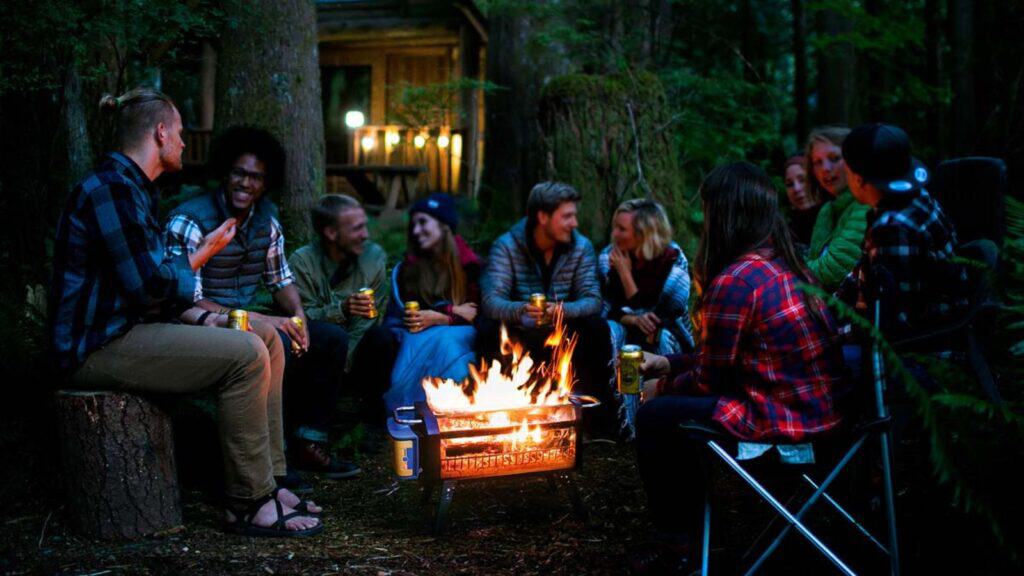
“Car camping is now the biggest share of the camping market,” points out Seth Chinnis, director of design at BioLite. “What’s interesting is the style of those trips is shifting: shorter, simpler, more weekend-driven. We see a lot of success with this kind of user-led design; our FirePit is a great example of a portable, easy-to-use grill with campfire ambiance. We also see great interest in camp lighting products and other products that make the outdoors more comfortable and accessible.”
“Younger campers tend to be simpler, more along the lines of aluminum foil and a Coleman Classic,” adds Kevin Long, CEO of The Dyrt. “Older campers are much more likely to be in an RV with plenty of space and more financial freedom to purchase more gear.” The cast iron campfire pie iron remains popular with both.
And recreational vehicles aren’t just for older adults. Younger travelers are turning to RV rentals as a lower-commitment way to hit the road without the cost of ownership. More than half of Gen Z say they’re likely to rent an RV in 2026. Heritage trips are a big draw, with 43% planning excursions in celebration of America’s 250th birthday.
“Major milestones like America’s 250th and Route 66’s centennial are fuelling an interest in road trips,” explains KOA gear expert Andrew Straley. “People are craving unstructured time with the people they care about, and there’s a growing awareness of what time spent outdoors does for your physical and mental wellbeing.”
West Coast heads north
Campers aren’t just celebrating the United States this summer. Several road trippers and camp enthusiasts head to their neighbor to the north. In particular, residents of California, Washington state and Oregon are journeying to British Columbia. The journey gives them the opportunity to stretch their legs outside the country, but in areas they feel safe driving in.
A great way to extend a road trip and enjoy some unique experiences with your family is to hop on the BC Ferry for an excursion through the Inside Passage. The passage, formed by ancient glaciers, is just under 1,000 miles long, from Seattle, Washington, to Skagway, Alaska. The BC adventure begins at Bear Cove in Port Hardy on Vancouver Island. From there, the Ferry takes you to Prince Rupert. All told, it’s roughly 16 hours and 20 minutes. The Ferry follows the same route that most Alaskan cruises take, but it’s a lot cheaper with fewer distractions.
Pitching in-tents
Interest in spending time in the great outdoors continues to grow as camping is embraced by all generations. Many over 65 plan retirement trips with their significant other, while 1 quarter of all campers bring along the whole family and create multi-generational memories. No matter whether you traditionally camp, glamp or truck in with your RV, reconnecting with nature and one another makes for a better life.
Bella Bucchiotti is a freelance writer with a passion for adventure, delicious recipes and authentic storytelling. Through xoxoBella and social media, she shares vibrant travel experiences, mouthwatering dishes and everyday moments that inspire connection.