
Gardeners obsess over seed varieties and planting dates, yet the soil under their boots often gets ignored. Soil testing for spring planting costs less than a bag of premium fertilizer and delivers answers that structure the entire season. With spring lab backlogs already forming, those who test early move forward with clarity, while others gamble on guesswork.
This post may contain affiliate link(s). As an Amazon Associate, I earn from qualifying purchases. See Disclosures.
Beneath every neat row and labeled packet sits the real decision maker. Gardeners who run a soil test before planting replace crossed fingers with solid data and enter spring ready to grow with confidence. An early decision to test often determines whether the season starts strong or turns into a series of midseason corrections.
The power of soil data
Soil testing for spring planting gives gardeners a clear view of soil pH and nutrient levels before crops begin drawing from the ground. Certified labs measure elements such as phosphorus and potassium and deliver crop-specific recommendations for lawns, vegetable beds or flower gardens. With those numbers, growers make informed decisions about lime and fertilizer instead of relying on guesswork.
University of New Hampshire Extension states that soil pH controls how effectively plants access nutrients, and imbalances can limit growth even in soil that looks healthy. Early soil testing reveals those problems in time for gardeners to correct them before planting begins. When growers follow lab recommendations, they apply nutrients at proper rates, protect their budgets and reduce runoff into nearby waterways.
The right time to test
Timing determines the value of soil testing for spring planting, and March often sets the tone for the season. As seed catalogs stack up and garden beds thaw into dark, crumbly soil, labs receive a surge of samples. West Virginia University Extension reports that submissions from March to June often take longer to process, so gardeners who test between July and December avoid delays and secure results before spring planting windows tighten.
Gardeners gain an advantage when they test soil in early spring. Winter rain, snow and temperature swings shift nutrient availability and change soil conditions before roots begin to grow. Early testing protects preparation time and allows growers to plan lime and fertilizer applications without rushing as planting dates approach.
How to collect samples
Accurate soil testing for spring planting starts with proper sampling techniques. Gardeners should divide their landscape into uniform areas based on use, such as vegetable beds, lawn sections or ornamental borders. Each area requires its own composite sample to reflect consistent soil conditions.
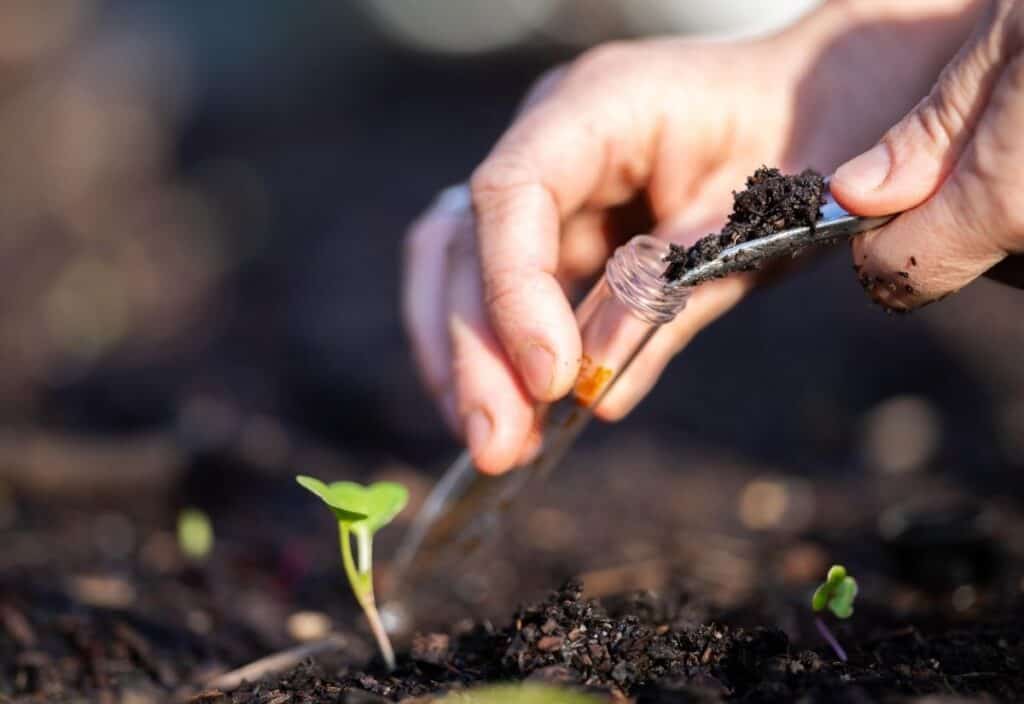
To collect a representative sample, gardeners take small cores from multiple spots within the same area at a depth of about 6 inches for most gardens. They mix those cores in a clean bucket and remove debris before placing a portion into a labeled sample bag. Clear labeling with the intended crop helps labs tailor fertilizer and pH recommendations.
Clean tools matter because contamination can distort results. Gardeners should avoid sampling immediately after fertilizer application and wait until the soil is workable but not saturated. Careful collection strengthens the reliability of soil testing and ensures that recommendations match real conditions.
Where to send samples
University of Missouri Extension continues to offer soil testing services for home gardeners. Local extension centers provide soil sample boxes, and submission forms and detailed instructions are available online or in person. Certified private labs like Suburban Testing Labs also conduct soil testing for spring planting and often publish turnaround times during peak season.
Gardeners can locate their local extension office through state university websites and review submission guidelines before collecting samples. Some labs accept mail-in packages, while others welcome in-person drop-offs during regular business hours, so gardeners who confirm details in advance prevent unnecessary delays. By checking current processing times before sending samples, they align soil testing with planting schedules and avoid last-minute adjustments.
Understanding soil test results
Soil test reports list pH, nutrient levels and organic matter content in clear, easy-to-read tables. The pH number tells gardeners whether their soil runs acidic or alkaline and directs them to add lime or sulfur to reach a productive range. Labs group nutrient levels as low, medium or high and attach specific application rates, which gives growers concrete steps instead of vague suggestions.
Soil testing for spring planting often includes crop-specific recommendations that match the plants headed for the ground. Lawns demand one nutrient balance while tomatoes, peppers and leafy greens call for another, so labs adjust guidance based on intended use. When gardeners follow those tailored recommendations, they feed plants according to need and set the stage for sturdy stems, deep green leaves and steady growth.
Gardeners take the next step by spreading amendments evenly across the soil surface and working them into that cool, earthy layer before planting begins. Lime compost and other materials need time to interact with soil particles and influence structure and nutrient availability. By acting on soil test results promptly, growers transform dry lab numbers into fertile ground that supports strong roots and productive beds.
Build a testing routine
Gardeners get the most from soil testing for spring planting when they treat it as a steady habit instead of a one-time task. Extension experts recommend that growers test every two to three years and increase frequency when they change crops or adjust soil practices. By tracking soil test results over time, gardeners identify trends, measure progress and refinetheir soil management strategies with intention.
Routine soil testing also helps gardeners prevent nutrient buildup and apply fertilizer with precision and control. When they review each report and follow clear recommendations, they strengthen plant performance and protect long-term soil health. As spring approaches, gardeners who prioritize soil testing for spring planting enter the season prepared and confident in the soil beneath their crops.
Start spring with confidence
Soil testing for spring planting puts gardeners in control before the first seed goes into the ground. Instead of reacting to yellow leaves or weak growth later, they act with intention from the start and build strength into the soil itself. A simple test taken at the right time turns spring planting into a planned move rather than a hopeful one, and that steady start often defines the entire growing season.
Zuzana Paar is the creator of Sustainable Life Ideas, a lifestyle blog dedicated to simple, intentional and eco-friendly living. With a global perspective shaped by years abroad, she shares everyday tips, thoughtful routines and creative ways to live more sustainably, without the overwhelm.