
On the Amalfi Coast in July, the single road that threads the cliffs is jammed by mid-morning: buses back up above Positano, the overlooks are packed, and for much of the peak season, the coast road allows cars only on alternating days based on license plate numbers. Plenty of people still make the trip and count it as worth the crowds, but others who have done it once are looking elsewhere. A lot of them are American, and the ones going deepest are driving past the coast entirely, into the quieter interior of Italy’s deep south.
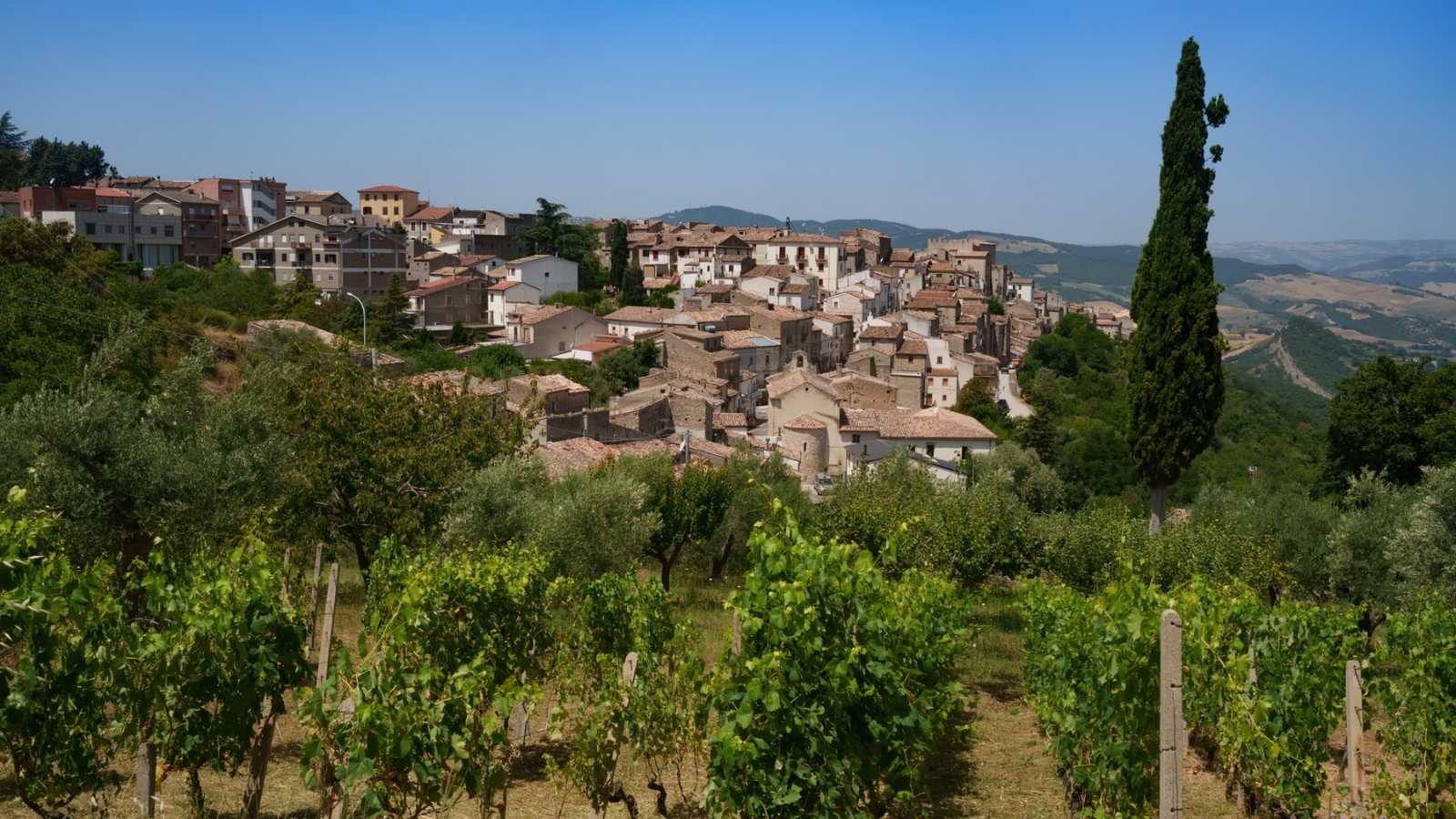
Americans have already worked through the country’s greatest hits. Rome, Florence and the Amalfi Coast have been on the list for generations, and even the insider pick has caught up with them. Puglia, the heel of the boot that spent years as the answer for travelers who wanted somewhere quieter, now carries the slow-travel buzz and new direct flights from the United States to match its rising profile. The travelers going deepest are pushing past all of it, toward three regions standard itineraries skip: the Cilento coast below Salerno, the hills around Matera in Basilicata and Molise in the far south.
Farm tourism is now a billion-dollar business
The estates they are driving toward add up to serious money. Italian farm tourism is now worth about $2.2 billion a year across more than 26,000 working estates, a record for the sector. In 2024, the most recent full year counted, those estates drew 4.7 million guests, with foreign travelers booking 62% overnight stays. A room on a working farm comes with the vineyard, the kitchen garden and the olive press attached, and it usually sits in a part of the country the tour buses never reach.

Cilento, the coast that inspired the Mediterranean diet
Two hours south of the Amalfi crush, the Cilento coast runs along the same sea with a fraction of the traffic. It is where the American physiologist Ancel Keys studied the local diet beginning in the 1950s and helped popularize the concept of the Mediterranean diet.
Near the Greek temples of Paestum, the Pagano family runs San Salvatore 1988, a winery and buffalo farm inside Cilento National Park, and puts guests up at the Savoy Hotel & Spa, a short drive away. Dinner is at Tre Olivi, the family restaurant that holds a Michelin star and cooks with much of what the farm raises and grows.
Basilicata, the wine country past Matera
Inland, the pull is Matera, the ancient cave city carved into a ravine that drew filmmakers for years and, since its turn as a European Capital of Culture in 2019, a steady stream of travelers. The wine country spreading south toward the coast is the quieter half.
Outside Bernalda, Masseria Cardillo has turned a granary built at the end of the 1700s into a 10-room relais on a working estate, pouring its own Matera Primitivo and Aglianico del Vulture alongside the local cooking. Guests sleep in the old manor and swim, with the Sassi of Matera less than an hour north and the Ionian beaches closer still. It is the kind of address that would have been much harder to find a decade ago.
Molise, the region most travelers cannot place
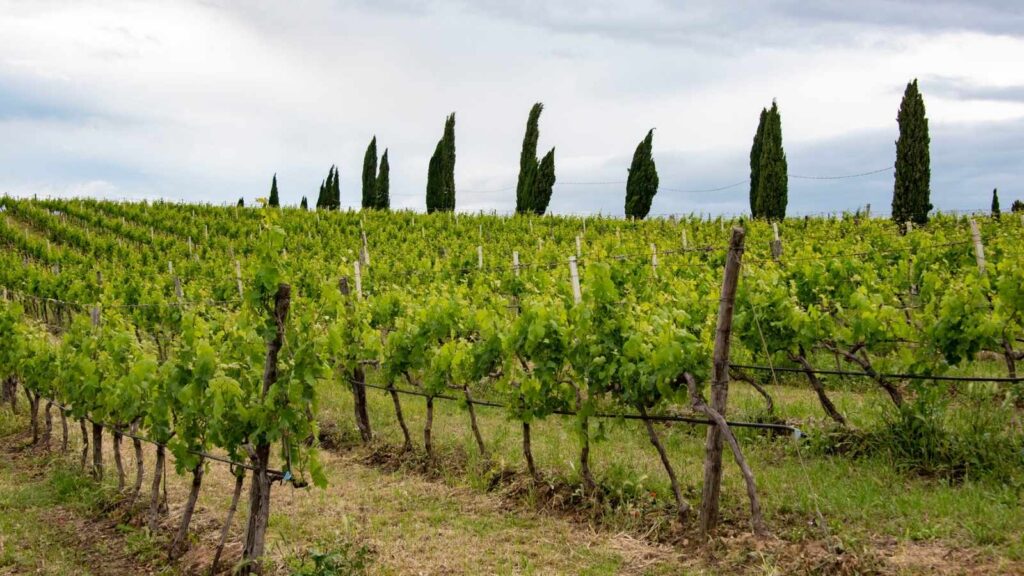
Molise barely registers on the American map of Italy, which is much of its appeal. One of the least-visited regions in the country, it has no major airport and few marquee sights, only hill towns, empty roads and a stretch of Adriatic coast most foreigners never see. Its wine is no better known.
At Campomarino, near the sea, Di Majo Norante has made wine since the 19th century and farms organically, working native grapes like tintilia, a deep red that barely leaves the region. For travelers chasing the version of Italy that predates the crowds, Molise is close to the last of it.
Where the money moves next
Americans are Italy’s third-largest overseas market and among its biggest spenders. Their arrival numbers barely grew in 2025, but they spent more than $7 billion, up 3.4%, and booked 12% more nights, a sign of longer trips rather than a bigger crowd. They are also changing when they go: one analysis of more than 10,000 luxury bookings found the share of affluent U.S. trips to Europe taken in peak summer fell from 47% in 2023 to 40% in 2025, traded for shoulder-season dates.
The redirection shows in the south, where international arrivals climbed more than 13% in Molise and nearly 12% in Basilicata in early 2026, far outpacing the country as a whole. More of that travel lands on a working farm inland than a room on the coast.
These regions are now where Puglia was a decade ago, at the point just before the roads widen, the flights multiply and the quiet that draws people starts to thin. That gap between discovery and arrival is short, and it is the whole appeal. For now, Cilento, Basilicata and Molise are still on the near side of it. Whether they stay there is the question the rest of southern Italy has already answered.
Mandy is a luxury travel, fine dining and bucket-list-adventure journalist with expert insight from 47 countries. She uncovers unforgettable experiences around the world and brings them to life through immersive storytelling that blends indulgence, culture and discovery, and shares them with a global audience as co-founder of Food Drink Life. Her articles appear on MSN and through the Associated Press wire in major U.S. outlets, including NBC, the Daily News, Boston Herald, the Chicago Sun-Times and many more.