
The drink arrives at the table, and the name on the menu makes no sense. The bartender reads it out loud, and it sounds nothing like what you tried to order. That small embarrassment is how most Americans first encounter Spain’s oldest terrace drinks, and right now those drinks are showing up on cocktail menus from coast to coast, whether people can pronounce them or not.
A recent culinary and cocktail trend forecast named kalimotxo, tinto de verano and rebujito as drinks set to grow in popularity this year, joining a broader wave of Spanish-influenced drinking culture crossing the Atlantic. That forecast tracks with what market data already shows: premium-priced aperitifs in the United States grew at an 18% compound annual growth rate between 2018 and 2023, with a 19% CAGR forecast through 2028. These Spanish drinks are slowly crossing over into bar menus, via word of mouth and through travelers who encountered them on a terrace and couldn’t stop thinking about them.
The Basque drink nobody can spell
Kalimotxo, pronounced kah-lee-MOH-cho, is as simple as a cocktail gets: red wine and Coca-Cola in equal parts over ice. According to the most widely cited origin story, the drink acquired its modern name at a 1972 festival in the Basque town of Getxo, after organizers mixed cola into wine they feared had spoiled. The name comes from Kalimero, the organizer who devised the fix, with “motxo,” the Basque word for ugly, added as a suffix. In La Rioja, where tempranillo grows along the Ebro River valley, you’ll find it poured without ceremony at outdoor festivals, a practical way to drink regional wine in the summer heat.
Stateside, kalimotxo has been building a presence. Rand Egbert, general manager of Kalimotxo bar in Austin, Texas, first encountered the drink while living in Spain’s Basque region and eventually named his bar after it. DiAnoia’s Eatery in Pittsburgh added a version after a similar encounter abroad. The craft versions trade up on ingredients: a structured Rioja tempranillo, a small-batch cola and a strip of orange peel. To order, ask for “una kalimotxo,” pronounced oo-nah kah-lee-MOH-cho.
What locals order instead of sangria
“Tinto de verano,” pronounced TEEN-toh deh veh-RAH-noh and translated as summer red wine, is what many Spanish locals order while tourists reach for sangria. The recipe is equally unfussy: red wine and lemon soda over ice in a tall glass. It was created at La Venta de Vargas, a roadside restaurant in San Fernando, in Cádiz Province, in the early 20th century, and spread across the country as a cooler alternative to heavier drinks. In La Rioja, tinto de verano is a common choice on hot afternoons because it stretches a good glass of local red without overwhelming it.
A cocktail publication described it as Spain’s answer to the spritz. For bars, the appeal is straightforward: no special equipment, technique or hard-to-find ingredients, just a decent red wine and lemon soda. To order, ask for “un tinto de verano” or simply “tinto verano.” In Spain, you would not specify the wine. The house pour is the point.
The Andalusian fair drink goes national
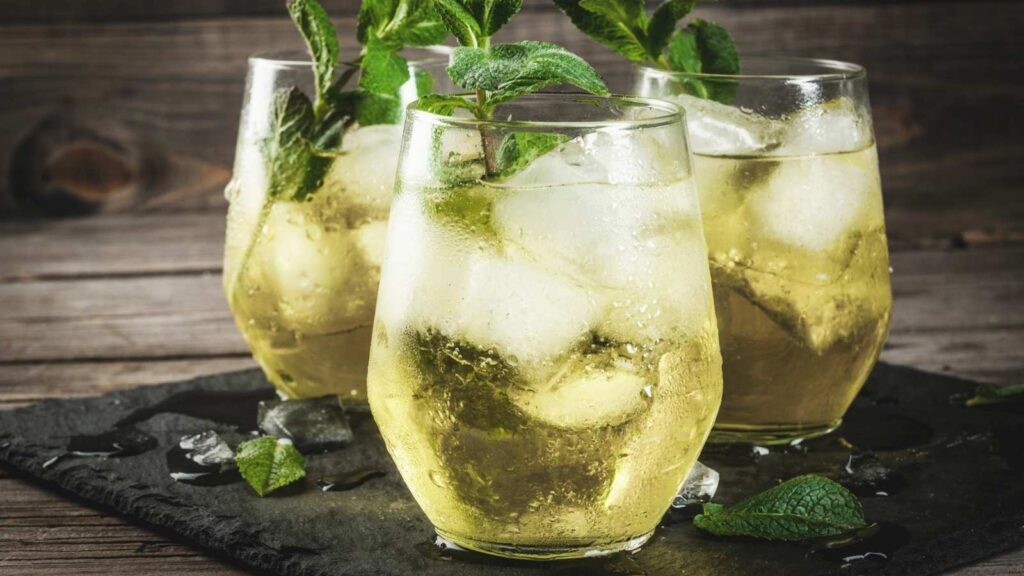
Rebujito, pronounced reh-boo-HEE-toh, is the signature drink of Andalusia’s spring fairs, poured by the pitcherful at Seville’s Feria de Abril and the Feria del Caballo in Jerez, where it carries festivalgoers through long afternoons of flamenco and horses. The recipe combines fino or manzanilla sherry with lemon-lime soda and fresh mint over ice. It is dry, light in alcohol and built for hot weather.
The drink is beginning to appear on cocktail menus across the United States. The sherry base gives it a savory, nutty character that sets it apart from an Aperol spritz and makes it particularly food friendly. Mario Muñoz González, a portfolio manager at Lustau, put it plainly: “The Rebujito is pure energy.” To order, ask for “un rebujito” and ask whether the bar makes it with fino or manzanilla. Both are correct; the dryness is what makes it work.
Cava is already on your list
Cava, pronounced KAH-vah, is Spain’s traditional-method sparkling wine, made using the same production process as Champagne but produced primarily in Catalonia’s Penedès region at a fraction of the cost. Most Americans have seen it on a wine list without knowing much about it. That is changing. Premium organic Cava roughly tripled in U.S. volume between 2020 and 2025, with much of the growth concentrated in the Guarda Superior tier. These longer-aged, estate-grown bottles typically sit above prosecco in price but below Champagne.
On cocktail menus, Cava appears as the base for Agua de Valencia, a Valencian classic that combines Cava with fresh orange juice, gin and vodka. It is worth knowing the name before you encounter it.
Finding them without a plane ticket
More than a third of younger American drinkers have adjusted their routines toward earlier, lighter drinking occasions, the same afternoon pattern that made spritz culture stick. Spanish drinks fit this moment: low ABV, food friendly and inexpensive to produce, carrying the kind of regional specificity that American bar programs are actively seeking.
The most reliable starting points are Spanish restaurants and tapas bars in major cities. New York, Miami, Chicago and Los Angeles all have established Spanish dining scenes where these drinks appear without explanation. Kimpton hotel bar programs, flagged in the 2026 trend forecast, are another entry point for travelers who want a guided introduction. All four drinks are simple enough to make at home: the right bottle, the right mixer and a glass with ice.
These drinks predate the trend cycle
None of these drinks was invented for export. Kalimotxo was born out of festival improvisation, tinto de verano was a local’s workaround, rebujito is what you drink at a fair in Andalusia and Cava was made for Catalan celebrations long before the global sparkling wine market existed. They arrived on U.S. menus because enough travelers came home from Spain unable to stop thinking about the drink they had at a terrace bar on a Tuesday afternoon.
Jennifer Allen is a retired professional chef and long-time writer. Her work appears in dozens of publications, including MSN, Yahoo, The Washington Post and The Seattle Times. These days, she’s busy in the kitchen developing recipes and traveling the world, and you can find all her best creations at Cook What You Love.