
A stretch of grass in Verulamium Park gives little indication that one of Roman Britain’s largest cities once stood beneath it. Hold up a phone, however, and the outlines begin to return. A Roman townhouse rises on the screen, a gatehouse appears along an ancient route to London and visitors can step inside reconstructed buildings, collect coins and even design a mosaic.
The experience is part of a new augmented-reality project from St Albans Museums designed to help visitors picture the city of Verulamium that once occupied the park. Farhana Begum, head of St Albans Museums, says the goal is simple: “We really want people to be able to explore the park and enjoy the nature around them, but also understand that they’re standing on history.” The app is expected to launch this fall.
In about the time it takes to cross London by Tube, a fast train from St Pancras can carry travelers to St Albans. Roman ruins, a medieval cathedral, centuries-old coaching inns and the beginnings of golf’s Ryder Cup are packed into a city compact enough to explore largely on foot.
A Roman city beneath the grass
The first surprise inside Verulamium Museum is how much color the Romans left behind. Roman interiors were far from the pale stone spaces the surviving ruins might suggest. Fragments of painted plaster still hold traces of deep reds and other pigments. Intricate mosaics hint at rooms that once felt decorative, expensive and very much lived in.
“When we think about antiquity, we think about these white alabasters,” says Begum. “Actually, in the homes of people, you would have painted plaster.”
The galleries only hint at the scale of what has been uncovered here, from jewelry and coins to oil lamps, household objects and tools connected to trade and industry. “We’ve got a massive collection here, which universities come down to study,” remarks Kate Klevit, marketing officer at St Albans Museums.
Outside the museum, an 1,800-year-old mosaic still rests above a hypocaust, where hot air once moved through channels beneath the floor of a substantial townhouse. “We have underfloor heating now today, and the Romans were doing it 2000 years ago,” Begum says.
Much of Verulamium remains hidden beneath lawns, paths and playing fields. Visitors cross ground once occupied by villas, temples and gateways, often without realizing what sits below. Sections of the old city wall still break through the landscape, but elsewhere the Roman city has almost disappeared from view.
“When you’re in the park, you really don’t know what was there. It’s really hard to imagine,” Begum says.
The new AR experience fills in the parts of the city that have vanished from view. Elsewhere in the park, the app reconstructs the London Gate and a temple, letting visitors move through spaces that disappeared centuries ago.
Along one stretch of Verulamium Park, the modern footpath follows the course of an ancient Roman road. Walkers, commuters and families still use it every day as they cross the park.
“People have been walking this path for thousands of years,” Klevit says. It is an easy detail to miss, and one of the clearest reminders that much of Roman St Albans is still part of ordinary daily life.
From Roman brick to royal connections
St Albans Cathedral comes into view during the climb from Verulamium Park into the city center, well before visitors reach its doors. Its massive Norman tower dominates the skyline, built largely from Roman bricks hauled uphill from the abandoned city below.
The cathedral honors Alban, Britain’s first saint and martyr, and its almost 280-foot nave is the longest in England. In 2025, it received a Tripadvisor Travelers’ Choice Award.
The cathedral grounds also carry a more recent royal tie. Princess Diana planted a tree here in 1989 when she came to dedicate the cathedral’s Rose Window. The Spencer family’s association with St Albans traces back much further: Georgiana, Countess Spencer, an ancestor of Diana, lived in the city and planted the great cedar in 1803 that still stands in Sumpter Yard beside the cathedral.
Inside, the Rose Window is another reminder of Diana’s visit. She unveiled its colorful design at the dedication, and the glass still casts red and blue light over the cathedral’s stonework.
The Clock Tower preserves another piece of the city’s medieval power struggle. Completed around 1405, it gave townspeople the ability to keep their own time and sound their own alarms rather than relying on the Abbey. Ninety-three narrow steps lead to the top, where the cathedral, rooftops and surrounding countryside spread out below.
Professor of Anthropology and History Tim Boatswain has been a St Albans resident for more than three decades. He claims the old coaching route from London had a lasting influence on the city center.
“During the time of coaches, before motor cars, you could get out of London, and this would be your first stop,” Boatswain says. “So it has an enormous number of inns, which now, of course, are public houses. And it was said, at one point, there was one for every day of the year. I’ve never been able to prove that.”
The man behind the Ryder Cup
Samuel Ryder’s name is inseparable from one of golf’s most famous competitions. His fortune, however, began with packets of seeds. A mail-order business selling inexpensive seed packets that could be shipped quickly by rail made him wealthy, and evidence of that horticultural past still survives across St Albans.
St Albans Museum + Gallery has explored that legacy through its gardening collection, including historic seed packets and a silver gardening trophy staff jokingly refer to as “the other Ryder Cup.” Ryder’s former Seed Exhibition Hall is now home to MOKA, a dramatic dining room beneath a soaring glass roof.
Oversized red pendant fixtures hang above brass accents, trailing greenery and jewel-toned banquettes, giving the historic space a bold contemporary look. The menu focuses on modern Indian cooking, and on some evenings a magician moves from table to table between courses.
Golf entered the picture at Verulam Golf Club, which Ryder joined in 1909 and later captained three times. His involvement in the game eventually led to the creation of the Ryder Cup, first contested between teams from the United States and Great Britain in 1927. His portrait hangs in the clubhouse among memorabilia tied to the competition.
“Ryder’s influence is still strong today within the club and St. Albans,” says Paul Keen, general manager of Verulam Golf Club. “We have regular visitors who are keen to know the history of Ryder and his connections to the club and city.”
Visitors learn about Ryder’s role in the creation of the competition and the meeting held in the clubhouse to commission the trophy. The original Deed of Trust is kept in the club’s Samuel Ryder Suite.
Ryder served as club captain three times. Verulam keeps that history alive through its annual Samuel Ryder Trophy, a scratch event played in a Ryder Cup-style format.
His former business headquarters has another life today as The Samuel Ryder Hotel St. Albans, part of Hilton’s Tapestry Collection.
“The history of Samuel Ryder is very important to us here at the hotel,” says Peter Eastoe, area commercial manager. “Guests can learn more about Samuel Ryder by staying in the Ryder Suite — once his personal office — as well as by exploring throughout the hotel where we have more information available, or by speaking to any of our team.”
The original mahogany fireplace still bears the initials “SR” carved into the design. Other original features include stained-glass skylights and the first-floor dome.
If you go
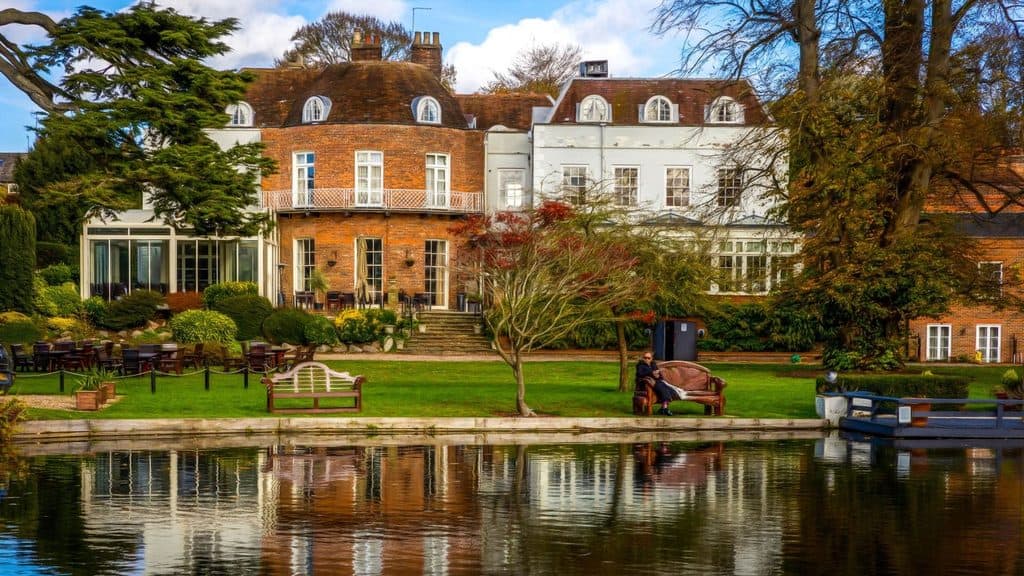
St Michael’s Manor Hotel occupies a historic property on Fishpool Street and has 5 acres of gardens surrounding a private lake. The Samuel Ryder Hotel sits in the heart of the city center, steps from St Albans Cathedral and within easy walking distance of shops, restaurants and many of the city’s historic sites.
Little Marrakech serves Moroccan dishes in a colorful, intimate setting. Chicken George in The Maltings Shopping Centre has more of a sports-bar feel, with big screens and a lively, casual setup. MOKA adds a more polished option for contemporary Indian cooking.
Away from the bylines, Casandra is an award-winning luxury travel journalist, a hockey mom, golfer and sports-travel obsessive raising two boys amid hockey bags, road trips and schedules that require military-level logistics. She’s happiest chasing a better swing, bouncing between a sauna and cold plunge or plotting the next trip because an empty passport page feels like unfinished business.