
Table salt works fine for some recipes, but relying on it for everything limits what’s possible in the kitchen. Different salts work better at different stages of cooking, and understanding when to use each type makes a noticeable difference in how food tastes and feels in the mouth.
This post may contain affiliate link(s). As an Amazon Associate, I earn from qualifying purchases. See Disclosures.
Table salt isn’t always the answer
Table salt has its place, particularly in baking, where precise measurements matter. The fine, uniform grains measure consistently and distribute evenly in doughs and batters. But those same qualities that make it good for baking create limitations for other cooking tasks.
The fine grains make it easy to oversalt. A pinch of table salt contains more salt by volume than a pinch of larger-grained salts, which means it’s harder to control seasoning when adding by feel rather than measuring. Most home cooks season by pinching and sprinkling rather than measuring, making table salt’s fine texture a disadvantage.
Anti-caking additives keep table salt flowing freely but can leave a slight chemical aftertaste that some people detect, particularly when used as a finishing salt on delicate foods. The addition of iodine, which prevents deficiency, creates a metallic flavor that becomes more noticeable in certain applications.
Table salt dissolves almost instantly, which sounds good but limits versatility. Sometimes, slower dissolution is better as it allows for seasoning adjustments and creates different textural experiences.
Kosher salt for everyday cooking
Kosher salt has become the default choice in professional kitchens and many home kitchens for good reason. The larger, irregular flakes are easier to pick up and control when seasoning by hand. The coarse texture gives better feedback as it’s possible to see and feel how much salt is being added.
The crystal size affects how kosher salt behaves in cooking. It dissolves more slowly than table salt, giving more control over seasoning. The larger surface area means it sticks well to food surfaces, making it particularly good for seasoning meat before cooking.
Two main brands dominate the market: Morton and Diamond Crystal. I keep Moreton in my kitchen because I use much less of it to achieve the same level of saltiness as Diamond, though many cooks prefer Diamond’s lighter crystals. They’re not interchangeable by volume because their crystal structures differ significantly. Morton has denser, more compact crystals, while Diamond Crystal has lighter, flakier crystals. A teaspoon of Morton contains nearly twice as much salt by weight as a teaspoon of Diamond Crystal.
The difference matters when following recipes. If a recipe calls for kosher salt without specifying the brand, it’s usually written for Diamond Crystal since many professional kitchens use it. Using Morton without adjusting amounts will make dishes too salty.
Kosher salt excels at seasoning meats like grilled steak or a pork roast, as the large crystals draw out moisture and create a better crust. It dissolves easily in large volumes of water for boiling pasta or seasoning brines and pickling liquids. It’s also an excellent general salt as it is easy to control and adjust for everyday cooking.

Flaky salt for texture and crunch
Flaky salts like Maldon have become increasingly popular for good reason. The pyramid-shaped crystals have a satisfying crunch that doesn’t immediately dissolve on contact with food. This textural element adds another dimension beyond just saltiness.
These salts work best when added at the end of cooking or just before serving. The delicate flakes would dissolve and lose their texture if added during cooking. The point is experiencing both the flavor and the physical sensation of the salt crystals.
The price difference compared to kosher salt is significant, as flaky salts cost 5-10 times as much per ounce. This makes them impractical for general cooking, but definitely worth it for finishing where their unique properties shine. I was skeptical about spending more on Maldon until I sprinkled it on chocolate chip cookies fresh from the oven. That moment of sweet-salty crunch sold me on keeping a tin around.
Flaky salt works particularly well on double chocolate chip cookies, where the sweet-salty contrast gets a boost from its light crunch. It also shines on roasted vegetables, adding brightness and texture to caramelized surfaces, and on grilled or roasted meats, where it delivers a final layer of flavor and subtle crunch. Sprinkle it over a fresh tomato salad to enhance its natural sweetness while adding texture. It is equally at home on caramel or chocolate desserts, creating that classic sweet-salty balance with a delicate crisp finish.
Fine sea salt for baking and precise measuring
Fine-grain sea salt splits the difference between table salt and kosher salt. It measures consistently like table salt but lacks the chemical additives and iodine that can affect flavor. The fine texture distributes evenly through batters and doughs, making it reliable for baking.
Sea salt’s mineral content, with trace amounts of magnesium, calcium and other elements from seawater, adds subtle complexity that some cooks prefer over the pure sodium chloride of table salt. The difference is subtle, and not everyone detects it, but it exists.
The fine-grain size of sea salt makes it ideal for applications where even distribution is important. It works especially well in baking, where it measures accurately and disperses consistently throughout the batter or dough. It blends smoothly into spice mixes and dry rubs, adhering well to meat surfaces and spreading flavor evenly. It is also a reliable choice for recipes that require precise measurements, as it behaves predictably in carefully balanced ratios.
Fine sea salt costs more than table salt but less than specialty finishing salts. It is a reasonable middle-ground option for cooks who want to avoid additives but don’t need the specific properties of flaky or specialty salts.
Finishing salts for the final touch
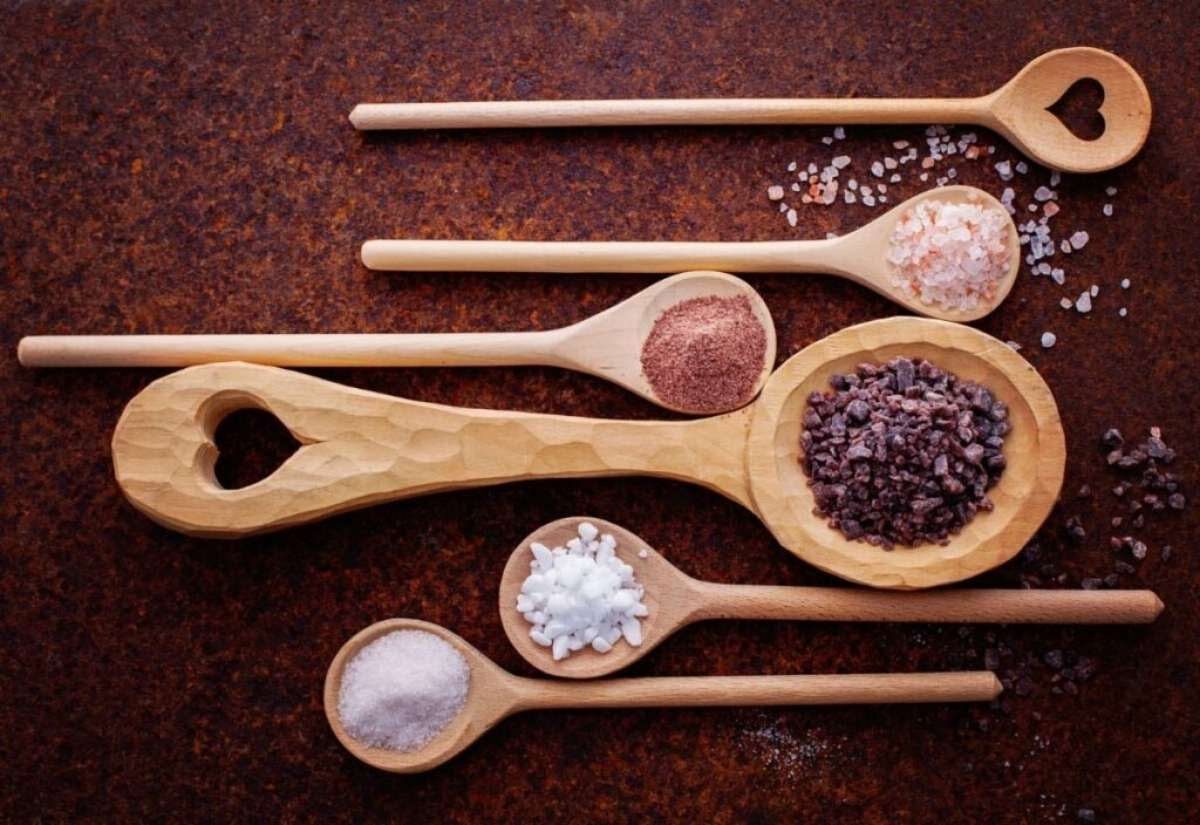
Finishing salts encompass a wide category, including smoked salts, flavored salts like truffle or herb infused and colored salts like pink Himalayan or black Hawaiian. These are about adding specific flavor notes or visual appeal in the final moments before serving.
The key to finishing salts is restraint. They’re meant to add a subtle accent, not dominate the dish. A light sprinkle goes further than expected because these salts are typically used where their flavor won’t be diluted by cooking.
Smoked salt adds depth to grilled meats or roasted vegetables without actual smoking. Flavored salts work when the added flavor complements the dish, like using truffle salt on pasta or lemon salt on fish. Colored salts primarily add visual interest, though some have slightly different mineral profiles that subtly affect flavor.
Finishing salts make sense when: the base dish is simple enough that an accent flavor adds interest, visual presentation matters, the specific flavor profile complements the dish and they’re used sparingly as a true finishing touch rather than primary seasoning. Finishing salts are excellent for seasoning homemade popcorn.
They’re unnecessary when: the dish already has complex flavors, the cost outweighs the subtle benefit, regular salt would accomplish the same goal or the added flavor doesn’t actually complement the dish.
Layering salt throughout cooking
The most effective layering approach uses different salts at different stages rather than relying on one type for everything. This concept of layering builds a more complex, well-rounded flavor.
Season early with kosher salt
Salt the meat 30-60 minutes before cooking to allow it to penetrate and season throughout. Salt the pasta water generously so the pasta absorbs flavor as it cooks, and season vegetables before roasting to draw out moisture and encourage browning.
Adjust during cooking
Taste and add more salt as needed. Understand that flavors concentrate as liquids reduce. Salt timing affects how it integrates with early salting, allowing penetration, while late salting provides surface seasoning.
Finish with flaky or specialty salt
Add a final pinch of flaky salt to provide textural interest and a bright pop of flavor. This last-second addition creates a different experience than salt that’s been fully dissolved into the dish.

A practical example
Roasted chicken gets seasoned inside and out with kosher salt an hour before cooking to allow the salt to penetrate the meat. The roasted vegetables on the side get tossed with kosher salt before going into the oven, which draws out moisture and promotes browning. Just before serving, a light sprinkle of flaky salt on both the chicken and vegetables adds final brightness and crunch.
Make the switch
The upgrade from table salt isn’t about collecting expensive specialty products. It’s about understanding how different salts behave and using that knowledge to improve cooking results. Kosher salt for cooking and flaky salt for finishing handle the vast majority of home cooking needs while providing noticeably better control and results than table salt alone.
Renee N Gardner is the creator behind Renee Nicole’s Kitchen, a recipe blog based on seasonal ingredients, dedicated to helping home cooks build their kitchen confidence to become home chefs. When Renee isn’t writing, developing recipes or photographing food, you’ll find her in the garden, traveling or enjoying the outdoors with her husband, son and two goldendoodles, Tahoe and Baxter.