
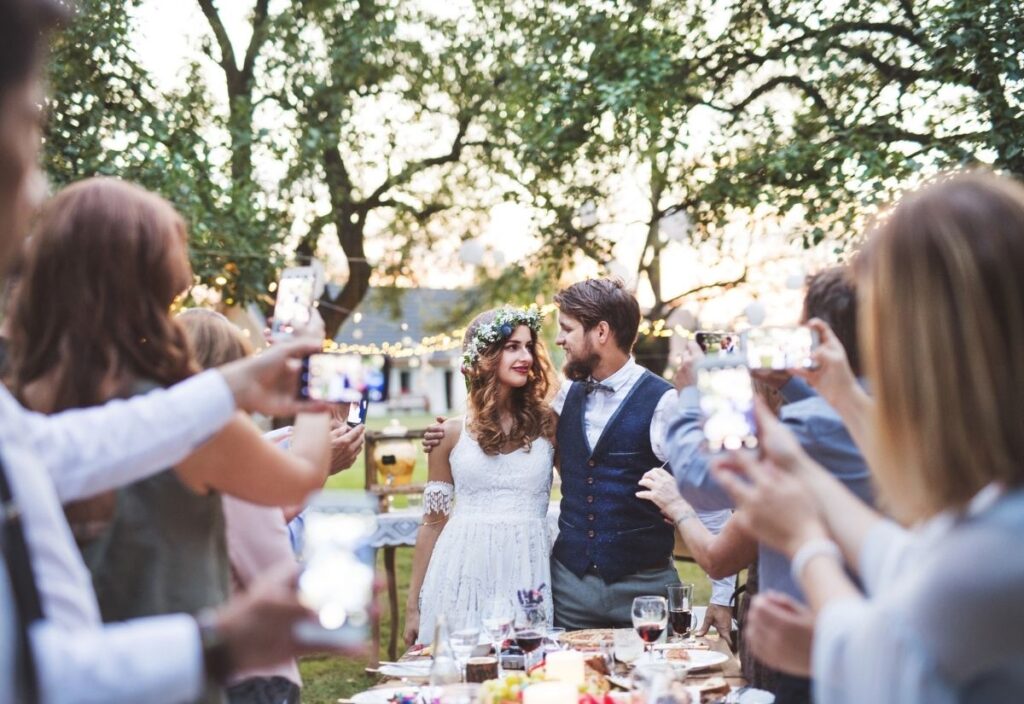
Wedding guest decorum erodes in the age of social media oversharing as phone screens and livestreams disrupt precious moments. Phones have become the unofficial plus-ones, often pulling focus from the couple at the altar. With 92% of Gen Z couples calling social media essential to the planning process, weddings are shifting into interactive events shaped as much by digital content as in-person celebration.
This post may contain affiliate link(s). As an Amazon Associate, I earn from qualifying purchases. See Disclosures.
Digital etiquette is becoming just as important as seating charts and timelines in wedding preparations. As screens continue to shape how guests show up, more planners are helping couples define boundaries before the big day even begins.
Screen time steals attention
Weddings are becoming harder to recognize as phone screens light up every corner of the room. With the average American checking their phone 205 times a day, that same reflex shows up during ceremonies. Guests scroll during vows, shoot videos mid-processional and snap selfies before the couple gets a chance to post anything official.
Some crowd the aisle, blocking photographers in the rush to get their own shots. Others livestream without asking. Couples try to set boundaries with unplugged signage, but many guests ignore it. As a result, planned moments lose their meaning while uninvited content circulates online.
Unplugged signs are often ignored
Flash photos and aisle interference may seem minor, but they often disrupt key moments that professionals work hard to capture. Photographers are frequently forced to reposition or pause when guests lean in or block shots with their phones. Some couples have had to redo first looks or halt aisle walks just to avoid someone’s elbow or selfie stick.
While unplugged signs try to set the tone, many guests either overlook them or assume the rule doesn’t apply to them. The urge to post quickly often overrides courtesy. As a result, couples find incomplete or awkward photos online before they’ve had a chance to share the ones they chose themselves.
Weddings meet influencer culture
Guest outfits have become part of the show, and sometimes a distraction. Viral fashion trends now compete with wedding themes, as guests arrive in attention-grabbing pieces like cutouts and white dresses that risk pulling focus from the couple.
At the same time, influencer culture has moved from the guest list into the planning process itself. Compared with 2023, 48% more couples marrying in 2024 say they’ve modeled their events after influencer weddings. As a result, weddings feel less like personal milestones and more like curated productions. Some guests now treat ceremonies as creative sets, filming outfit reveals and transition videos without asking. This shift blurs roles and pulls energy away from the moment, often at the couple’s expense.
The impact on couples and vendors
Wedding planners now talk about digital behavior as part of standard consultations, helping couples set expectations early. Some recommend scheduling windows for guest photos or hiring a content creator to handle social coverage, keeping guests focused on the moment instead of the feed. A growing share of couples now choose phone-free celebrations, with 75% opting for unplugged weddings to protect the experience.
Vendors are adapting in their own ways. Photographers navigate crowded aisles as guests bring camera gear of their own. Florists occasionally find their arrangements tweaked by content creators trying to style a perfect shot. DJs have reported being interrupted mid-set by guests attempting to film mashups or choreographed dances.
As this behavior becomes more common, the wedding industry is adjusting how it prepares and responds. For couples, it means planning not just a ceremony, but a strategy to manage content expectations in real time.
How to be a respectful guest in 2025
Being a good wedding guest starts with respecting the couple’s wishes. If they request an unplugged ceremony, take it seriously. Put the phone away and experience the moment without trying to document it. If you plan to film or post anything during the day, ask for permission first. A casual video or photo might not align with what the couple wants shared publicly.
Etiquette also extends to how you show up. Follow the dress code and avoid outfits that could pull attention away from the couple. Weddings are not an opportunity to build content for your feed. They are personal events meant to be experienced in real time. Being present matters more than anything you could post online.
The future of wedding etiquette
As digital tools become a fixture in wedding planning, etiquette is evolving alongside them. Couples are exploring new ways to manage guest behavior, such as using apps to share rules or adding consent checkboxes to RSVPs. Some now carve out specific zones for taking photos, allowing guests to post without disrupting private moments elsewhere. These shifts point to a growing need for balance, where structure and boundaries help preserve the meaning of the day while still leaving room for modern sharing.
Modern manners still matter
Weddings are changing, but the need for respect remains. As digital sharing becomes part of how guests engage, etiquette must evolve alongside it. The issue is not the technology but how it’s used. When celebrations shift toward performance for the camera, the meaning behind the moment often fades. Guests must learn to read the room, knowing when to record and when to be fully present.
Mandy writes about food, home and the kind of everyday life that feels anything but ordinary. She’s travelled extensively, and those experiences shaped everything, from comforting meals to little lifestyle upgrades that make a big difference. You’ll find all her favorite recipes over at Hungry Cooks Kitchen.