
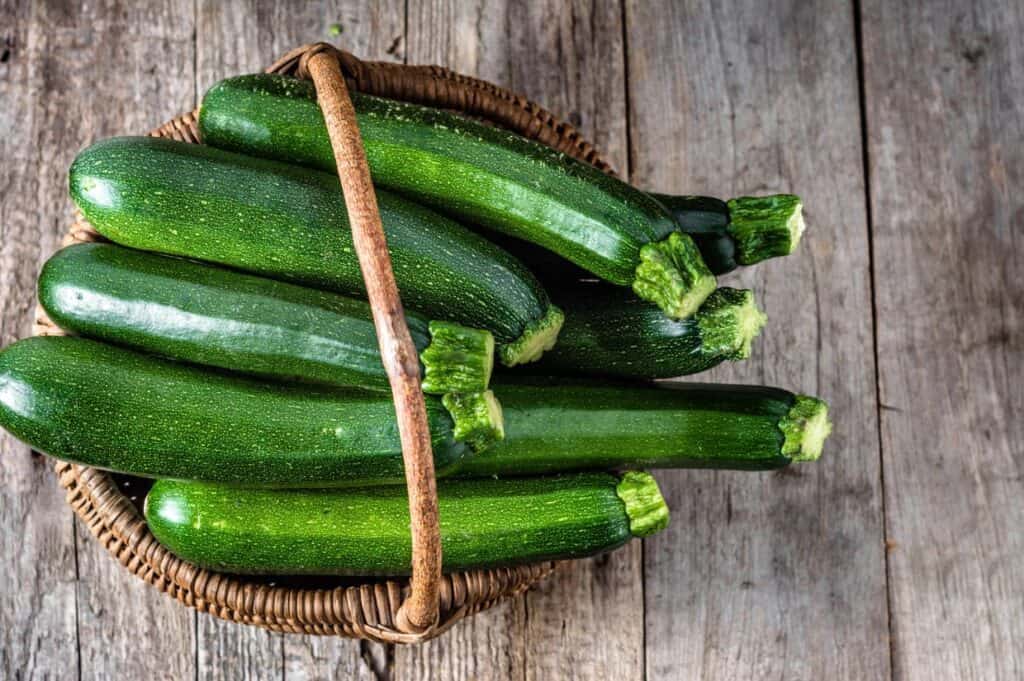
Zucchini may look like a vegetable, but it’s botanically a fruit, which is just one of the many weird food facts you might not know. From bananas being true berries to ketchup’s fish-based origins, the truths behind our favorite ingredients often defy what we think we know. These surprises emerge when scientific definitions collide with cultural traditions and everyday habits, revealing just how fluid our understanding of food truly is.
This post may contain affiliate link(s). As an Amazon Associate, I earn from qualifying purchases. See Disclosures.
Because these stories span everything from science to culture, they challenge the labels we take for granted, highlight how food knowledge evolves and invite us to rethink the familiar. Here’s why those odd little facts aren’t just fun trivia but windows into how food, science and culture constantly evolve.
Zucchini is a fruit, and so are cucumbers
A fruit is technically an edible plant part made from a flower that ripens from a plant’s ovary, which is exactly how zucchini grows. It develops from the zucchini plant’s flower and contains seeds, making it a fruit by botanical standards, even if cooks treat it as a vegetable in the kitchen. This same logic applies to cucumbers, tomatoes and bell peppers, blurring the line between what we eat and what science says it is.
The gap between botanical facts and culinary customs has existed for centuries. One of the clearest examples occurred in 1893, when the U.S. Supreme Court officially classified tomatoes as vegetables, not because of how they grow, but based on how people typically use them in meals. That legal decision highlighted how culture and cooking habits often outweigh science in shaping what we call food.
Bananas are technically berries
Here’s a fun twist: bananas are berries. According to botanical definitions, a berry must develop from a single ovary and contain three fleshy layers: the exocarp, mesocarp and endocarp. Bananas meet all those requirements, even if their seeds are so small that most people barely notice them.
The historical confusion around berries stems from language evolving faster than science. People had already been calling small, juicy fruits berries for thousands of years before botanists established a clear scientific definition. In Live Science, Judy Jernstedt, a professor of plant sciences at UC Davis, explains that these cultural labels stuck even as the botanical community refined the rules.
Now here’s where it gets even more interesting: strawberries, raspberries and blackberries don’t qualify as true berries at all. Since they form from multiple ovaries of a single flower, botanists classify them as aggregate fruits. So next time you blend up a berry smoothie, remember that it’s bananas, not berries, that are playing by the book.
Cashews grow from apples, and peanuts aren’t nuts
Cashews don’t come from hard-shelled trees like many people assume; instead, they grow from the base of a vibrant, tropical fruit called a cashew apple. The fruit itself is edible, but extremely delicate and rarely sold outside its growing region. What we call a cashew nut is a seed, and before it’s safe to eat, it has to be roasted to eliminate toxic oils that are, surprisingly, the same compound found in poison ivy.
Peanuts add another twist to the logic of nuts. While many group them with tree nuts, peanuts belong to the legume family, having more in common with lentils and chickpeas than almonds. They grow underground in pods that split open when mature, which sets them apart from true nuts such as hazelnuts and chestnuts, which remain sealed.
Honey never spoils
Honey has one of the longest shelf lives of any food because of its remarkable resistance to spoilage. Its low water content and high sugar concentration make it an unfriendly environment for bacteria, which explains why archaeologists have found 3,000-year-old honey in Egyptian tombs that’s still perfectly edible.
Even more fascinating, bees add an enzyme to the nectar during honey production that produces hydrogen peroxide. This, along with honey’s natural acidity and dense texture, blocks microbial growth. When stored in a sealed container, honey stays fresh and edible for years without spoiling, making it practically immortal.
Ketchup used to be made from fish
Before ketchup became the sweet, tomato-based condiment we all recognize, it had a much fishier past. The earliest versions came from Southeast Asia, where a tangy, umami-rich sauce called ke-tsiap was made by fermenting anchovies with spices. It wasn’t tomato-based at all, but it laid the groundwork for the ketchup we know today.
As British traders encountered this savory sauce, they adapted the recipe using ingredients more readily available back home. Over time, those changes led to the addition of mushrooms, walnuts and eventually tomatoes, which by the mid-1800s, American cooks had embraced as the standard version.
Carrots weren’t always orange
When you picture a carrot, you probably see something orange and crisp. But that hasn’t always been the case. The earliest cultivated carrots in Central Asia were purple, yellow or white, and they looked quite different from what lines grocery shelves today. The familiar orange variety is a relatively recent development, believed to have originated in the Netherlands during the 17th century.
One popular theory credits Dutch farmers with intentionally breeding orange carrots as a tribute to the ruling House of Orange, a symbol of national pride. Whether the link was political or coincidental, this vibrant version quickly caught on and spread across Europe, gaining popularity in farmers’ markets and heirloom seed catalogs.
Apples float, but pears sink
Try this experiment: toss an apple into a bowl of water, and it’ll float, thanks to the air pockets that make up about 25% of its volume. That built-in buoyancy is why apples bob instead of sink. Pears, in contrast, are denser and lack those air spaces, so they sink right to the bottom.
But there’s more to it than a fun science demo. These structural differences influence how each fruit behaves in the kitchen, from storage to cooking. Apples retain their firmness and work well for pies or crisps, while pears break down faster and shine in jams, sauces or poached desserts.
Cheese rinds can be edible and flavorful
It’s easy to peel away the rind from soft cheeses without a second thought, but many of those rinds are edible and even enjoyable, depending on your taste. Cheeses like Brie, Camembert and washed-rind varieties develop natural coatings through the aging process, which adds complexity to their flavor and texture. In St. Louis Magazine, Simon Lehrer of Parker’s Table, one of the most experienced and respected cheesemongers in town, says, “Eat it if you like the flavor; skip it if you don’t.” Despite this, he admits he enjoys brie rinds but wouldn’t necessarily go back for the crustier bits.
The process behind rind formation involves molds, yeasts or bacteria applied during aging, which create that protective exterior and distinctive finish. Not all rinds are created equal, though, and Lehrer points out that wax-bound cheeses like Gouda technically have edible rinds that aren’t especially appealing. Manchego is often considered edible, too, but its egg-wash coating can attract bacteria, so it’s best to be selective based on how the cheese was made.
Food facts that keep you thinking
Even the most familiar ingredients can surprise you once you dig into the science and stories behind them. From zucchini’s unexpected identity as a fruit to honey’s nearly eternal shelf life, the foods we eat carry more nuance than we might think. For curious eaters, those details aren’t just trivia; they’re a reason to look twice at the grocery list, the menu or even the next bite.
Jennifer Allen is a retired professional chef and long-time writer. Her work appears in dozens of publications, including MSN, Yahoo, The Washington Post and The Seattle Times. These days, she’s busy in the kitchen developing recipes and traveling the world, and you can find all her best creations at Cook What You Love.