
Wet brining a Thanksgiving turkey sounds simple until the container big enough for the whole bird has to fit in the refrigerator. A dry brine rubs salt on the turkey and skips the liquid, which frees up that room, though it takes longer and leaves the skin browner and crisper. Both methods leave the meat moist and flavorful, so the question is whether a cook has more refrigerator room or more patience.
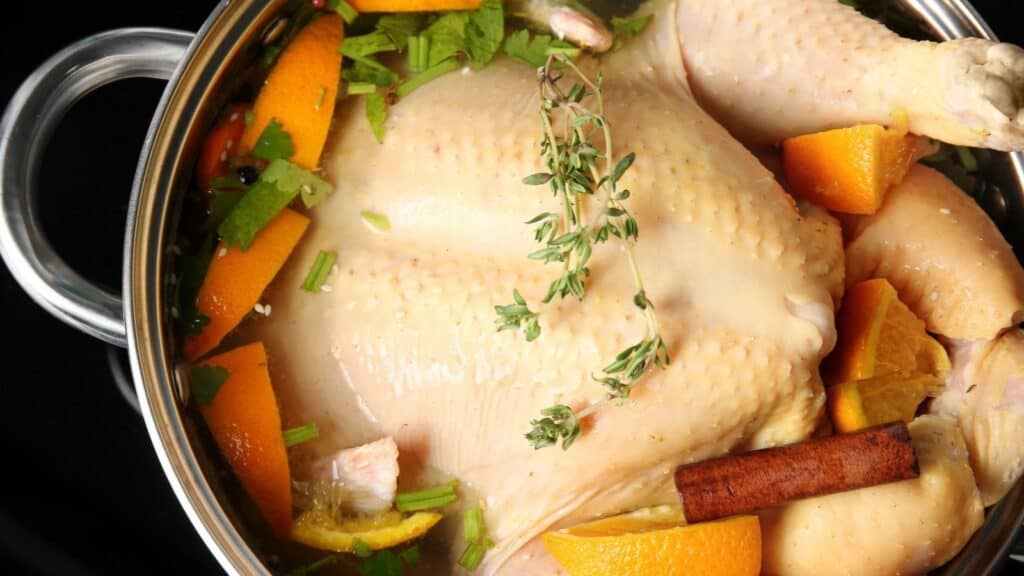
A brine is a strong solution of salt and water, and a wet brine sometimes adds sugar or honey for flavor. A dry brine seasons the turkey with salt and spices alone, without the water or the sweetener. Either brine changes how the meat tastes, but federal food safety guidance on thawing, rinsing and cooking applies to a brined turkey the same way it applies to any other.
Thawing sets the schedule for every Thanksgiving turkey, brined or not, and the latest food safety reminders put numbers on it. A frozen bird needs about 24 hours in the refrigerator for every 4 to 5 pounds, and the guidance rules out thawing on the counter. Applying that federal ratio to a 16-pound turkey works out to roughly three to four days in the refrigerator before a brine can start. A frozen turkey also needs to thaw before brining, which makes the thaw window the first deadline on the calendar.
A wet brine works faster but needs room
A wet brine infuses flavor and moisture into the turkey more quickly than a dry one, with a 16- to 20-pound bird soaking for 12 to 24 hours. The tradeoff is volume, because that same bird needs roughly 2 gallons of brine and a 12- to 14-pound bird needs about 1 gallon. Food safety guidance calls for a food-grade container that keeps the turkey fully submerged and cold, either in the refrigerator or in a cooler with ice. The brine itself also has to be cold before use, which leaves time to chill it ahead of the soak. A spatchcock turkey recipe puts the wet method to work, soaking the bird in an apple cider and salt brine before it roasts. All of that liquid, plus the turkey, takes up far more room than a dry brine does.
A dry brine trades time for space and crisper skin
A dry brine takes longer than a wet one, but it needs less refrigerator space because the turkey sits in a pan under plastic wrap instead of in a container of liquid. The salt first draws moisture out of the meat, and that moisture then redistributes through the bird, which is how a dry brine seasons without any added liquid. Wet-brined turkeys tend to yield slightly less brown skin because the skin holds more water, while a dry brine gives it a browner, crisper finish. Brining is only one way to season a bird before cooking, and turkey recipes cover the rest, from roasted and smoked turkey breast to soups and casseroles built on leftovers.
The refrigerator clock limits when a brine can start
Once a turkey has thawed, it stays safe in the refrigerator for only one to two days. A dry brine runs 24 to 48 hours in the refrigerator, which covers that entire span. Planning the thaw, the brine and the roasting date together keeps the bird inside that window.
Rinsing a brined turkey raises a food safety question
A wet-brined turkey comes out of a salty bath, which leads some cooks to rinse it before roasting. Federal guidance calls washing raw poultry risky and not necessary, and it notes that washing, rinsing or soaking a meat product removes very little salt. The same guidance treats soaking meat in salt water as a personal preference with no food safety purpose. Washing a raw turkey can also cause cross-contamination, so cooks who rinse anyway need to clean and then sanitize the sink afterward. A dry brine ends differently, because the method calls for wiping off any remaining salt and patting the turkey dry before roasting, a cooking step and not a safety rule.
Some store-bought turkeys already contain added solution
Labels such as self-basting or marinated mean the plant added a solution to the turkey during processing, and that solution can include water, broth, spices and other approved ingredients. Added solution can reach 3% by weight in bone-in poultry and 8% in boneless poultry under federal guidance. Those labels explain why a store-bought turkey can taste seasoned before a cook adds anything. They also give a home cook a reason to read the package before choosing a brine, since a bird with added solution starts out with some of its flavor already in place.
A food thermometer gives the final safety check
Safety depends on a food thermometer reading 165 degrees Fahrenheit in the thickest part of the breast, the innermost part of the wing and the innermost part of the thigh. Federal guidance calls the thermometer the only sure check, and it applies the same way to brined and unbrined birds. That leaves the brine itself as a matter of taste and of the room and time a kitchen has to spare.
Jennifer Allen is a retired professional chef and long-time writer. Her work appears in dozens of publications, including MSN, Yahoo, The Washington Post and The Seattle Times. These days, she’s busy in the kitchen developing recipes and traveling the world, and you can find all her best creations at Cook What You Love.