
Food costs jumped again in April, nearly 3% higher across the board than in April 2025. Experts say between escalating gas prices and ongoing global conflicts, consumers should expect their grocery bills to keep climbing. That sent millennials and Gen Z on a quest to raid grandma’s recipe box for classic dishes at an affordable price.
This post may contain affiliate link(s). As an Amazon Associate, I earn from qualifying purchases. See Disclosures.
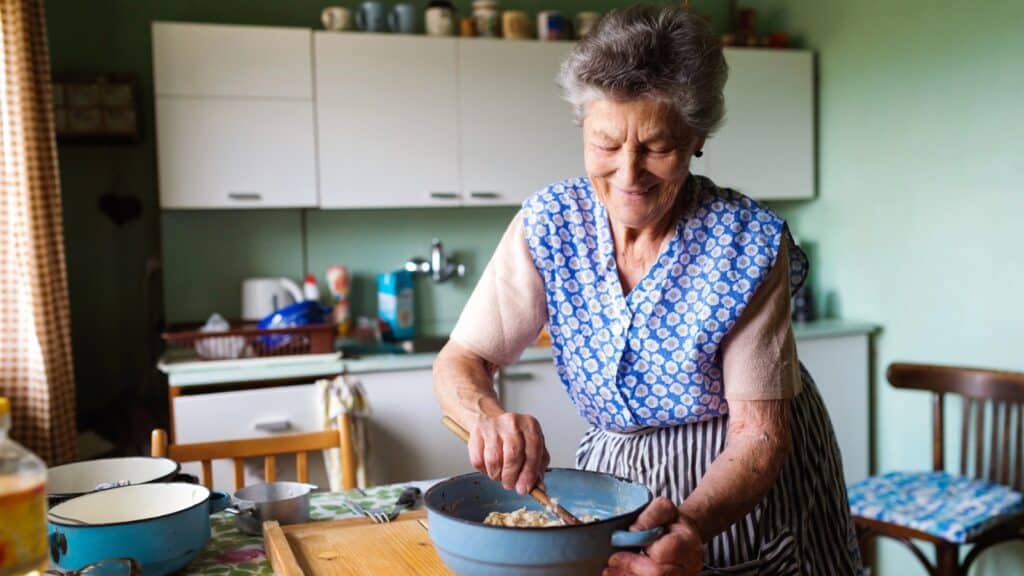
Trendsetters call it “nonna-stalgic,” recognizing the benefits of saving money with Depression-era cooking and the nostalgia of the comfort food they grew up with. These classic recipes are often passed down through generations, sometimes adapted for new cooking technologies like microwaves and air fryers. With food prices on the rise, so is the appeal of simple, affordable ingredients in the kitchen.
Pricier produce
The U.S. Department of Agriculture April 2026 Consumer Price Index shows food at home prices jumped 0.7% from March 2026 to April 2026. That may seem small, but when viewed on a larger canvas, it represents a 2.9% increase over this time last year. And a pattern of consistent increases every month.
Some experts say it may jump even higher, as much as 4-5% by the end of the year. Richard Volpe, former USDA economist and California Polytechnic State University professor told Food Navigator USA, “I do think that food price inflation is probably going to tick up above the rolling 20-year average of 2.6% to be closer to 4% or 4.5% for the year … we’re going to be seeing some of these impacts filtering into the food system well into the late summer and into the fall.”
Depression-era penny pinching
Everyone seems hesitant to use the term depression when describing our current United States economy. But the concept is clearly reflected in the use of nearly 100-year-old recipes that emerged after the 1929 stock market crash.
It makes sense. Many of these recipes came about because the entire nation was forced to become budget-minded practically overnight. Even traditional dishes or recipes from the old country were repurposed and reworked to stretch farther and feed more. It wasn’t so much a dietary choice as an inflation strategy.
In our modern age, folks may not be in the same dire straits, but they’re smart enough to look for affordable options to make their food budget last longer. It’s no wonder #DepressionEraCooking has become a hot hashtag on TikTok and Instagram.
Take a few simple ingredients, throw them together and toss them into a crock pot, casserole dish or pressure multicooker. Set the timer, and an hour to six later, you have a hearty meal for the whole family. And quite often leftovers to spare.
Speaking of leftovers, Depression-era meals are easy to make in large batches and can be planned on for multiple meals. This is what gave the Sunday pot roast its enduring place as a classic meal grandma could be counted on to make. Want a little more variety? Try a hearty, flavorful ground beef casserole.
Leftovers can even become their own mixed menu meal. Bring everything out, and each family member picks their favorite to enjoy for that night’s dinner.
Ever wonder why Grandma’s meatloaf had rolled oats? To help their meat stretch further, mothers started mixing the beef with oats. Turns out it’s not only a great filler but often results in moister meatloaf than traditional breadcrumbs. It became so popular that Quaker started printing a recipe on their canisters in the 1950s. Sprouted rolled oats are also the main ingredient for a delicious vegan granola snack or breakfast treat.
It came from the motherland
Even before the Great Depression, immigrants had a long history of creating hearty, soulful meals that everyone loved without doing much work. America has always been a melting pot of people from various countries and cultures.
As younger generations look to get in touch with their roots, they’re discovering the recipes and cooking techniques older generations used and brought to the U.S. For decades, home-cooked meals have been one of the most vital ways that migrant families maintain the tastes and traditions of their homelands. Whether it’s contributing to the church potluck or setting up a tent to share their esquites or street corn recipe, food helps neighborhoods build connections.
Recycling isn’t something recent generations came up with. They’re simply rediscovering something their grandparents swore by. Immigrants hate to waste what they can reuse. Even the smallest scraps still have a purpose.
Stale bread gets chopped up and either baked with olive oil to make croutons or mixed with milk and sugar to make bread pudding. Add sautéed vegetables, chopped potato bits and cornstarch to leftover pot roast or other beef to create a hearty stew. Once you’ve picked the chicken or turkey carcass clean, put it back in the oven with some herbs, maybe some loose veggies and onions and bake the bones down to make a perfect soup stock.
What’s in the box?
Whether you’re looking for a closer connection to your family history or a better way to stretch your food budget, old-school recipes are returning to kitchens old and new. The dog-eared 3×5 cards may be digital now, and the techniques updated for modern technology, but the sentiment remains the same. Simple ingredients, easy preparation, plenty to go around. As grocery prices continue to rise even faster than overall inflation, going back to grandma’s basics is the best way to stretch your food budget further.
Sharon Rhodes is the creative force behind the food blog The Honour System. Passionate about all things homemade, Sharon is a seasoned recipe curator focused on making healthier cooking and baking accessible to all.