
Packing for a flight always comes with a few security questions. What counts as a liquid? What’s fine to toss in a carry-on? The Transportation Security Administration has answers, and some of them are surprising.
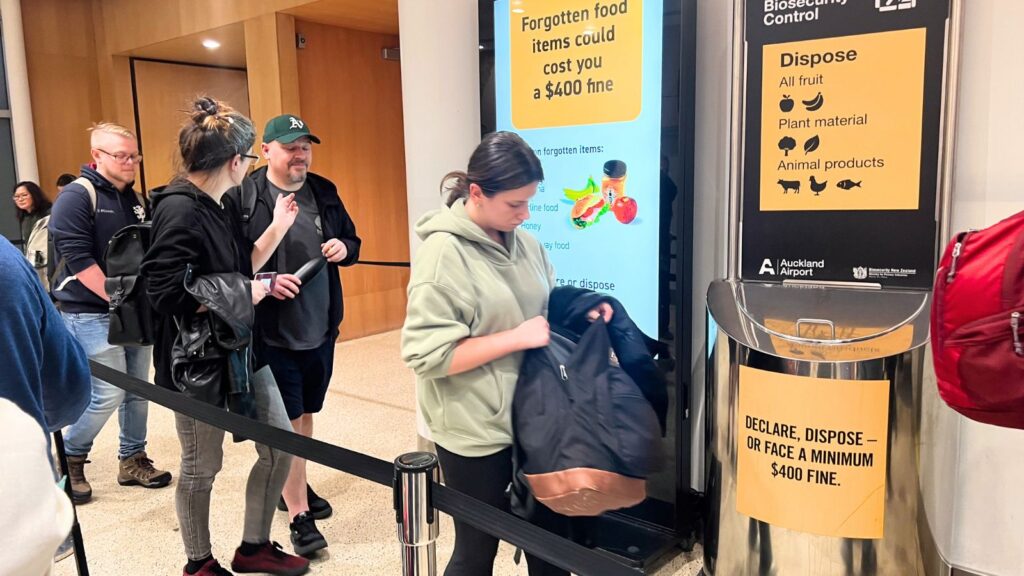
The agency uses one specific yardstick: if a food has no fixed shape and takes the shape of whatever holds it, it counts as a liquid. That single rule explains almost every surprise on this list. Here’s what typically makes it through the checkpoint, and what typically gets left behind.
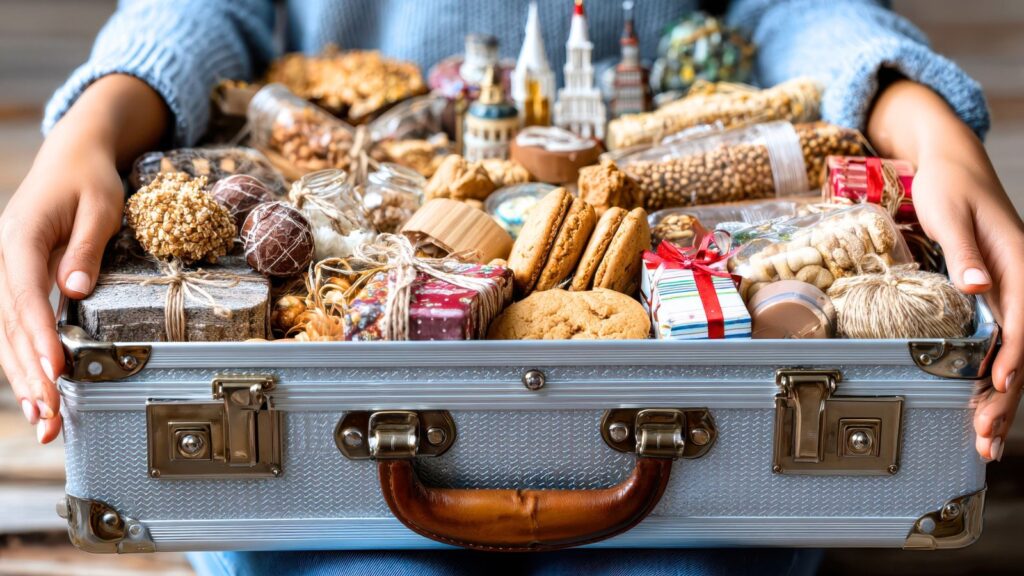
Foods You Can Bring
Solid cakes and pies get a pass, even with frosting or a filling. So do sandwiches, hard cheese and dry snacks like chips or crackers. None of that needs any special handling.
Baby food is a different story. It’s allowed even in containers bigger than the usual 3.4-ounce limit, since it counts as a medical necessity for anyone traveling with an infant.
Live lobster is allowed too, as long as it rides in a clear, spill-proof container. A TSA officer will inspect it at the checkpoint. Airlines still have the final say on whether it can fly in the cabin or should go in checked luggage. Travelers heading home from New England with a fresh catch are the ones who often run into this rule.
Foods You Can’t Bring
The reasoning here is more literal than most people expect. TSA’s 3-1-1 rule treats any food without a fixed shape as a liquid, and that catches many ordinary pantry staples off guard.
Peanut butter is the classic example. TSA has said outright that it counts as a liquid, since it takes the shape of whatever container holds it. A full jar has to go in a checked bag, though anything under 3.4 ounces can ride in a carry-on. Spread it on a sandwich first, though, and the rule no longer applies. A peanut butter and jelly sandwich counts as a solid food, not a liquid.
Soft cheese follows the same logic. Brie, camembert and other creamy cheeses count as liquids too, so pack a small wedge or plan to check it instead. Jam and jelly are treated the same way, no matter how solid they look sitting in the jar.
Yogurt counts too, even the small cups made for kids. Most grocery store cups run 5 to 6 ounces, which is already over the limit on its own. Freezing it solid before a flight is one workaround. A fully frozen item isn’t treated as a liquid.
Hummus catches a lot of people off guard, especially packed in a snack cup with pretzels. It’s spreadable, so the same limit applies.
Soup rounds out the list. Broth, chowder, or anything with liquid in it needs to stay under 3.4 ounces or go in a checked bag.
Packing snacks for a flight doesn’t have to be stressful. Stick to solids for the carry-on and save the spreads for after landing; this makes the checkpoint simple.
Jennifer Allen is a retired chef turned traveler, cookbook author and nationally syndicated journalist; she’s also a co-founder of Food Drink Life, where she shares expert travel tips, cruise insights and luxury destination guides. A recognized cruise expert with a deep passion for high-end experiences and off-the-beaten-path destinations, Jennifer explores the world with curiosity, depth and a storyteller’s perspective. Her articles are regularly featured on the Associated Press Wire, The Washington Post, Seattle Times, MSN and more.