
Tents go up hours before kickoff. The cooler becomes a seat, the cutting board lands on the tailgate, and the food comes out long before anyone’s thinking about the opening snap. By the time the game starts, some of it is still worth eating. A lot of it isn’t, and that gap has everything to do with the food itself, not the person who made it.

College football’s FBS season kicked off Aug. 29, and the NFL season opener follows Sept. 9, which means parking lots across the country are filling up for months of pregame spreads. Whatever goes into that cooler in the morning has to last well past when it would normally be eaten.
Grazing Is Already How Tailgating Works
Tailgating has never really felt like a sit-down meal. It’s shared plates passed hand to hand, someone’s homemade dip next to a bag of chips, a spread that people graze on for hours. Some 41% of U.S. snack consumers now eat snacks in place of a full meal, and more than two-thirds say snacks are something they count on when socializing. The parking lot runs on that same logic, which is why grazing-style food fits it better than anything that needs a plate and a fork.
The Foods That Actually Hold Up
Dried and cured meats, firm cheeses, commercially packed pickles and giardiniera, and sturdy grain or bean salads tend to travel well. Curing, drying, fermentation and pickling all work by pulling moisture out or raising acidity, both of which make it harder for spoilage to take hold. Grain and bean salads built on farro, chickpeas or black beans hold their texture far longer than dressed leafy greens. Make them ahead, keep them cold, and add anything fragile closer to game time.
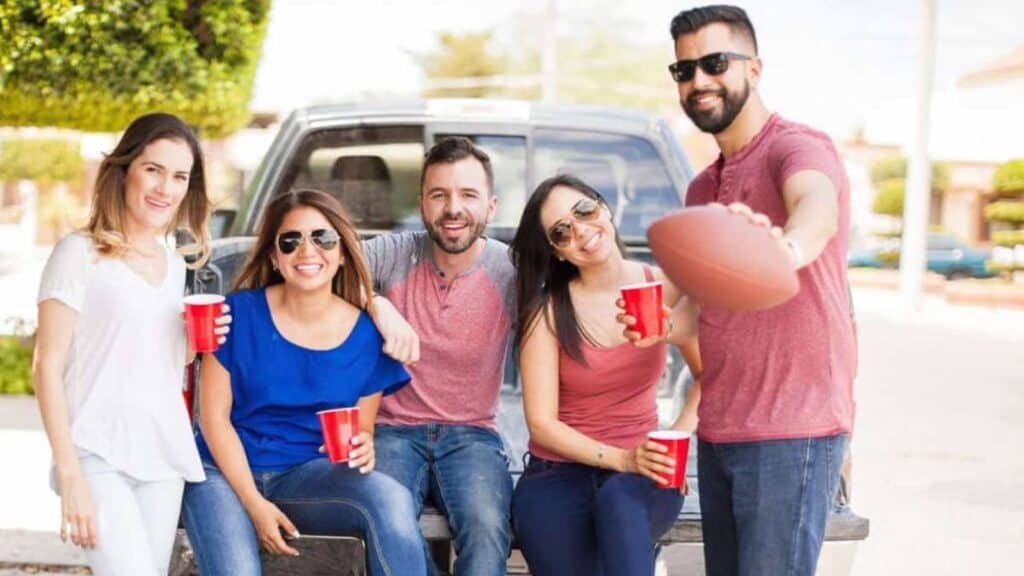
Texture and food safety are two different things, though. The USDA recommends keeping cold items at 40 degrees or below and tossing anything out more than two hours, or one hour past 90 degrees. A food that still looks fine isn’t necessarily still safe.
What Falls Apart Before Kickoff
Fried and breaded foods lose their crunch fast in any closed container. The trapped steam softens the coating until what was crisp an hour ago turns pale and limp. Dressed leafy salads wilt in the time it takes to walk from the car to the tailgate. Creamy salads turn watery as ingredients release moisture, leaving a puddle at the bottom of the bowl before halftime.
Texture is often the first thing people notice, and the first thing heat and time take away. Some 38% of U.S. cracker buyers say texture drives their product choices, which tracks with how fast a bad texture can kill a dish entirely.
Building a Spread That Lasts
A tailgate spread that holds up doesn’t mean skipping the grill. It means the sturdiest dishes do the heavy lifting while everything else cooks. One board or platter instead of a dozen containers makes the whole thing easier to manage once the crowd starts picking. Snack boards work on that same principle, built from individual components that need no last-minute prep and are easy to graze from start to finish. Put the right things out first and the spread takes care of itself, plate in one hand, game still hours away.