
Lake water holds its warmth long after the land around it gives up on summer, and that leftover warmth is the reason so many Great Lakes harbor towns are only now catching up to fall color season. Inland forests a few miles away can finish turning while the docks and harbors along the shoreline are still waiting on their own peak. Most leaf-peepers never see it, because they’ve already packed up and gone home by the time the real show starts.
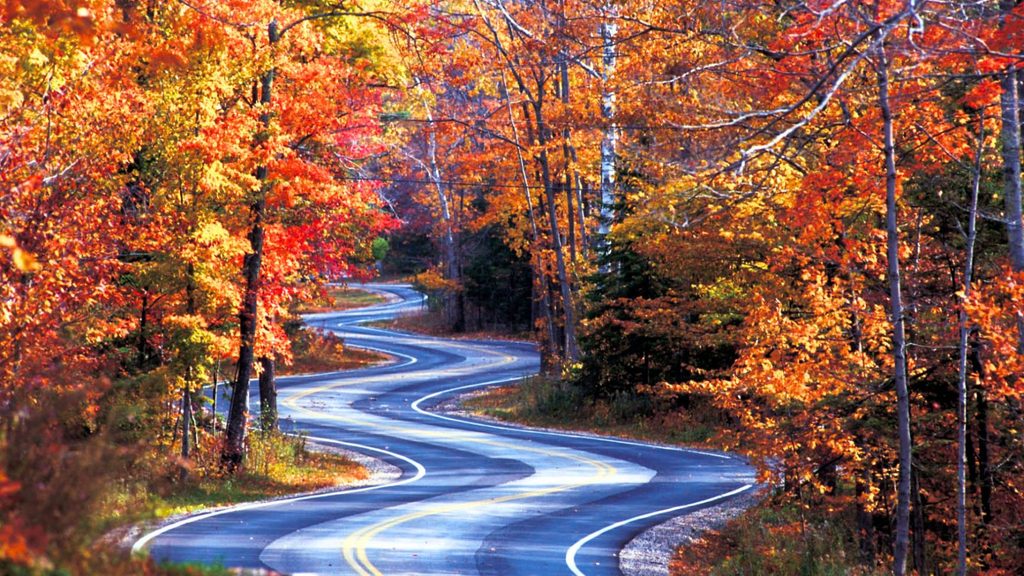
Harbor towns running behind their own inland forests creates a real planning problem, because most people only get one weekend to get it right. A single fall color map treats an entire state as though it turns on one date, so people plan trips around whatever week that map suggests, leaving no room for the water to run on its own schedule. Knowing roughly which towns tend to hold their color longest changes when a trip should actually happen.
The lake keeps its own clock
Shortening daylight starts the color change each fall, and cooler nights help trigger and intensify it. A large lake keeps the air above it warmer well into the season, which can delay cooling, so shoreline color often arrives later than inland. Reporting on Michigan’s 2026 fall color season found the Upper Peninsula already turning by mid-September, while most of the northern Lower Peninsula was expected to peak around Oct. 19-24, trailing the interior by several days to about a week.
Harbor Springs sits on a deep natural harbor
Harbor Springs is built around one of the deepest natural harbor basins on the Great Lakes, a small boating town on Little Traverse Bay. Shoreline color here often runs several days to about a week behind nearby inland areas, though the exact timing changes with each year’s weather. It remains a town built for walking the harbor at a slower pace than summer allows.
Fishtown is Leland’s working waterfront
Fishtown is a cluster of weathered fishing shanties still used by working boats, sitting where the Leland River meets Lake Michigan. It remains an active commercial fishing site, maintained today as a historic working waterfront.
October is generally when color builds around the harbor, though the waterfront can turn later than the nearby bluffs and inland woods, with timing varying each year. It’s a small harbor, and the wait tends to make the color feel earned.
Glen Arbor borders a national lakeshore
Sleeping Bear Dunes National Lakeshore surrounds Glen Arbor, its dune overlooks rising high above Lake Michigan’s open water. The overlooks are among the clearest places in the region to watch the shoreline’s slower color change play out against the dunes.
Inland color often develops earlier in the season, while shoreline areas near the dunes can lag by several days to about a week. A late-October visit tends to hit peak color sooner than an early one, though exact timing varies with each year’s weather.
Alpena trades crowds for shipwrecks and quiet water
Thunder Bay empties into Lake Huron at Alpena, home to Thunder Bay National Marine Sanctuary, which protects nearly 100 historic Great Lakes shipwrecks beneath the surface. The harbor traffic that fills the area all summer thins out by October, leaving the water quieter than in peak season. Shoreline color around the bay tends to build later into the month than a few miles inland, following the same lake-driven pattern seen elsewhere along the Great Lakes.
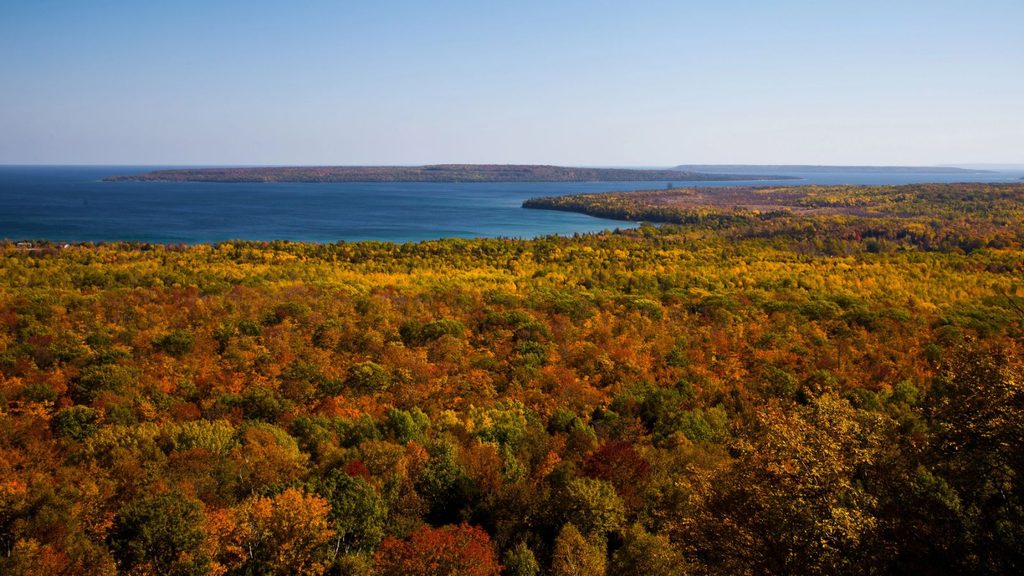
Door County is dotted with small harbor towns
A peninsula wedged between Lake Michigan and Green Bay, Door County is strung with small harbor communities, including Sturgeon Bay, Ephraim and Fish Creek. Each sits close enough to the water that the peninsula runs on a shoreline schedule distinct from Wisconsin’s interior.
Door County’s waterfront towns can lag about a week behind inland northern Wisconsin, with color closest to the shore sometimes arriving even later. For travelers combining a Michigan and Wisconsin route, Door County can be a solid late-season stop once inland color elsewhere has already faded.
5 harbor towns share 1 pattern
Large lakes moderate the air above them in similar ways wherever they sit, which is part of why Michigan’s shoreline towns and Door County end up running on a comparable late schedule. The exact difference between harbor and inland color varies year to year with the weather, but the direction holds steady.
The same timing difference extends beyond these five towns. A trip planned near any large Great Lakes shoreline may run on a later schedule than the inland area around it, though how much later depends on the season.
A single peak date never told the whole story
A statewide fall color map has always averaged the harbor towns that run late with the inland woods that run early into one tidy date. The water along the shoreline never agreed to that average, and it kept its own pace through every season on record. The next fall trip near a Great Lakes shoreline is worth planning around the water’s own timing, not a single date on a map.
Jennifer Allen is a retired chef turned traveler, cookbook author and nationally syndicated journalist; she’s also a co-founder of Food Drink Life, where she shares expert travel tips, cruise insights and luxury destination guides. A recognized cruise expert with a deep passion for high-end experiences and off-the-beaten-path destinations, Jennifer explores the world with curiosity, depth and a storyteller’s perspective. Her articles are regularly featured on the Associated Press Wire, The Washington Post, Seattle Times, MSN and more.