
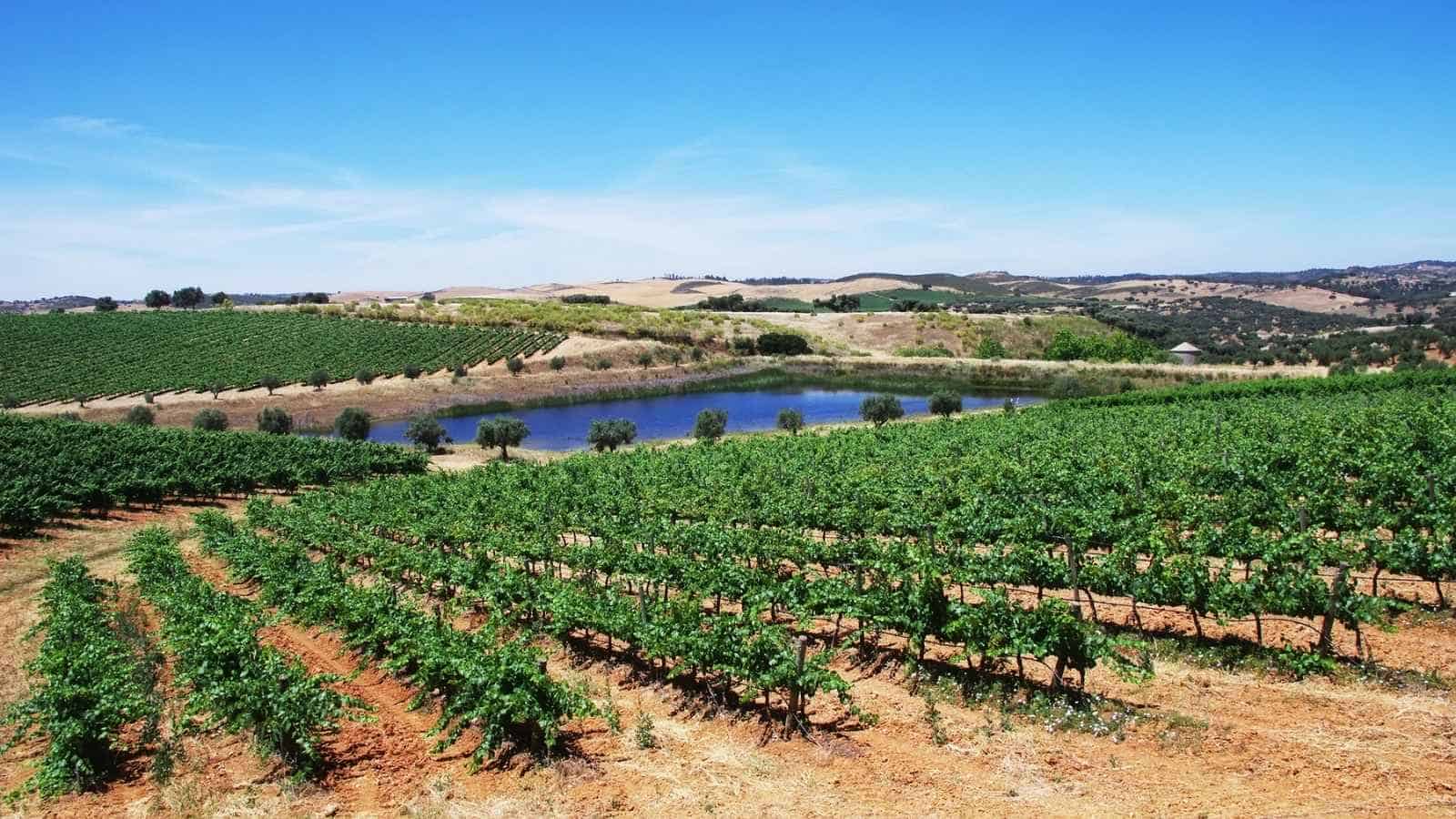
Portugal’s interior has something its coastline does not: space. East of Évora the cork oaks take over, the wheat plains stretch without interruption and the whitewashed villages sit far enough from the main roads that most visitors never reach them. For most of the past decade, American travelers arrived in Lisbon and headed south, but a growing number are heading east instead.
The country tourists are choosing has changed around them. Portugal spent years being discovered and then overdiscovered, its most famous addresses accumulating the queues and noise that come with sustained global attention.
Lisbon’s viewpoints fill by mid-morning in summer. For travelers who have done the coast and want something the itineraries haven’t caught up with yet, the Alentejo is where to go.
Portugal welcomed 32.5 million guests in 2025, a record year generating more than $33 billion in tourism revenue, and Americans now rank among the top three foreign markets by nights spent in the country. Visitor data shows arrivals spreading into the Alentejo, the northern interior and the Setúbal Peninsula, areas that absorbed relatively little of the country’s tourist boom until recently.
The estates that make the Alentejo worth the detour
In the upper Alentejo near Monforte, Torre de Palma Wine Hotel sits on a farmstead whose tower has stood since 1338. The owners, Ana and Paulo Rebelo, built a five-star hotel around a working winery producing seven estate varietals from vines grown on clay soils in the shadow of the Serra de São Mamede hills.
Guests ride Lusitano horses through the vineyards, eat at a restaurant sourcing almost entirely from the estate’s own kitchen garden and sleep inside walls thick enough to make July feel like April. The property holds Biosphere certification and B-Corp eco-credentials, running entirely on solar energy.
Two hours south, outside Reguengos de Monsaraz, Herdade do Esporão has farmed the same 4,500 acres since 1267. Its vineyards, now fully certified organic, grow more than 40 grape varieties across seven soil types. The estate restaurant holds a Michelin Green Star, built on a menu that changes with what the land produces. Wine tours run daily through cellars and olive groves before ending at a wine bar overlooking the Caridade reservoir.
Land that has been in the same hands for centuries
Near the medieval village of Monsaraz, São Lourenço do Barrocal occupies an almost 2,000-acre farming estate that has been in the Uva family for more than 200 years. The eighth generation restored it as a hotel without dismantling what made it a working farm. The winery still produces its own wines, the kitchen draws on an organic vegetable garden and orchard and guests move through the same lanes and stone buildings the estate has always used.
The Alqueva lake sits 5 miles away, and the Dark Sky reserve overhead makes the Alentejo night sky one of the clearest in Western Europe.
In the Baixo Alentejo, Herdade da Malhadinha Nova stretches across 1,800 acres outside Albernoa, deep in a region that covers a third of Portugal’s territory and holds a fraction of its population. The Soares family planted the first vines in 2001 and built outward from there: organic vineyards, an equestrian center with Lusitano horses and a restaurant that earned a Michelin Green Star in 2024.
The estate is a Relais & Châteaux property, and its kitchen cooks with ingredients the estate grows itself. The plains flatten to the horizon in every direction. There are no tour coaches.
The Alentejo’s moment is only beginning
Affluent U.S. travelers are moving away from peak-season Europe faster than the broader market, with the share of trips taken in July and August dropping from 47% in 2023 to 40% in 2025 among high-net-worth American guests. The Alentejo, drawing visitors year-round to its wine estates and working farms, is where that demand is arriving.
New hotel investment in the region is accelerating to meet it. A wave of luxury openings across the Alentejo in 2026 is reinforcing the region’s position as a genuine alternative to Portugal’s busier hubs, with the regional tourism board describing it as a destination with a strong vision for the future.
That investment is the indicator American travelers should read carefully. The Alentejo being discovered is not a rumor; it is a construction schedule. The estates and working farms that define the region today will share it, within a few years, with a new generation of hotels built precisely because demand has arrived. The window to find the Alentejo before it finds itself on every itinerary is open. It will not stay that way.
Mandy is a luxury travel, fine dining and bucket-list-adventure journalist with expert insight from 47 countries. She uncovers unforgettable experiences around the world and brings them to life through immersive storytelling that blends indulgence, culture and discovery, and shares them with a global audience as co-founder of Food Drink Life. Her articles appear on MSN and through the Associated Press wire in major U.S. outlets, including NBC, the Daily News, Boston Herald, the Chicago Sun-Times and many more.