
Anyone who assumed they had already missed their best shot at the northern lights this cycle was wrong. The sun crossed its most active point back in October 2024, but it has kept firing off major storms well after that peak instead of before it, exactly what forecasters had warned could happen. That is keeping the lights worth chasing this 2026-27 winter, from Norway’s Arctic Circle to Alaska’s interior.
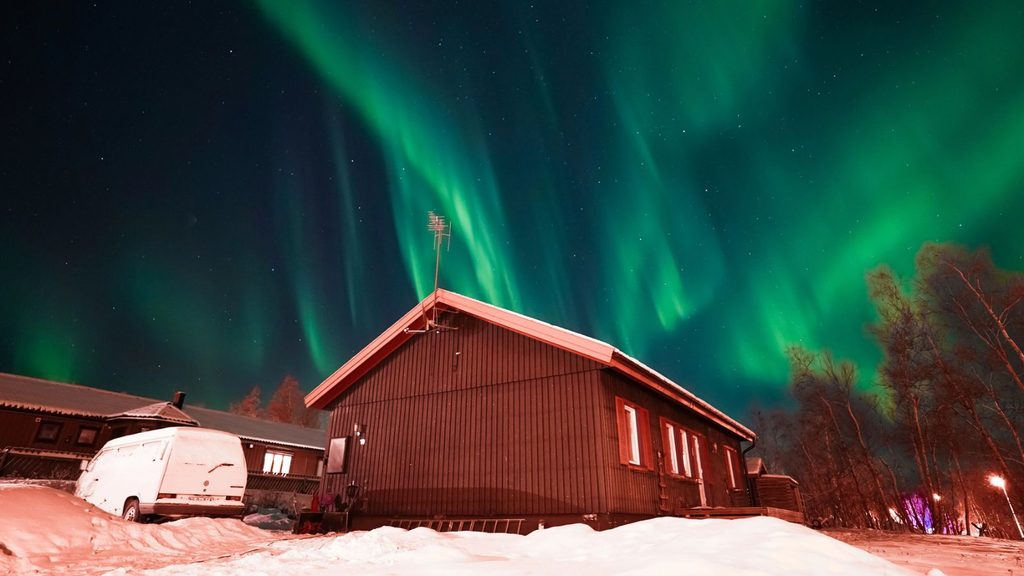
Aurora chasers have learned to watch the months after a solar peak just as closely as the peak itself. A cycle’s exact peak month is only confirmed in hindsight, once a sustained decline shows up in the data, and NOAA’s space weather lead said as much when the October 2024 peak was first announced. Elsayed Talaat, director of NOAA’s space weather operations, said then that the announcement did not mean the cycle had already produced its strongest activity.
The sun is 2 years past its peak and still active
A G4 geomagnetic storm struck on Nov. 11, 2025, more than a year after the officially announced peak. An X5.1 solar flare hit the same day. The question travelers face now is unusual: whether to go this winter while output is still unusually high, or wait, assuming the best nights have already happened.
The second option is the riskier bet, because geomagnetic activity does not fade evenly from one winter to the next. Furthermore, some of a cycle’s strongest displays have historically shown up well into its decline.
The sun’s smoothed sunspot count stood at 83 in July 2026, nearly two years after the October 2024 peak, and the same forecast expects that number to fall to roughly 53 by July 2027, a drop of more than a third over 12 months. That is a real decline, but it is nowhere near a quiet sun, and it leaves a wide window this winter where strong activity is still possible.
Tromsø’s aurora season stretches nearly 8 months long
Tromsø, Norway, sits well north of the Arctic Circle, and its aurora season runs from late August to early April, nearly eight months of potential viewing. The city has invested in infrastructure around that calendar, with lodges clustered well outside the city lights and guided tours that travel farther out when conditions near town aren’t cooperating.
Even inside city limits, dark spots like Prestvannet can still catch a strong display on a clear night. For a winter running ahead of the fading schedule the sun was supposed to follow, that built-in flexibility is worth more than usual.
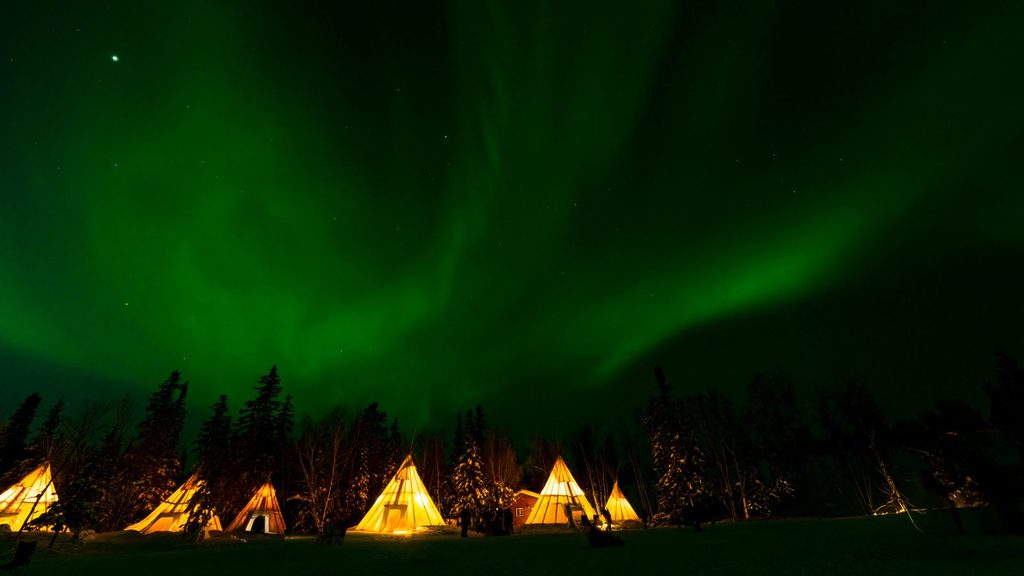
Yellowknife has built an entire industry around clear nights
Long, clear winter nights are Yellowknife, Northwest Territories’ main selling point, according to the city’s own tourism page. Its best window runs mid-November to early April, and a second one opens again in late summer.
Yellowknife has grown its tourism industry around those odds for years, with dedicated tour operators and aurora villages set up specifically for overnight sky-watching. None of that depends on this particular winter. Yellowknife earned its reputation over decades of cold, clear nights, long before this cycle’s surprises started showing up.
Fairbanks offers a forecast built for exactly this kind of winter
Travelers who would rather skip the passport have a domestic option in Fairbanks, Alaska, where the aurora season runs from Aug. 21 to April 21. The University of Alaska’s Geophysical Institute has tracked that activity since the late 1970s and began sharing forecasts with other scientists around 1994, when a professor there faxed two-week outlooks to roughly 200 recipients each week.
The forecast page now draws more traffic than any other page at the university, over 2 million views a year. Fairbanks offers the same cold, clear interior-Alaska nights that made the forecast necessary in the first place, without requiring a flight out of the country.
Abisko’s ‘blue hole’ gives it an edge no latitude can explain
Abisko, Sweden, owes its reputation to something more specific than latitude, a pocket of unusually open sky that local guides call the blue hole. The aurora season here runs from late August to late March. Chad Blakley, who runs a tour company there and has written about the phenomenon himself, says prevailing winds crash into mountains just across the Norwegian border and tear a rain shadow directly over the valley, usually leaving a clear patch of sky about 4 to 8 square miles wide no matter what the weather is doing nearby.
Blakley notes that clear skies don’t guarantee a display. For a destination this far north, though, simply being able to see the sky at all is rare enough to matter on its own.
The decline might still have surprises left
Past solar cycles suggest this one is not finished producing surprises. Space weather physicist Tamitha Skov says almost every solar cycle produces one last significant spike within a couple of years of its eventual minimum, a pattern she calls a last gasp. If Solar Cycle 25 follows that pattern, this slide will not be the end of the story for aurora chasers, just the next chapter.
Jennifer Allen is a retired chef turned traveler, cookbook author and nationally syndicated journalist; she’s also a co-founder of Food Drink Life, where she shares expert travel tips, cruise insights and luxury destination guides. A recognized cruise expert with a deep passion for high-end experiences and off-the-beaten-path destinations, Jennifer explores the world with curiosity, depth and a storyteller’s perspective. Her articles are regularly featured on the Associated Press Wire, The Washington Post, The Seattle Times, MSN and more.