
The average backyard grill menu has narrowed to the same short rotation: chicken breasts, ribeyes and the occasional burger. This summer, that default is getting a long-overdue reset. The cooks paying attention are putting whole fish over the coals, throwing halloumi directly on the grate, grilling peaches until the sugars blister and pulling flatbreads off the fire with a char that no oven can replicate.
This post may contain affiliate link(s). As an Amazon Associate, I earn from qualifying purchases. See Disclosures.
The appetite for something more interesting than the usual is showing up in the data. About 51% of global consumers actively seek out cuisines from other countries, and a majority are open to trying traditional foods with a modern interpretation. The grill is where that curiosity is landing this season, with chimichurri, jerk marinades and gochujang-based sauces moving from restaurant menus into home kitchens and onto backyard grates.
Beyond the default protein
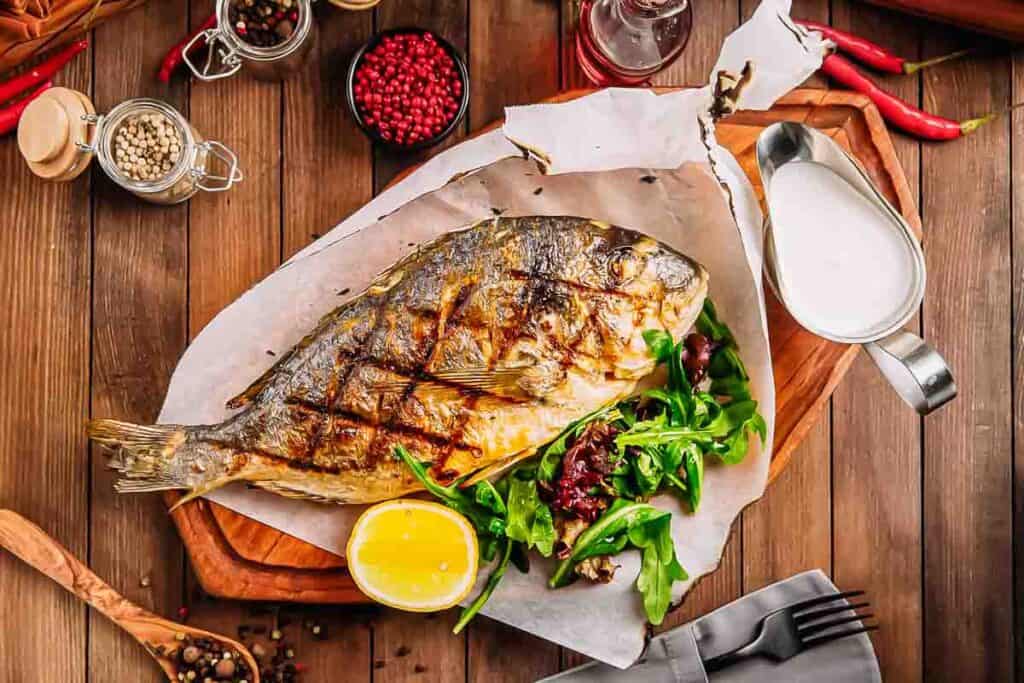
The most immediate upgrade to the standard backyard menu is rethinking what goes on the center of the plate. A whole fish, whether branzino, red snapper or trout, is one of the most forgiving things you can put on a grill, which surprises most people who have only ever tried it in a restaurant. The cavity holds moisture, the skin protects the flesh and the presentation delivers well above its effort level.
Score the skin on both sides to prevent curling, brush with a lemongrass and fish sauce marinade or pack the cavity with a chermoula paste, then cook five to eight minutes per side, depending on size. The result beats almost anything you can do with a fillet, often at a lower cost per serving than buying fillets of the same fish.
Shellfish follows the same principle and asks even less of the cook. Prawns and scallops take a marinade quickly and cook in minutes over direct high heat. Prawns brushed with fermented soy and finished with a squeeze of lime, or scallops basted with gochujang butter in the final minute, deliver a result that reads as ambitious without requiring much more than attention to timing. The shell-on approach for prawns protects the meat from the heat and adds a smokiness no pan can replicate.
Plant-based stars of the grill
Halloumi is the rare ingredient that actually improves on the grill. The semi-hard Cypriot cheese holds its shape at high heat, picks up crosshatch marks and develops a crisp exterior while staying soft inside. Slice it thick, pat it dry and put it directly on a well-oiled grill over high heat for two to three minutes per side. Serve it with a drizzle of hot honey and a pinch of chili flakes or alongside a quick harissa yogurt. It works as a centerpiece for a vegetarian spread or as a side that reliably outshines whatever protein is next to it.
Thick-cut grilled eggplant, zucchini and fennel reward the same patience. Slice them at least three-quarters of an inch, season well and give them time to develop color over indirect heat. Fennel in particular softens into something almost sweet over a slower flame and holds up well under a spoonful of romesco or a yogurt sauce spiked with smoked paprika.
Firm tofu, sliced into thick planks, patted dry before it hits the grate, picks up char marks and a smoky depth that makes it a credible centerpiece for a plant-forward spread. Finish it with a gochujang glaze or a drizzle of chili crisp, and it holds its own next to anything else on the table.
The grill as a finishing course
The grill handles sweet as well as savory, and most home cooks are not using it to its full potential. Stone fruit is the most immediate proof. Peaches, plums and nectarines all have enough natural sugar to caramelize fast over direct heat. Halve them, remove the pit, brush the cut side with a little neutral oil and place them cut-side down for three to four minutes. They pair with savory as well as sweet, whether folded into a grilled peach salad or served alongside jerk-spiced pork or chicken thighs. The fruit’s acidity and char cut through the smoke cleanly. A balsamic reduction or a spoonful of labneh with za’atar turns them into something that holds its own as a course on its own terms.
Flatbreads close the gap between the grill and the table. A ball of store-bought pizza dough stretched thin and laid over medium heat for two minutes per side produces a charred flatbread with a texture no sheet pan can match. Use it as the base for a chimichurri board, the bright Argentine herb sauce built from parsley, oregano, garlic, red wine vinegar and olive oil, topped with whatever came off the grill. The combination of char, herbs and smoke does more work than any individual ingredient could on its own.
Where the flavor is going
The move toward global flavor profiles on the backyard grill is not a passing moment. Global flavor layering has become a defining standard of outdoor cooking this season, with global barbecue introductions rising 400% in recent years. Grillers are not abandoning what they know. They are building on it, running a jerk marinade on ribs or finishing a smoked vegetable board with gochujang butter as one layer in a longer flavor sequence.
The real upgrade this summer is not a new cut or a new technique, but a willingness to treat the grill as the versatile, high-heat tool it has always been. It works just as well for a whole fish brushed with chermoula as it does for a ribeye and considerably better than your oven for flatbread on a Tuesday night.
Mandy Applegate is the creator behind Splash of Taste and seven other high-profile food and travel blogs. She’s also the co-founder of Food Drink Life Inc., a unique and highly rewarding collaborative blogger project. Her articles appear frequently on major online news sites, and she always has her eyes open to spot the next big trend.