
Michelin’s decision to send anonymous inspectors into Arizona, Nevada, New Mexico, Utah and other states this year confirms that regional American food drives travel interest far beyond the traditional fine-dining capitals. The guide has now expanded to more than 15 U.S. regions in three years, and the cities it keeps exploring are the same ones serious eaters have been quietly recommending for a decade.
This post may contain affiliate links that may earn us a commission. For more information, see our Disclosures.
The expansion follows a clear pattern. Michelin added Texas in 2024, the American South and Philadelphia in 2025 and now the Southwest in 2026, a systematic sweep tied to where travelers increasingly choose to eat and travel. Nearly 80% of travelers now say cuisine is either important or very important when choosing a destination, placing food on par with cost and location as a primary driver. Each expansion surfaces the same reality: cities that built serious food cultures without waiting for outside validation.
Houston, Texas
Houston was named the top food city of the year by the Los Angeles Times and earned four of 10 spots in Texas Monthly’s Best New Texas Restaurants for the year, a showing that tracks with what Michelin found when it arrived in Texas in 2024. The city’s advantage isn’t any single cuisine; it’s the density of immigrant communities cooking at the highest level.
In the Heights, Jūn is co-owned by James Beard Award semifinalists Evelyn Garcia and Henry Lu and runs Thai-inflected fried chicken alongside tandoori-marinated lamb belly and mussels with chorizo and red curry, a menu that only makes sense in Houston. In West University, Maximo earned a Michelin Bib Gourmand for chef Adrian Torres’s masa-driven cooking, where nixtamalized tortillas are pressed in-house, and the mushroom taco with sunflower seed chili crisp has become a signature.
The Bellaire strip malls hold some of the country’s most serious Cantonese and Vietnamese kitchens. Order the bún bò Huế anywhere you find it.
Philadelphia, Pennsylvania
Philadelphia earned its first Michelin Stars last year, one each to Her Place Supper Club, Friday Saturday Sunday and Provenance, and more than 100 new restaurants and bars are projected to open across the city this year, drawing James Beard Award nominees and New York operators crossing the Delaware for the first time. The momentum here is structural, not cosmetic.
Chef Amanda Shulman’s Her Place Supper Club runs a rotating prix fixe in a 24-seat room, where the menu changes every few weeks and reservations open once a month. At the other end of the price spectrum, Dalessandro’s cheesesteaks earned a Michelin Bib Gourmand, the first time the guide officially acknowledged that the city’s most iconic food is also among its best.
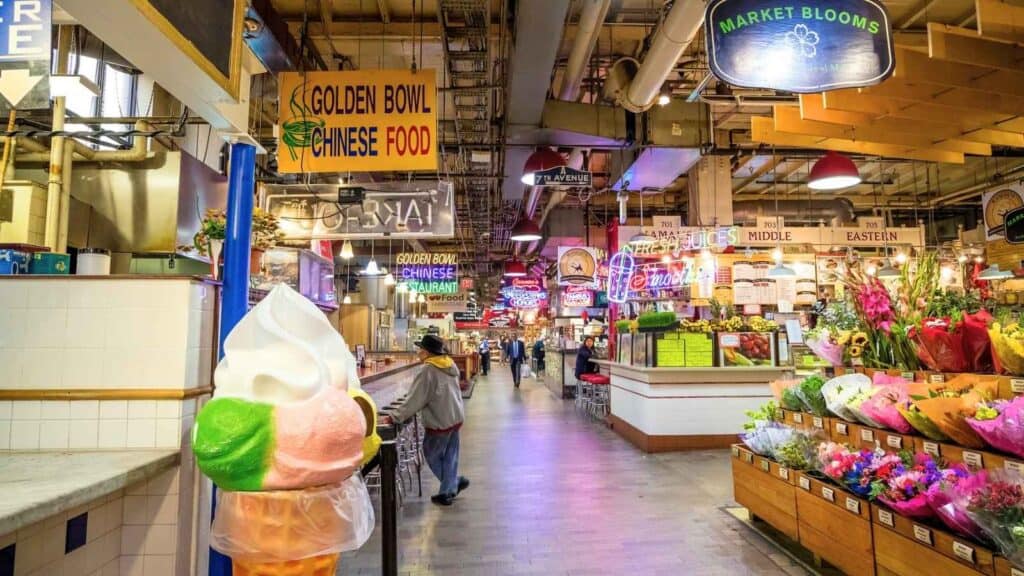
For the full picture, start at Reading Terminal Market on a weekday morning, then make dinner at Friday Saturday Sunday, where husband-and-wife team Chad and Hanna Williams run an eight-course tasting menu that holds a Michelin star, a James Beard Award for Outstanding Restaurant and a spot on North America’s 50 Best Restaurants list.
Greenville, South Carolina
Scoundrel earned Greenville its first Michelin star when the American South guide launched in 2025, and chef Joe Cash is now a 2026 James Beard Award finalist for Best Chef: Southeast. That back-to-back recognition, in a city that most food travelers still haven’t considered, is the why-now.
Cash grew up in Greenville, trained at Per Se and Noma, and came home to open a French bistro on Main Street. The menu is a study in restraint: beef tartare with fines herbes and dijonnaise, aged duck breast with poached rhubarb and hot mustard jus, steak frites with duck fat frites and sauce au poivre.
Scoundrel is part of a dining scene that has grown well beyond a single standout restaurant. Downtown Greenville has more than 200 restaurants within walking distance of Main Street, and national attention has followed, with “Top Chef” filming its 23rd season here and Michelin maintaining its North American headquarters in the city. Start with the fresh oysters at Jones Oyster Company, then spend the rest of the evening at Scoundrel.
Tucson, Arizona
Tucson has been America’s only UNESCO City of Gastronomy since 2015, a designation built on more than 4,000 years of continuous agriculture in the Sonoran Desert, not restaurant openings. With Michelin inspectors now active in Arizona ahead of the Southwest ceremony on Aug. 26 in Las Vegas, the city’s profile is about to rise again.
The anchors here are specific. The Sonoran hot dog at El Güero Canelo is bacon-wrapped, served in a bolillo bun, topped with beans, onions and tomatoes, and recognized by the James Beard Foundation in 2018. It is a regional food tradition perfected over decades.
Chef Tyler Fenton’s BATA makes the case for fine dining built on tepary beans, chiltepin peppers and mesquite rather than imported luxury ingredients. Both tables are necessary.
Kansas City, Missouri
The case for Kansas City doesn’t start with barbecue, though Chef J BBQ in the West Bottoms has spent several years proving that Central Texas smoking technique and fine dining sensibility are not mutually exclusive. Owner Justin Easterwood’s brisket and housemade sausage have drawn sustained attention from chefs, food writers and competition judges, the kind that changes how a city gets categorized.
What sits alongside it is the more important story. New Midwestern cuisine has found a genuine foothold here, with restaurants sourcing from local farmers and framing seasonal ingredients in a regional voice that has no coastal equivalent. The burnt ends are non-negotiable, but they are no longer the whole point.
The guide keeps moving west
Michelin doesn’t go where the food isn’t. Every city in this list built something real before the inspectors showed up: decades of cooking, neighborhood institutions, chefs who stayed instead of leaving for New York. The guide is catching up to what locals already knew, and that’s the pattern worth watching. The best meal you haven’t eaten yet probably isn’t in a city you’d expect.
Jennifer Allen is a retired chef turned traveler, cookbook author and nationally syndicated journalist; she’s also a co-founder of Food Drink Life, where she shares expert travel tips, cruise insights and luxury destination guides. A recognized cruise expert with a deep passion for high-end experiences and off-the-beaten-path destinations, Jennifer explores the world with curiosity, depth and a storyteller’s perspective. Her articles are regularly featured on the Associated Press Wire, The Washington Post, Seattle Times, MSN and more.