
The Boston Marathon, set for April 20 alongside Patriots’ Day, brings in about 30,000 runners, packing the city for one of its busiest travel weekends. Not only do runners take part, but spectators also plan trips around the date, fill hotels and line the course until nearly every block feels like part of the race.
This post may contain affiliate links that may earn us a commission. For more information, see our Disclosures.
The global event tourism market is projected to reach about $2.97 triillion by 2034, growing at a 7.71% annual rate as travel plans lock onto major dates. Sports travel leads that growth, and the Boston Marathon fits the pattern, with public access and fan programming drawing in visitors who come for the race but stay for everything around it.
Preparations appear across Boston before race day
The global event tourism market reached about $1.54 trillion in 2025, pointing to strong demand for travel built around major events. In Boston, preparations for the marathon become visible well before race day across multiple neighborhoods.
Race signage and barricades appear along the route days in advance, outlining key sections of the course. At the same time, a broader public safety presence becomes more noticeable, with increased monitoring and coordination across agencies as the city prepares for large crowds. Spectators gather along parts of the route ahead of the race, while public areas begin to take on a more organized, event-focused feel.
Spectators line the course from start to finish
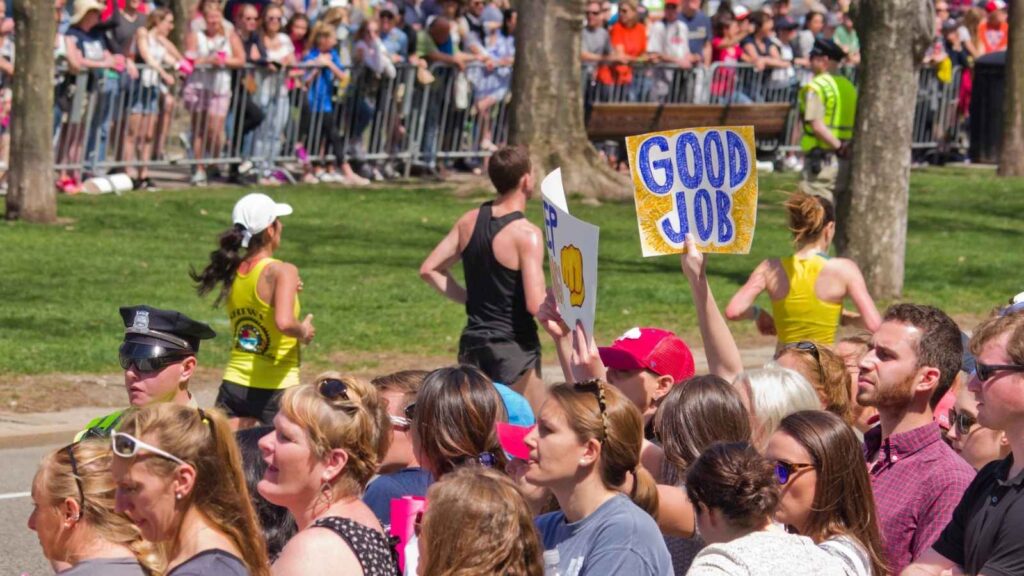
The 26.2-mile stretch from Hopkinton to Boston turns the entire course into a moving spectator route, where people don’t stay in one place for long. Some start in one town, then move along the course by train or on foot to catch runners at different points as the race progresses.
Crowds build in different ways depending on where you are. Heartbreak Hill draws those watching for one of the more demanding parts of the course, while the finish along Boylston Street fills steadily as the later runners come through. With no ticket required, the course stays open to anyone who wants to be part of it, and for many visitors, that access becomes reason enough to plan the trip.
Travelers build Boston trips around race weekend
Many visitors come back each year without ever entering the race, using the marathon weekend as a reason to return to Boston. Some plan their days around where they want to watch, then fill the rest of the time with stops across the city. Others treat the race as something to check in on, moving between viewing points and nearby attractions throughout the day.
Landmarks such as the Freedom Trail and Boston Common stay part of the plan, but the timing of the race changes how the day is built. Instead of a fixed sightseeing schedule, visitors tend to leave space to move with the event, adjusting plans as runners pass through different areas.
Boston traffic patterns change on race day
If you’re in Boston on race day, getting across town can take longer than expected. Major sections of the course close early, and some streets stay blocked for hours, so even short drives can turn into long detours. Visitors who arrive planning to use a car often end up checking closures or leaving it parked once they see how the route cuts through the city.
Public transit carries most of the movement instead, and it fills quickly as spectators head toward different parts of the course. You’ll notice packed trains heading out to viewing spots and back again as the race moves forward. Many people give themselves extra time or stay in one area rather than trying to move around too much. By the afternoon, the crowd builds around Boylston Street as more runners reach the end of the race.
Hotels and dining stay busy all weekend
Marathon weekend brings a steady rise in bookings across Boston, with many hotels nearing full capacity. Visitors arrive ahead of race day and remain through the weekend, extending the typical length of stay.
Dining follows a similar pattern, particularly in areas near the course where visitor presence builds across the day. Restaurants see consistent demand from early morning through the evening and often adjust hours to match race schedules. This activity spans multiple days, with demand continuing beyond race day and extending through the full event weekend.
Event calendars guide travel decisions
Events such as the Boston Marathon draw travelers to fixed dates, with visitors planning trips around race weekend rather than leaving timing open. These major events bring visitors into defined windows, giving cities a clearer timeline to plan transit, staffing and public services while concentrating spending into a short, predictable period. As more destinations build around recurring events, travel planning may continue shifting toward these fixed moments, where timing carries as much weight as place.
Mandy is a luxury travel, fine dining and bucket-list-adventure journalist with expert insight from 46 countries. She uncovers unforgettable experiences around the world and brings them to life through immersive storytelling that blends indulgence, culture and discovery, and shares them with a global audience as co-founder of Food Drink Life. Her articles appear on MSN and through the Associated Press wire in major U.S. outlets, including NBC, the Daily News, Boston Herald, the Chicago Sun-Times and many more.