
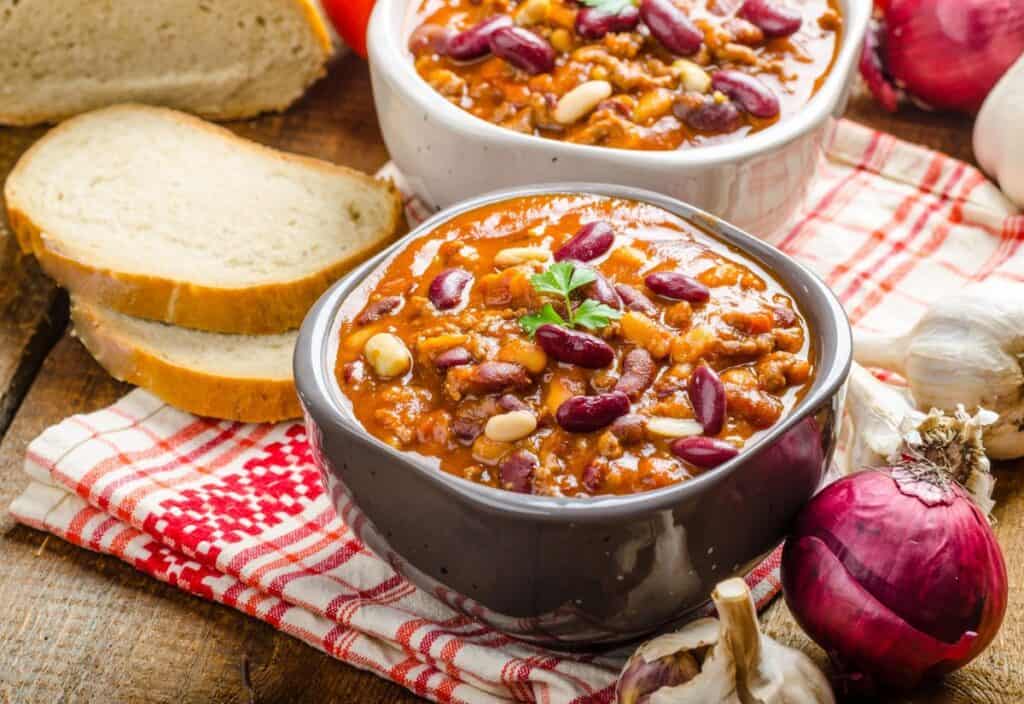
Chile con carne has long been at the center of cook-offs, drawing fierce competition and loyal fans across the country. It started as a hearty meal in early Texas kitchens and grew into a dish tied to state pride and regional rivalries. That history fuels today’s debates over beans, spices and technique, keeping chile con carne one of the most talked-about foods in America.
This post may contain affiliate link(s). As an Amazon Associate, I earn from qualifying purchases. See Disclosures.
Over time, it spilled beyond Texas, with local styles taking on their own flavor profiles. Each variation, whether fiery and bold or mild and hearty, shows how this once-simple stew continues to adapt to modern tastes.
Origins of chile con carne
Chile con carne traces its story back long before Texas put it on the map. Farmers in the Americas grew chile peppers for thousands of years, and Spanish explorers carried them to Europe in the 1500s and 1600s. Indigenous tribes such as the Jumano cooked stews with venison, peppers, tomatoes and onions, adding vegetables or beans when meat was scarce.
Spanish and colonial influences soon mixed in. One legend tells of a Spanish nun in West Texas who learned a pepper stew recipe from the Jumano and passed it along to explorers. Canary Island settlers later brought cooking traditions that used peppers and cumin, while Mexican and Mexican-Spanish cooks kept building on the dish.
By the 1800s, chili had become a frontier staple. Cowboys packed chili bricks of dried beef, fat, peppers and salt to boil on the trail, and women traveling with the Mexican army cooked goat or venison stews loaded with chile. In the 1860s, San Antonio’s famous Chili Queens began selling bowls of chili at Military Plaza, turning it into a city specialty.
The dish reached a national audience at the 1893 Chicago World’s Fair, and chili parlors soon spread across the country, inspiring regional styles such as Cincinnati chili. Texas later made it official, naming chili the state dish in 1977.
Chili rules that divide cooks
Few dishes spark as much argument as chile con carne. The bean question divides chili fans, with Texas purists insisting they don’t belong, while others say beans make the dish heartier and easier to stretch for family meals. Tomatoes stir similar disagreements, with some cooks leaving them out entirely to let the chile flavor shine and others adding them for acidity and balance.
Even the meat is up for debate. Traditionalists favor cubed beef for a chunky texture, but many modern recipes rely on ground beef for a quicker, more uniform result. Seasonings also vary, with cumin at the center of many Texas spice blends and heat levels ranging from mild to tongue-burning. These choices are often carry regional pride, with Texas standing by a strict meat-and-chile definition, while other areas add beans, spices and even sweetness to make the dish their own.
Reinventions and regional adaptations
“Chile con carne,” Spanish for chili with meat, is the version most people picture when they think of chili. Texas made it its own with a bold style built around beef chuck and plenty of chili peppers. Often called Texas red or a bowl o’ red, this classic skips tomatoes and draws its deep red color and heat from the peppers themselves.
Other versions show how far chili has traveled and changed. White chili swaps the red peppers and tomatoes for chicken, beans, corn and green chilies, creating a milder dish for those who want less spice.
Chili verde, a Southwestern favorite, uses tomatillos for tang and slow-cooks pork with green chiles until tender. Cincinnati chili takes a different path, seasoning beef with cinnamon, nutmeg, cloves and even cocoa powder for a spiced, Mediterranean-inspired flavor.
Regional creativity keeps going. In Kansas City, pitmasters bring barbecue traditions to the bowl with brisket, pulled pork and the city’s signature sweet sauce, often finishing with smoky burnt ends for extra depth. In New Mexico, carne adovada highlights the region’s red chiles by marinating pork cubes in a rich sauce before slow-cooking them into a hearty stew.
From cook-offs to kitchens
Chile con carne has grown from a Texas specialty into a centerpiece of American food traditions. Cook-offs celebrating the dish now take place across the country, drawing both amateur and professional cooks into friendly competition. Many of these events double as fundraisers for schools, churches and local nonprofits, turning a simple pot of chili into a way to support the community.
The dish also plays a steady role in social life. It shows up at tailgates, county fairs and sporting events, where big batches feed hungry crowds. Cookbooks, magazines and food blogs keep the recipe alive, encouraging new spins while keeping the hearty, pepper-packed base at the center. Families across the country still cook their own versions, proof that chili’s place at the table is as strong as ever.
A tradition that stays strong
Chile con carne carries a history that links Indigenous cooking, Texas ranch life and decades of regional creativity. What started as trail food became a dish served in city parlors and celebrated at cook-offs across the country. Ongoing debates over beans, spice blends and preparation methods keep it relevant and invite new takes in every kitchen. Today, chile con carne stands as both comfort food and a point of pride, connecting people through bold flavors and shared traditions.
Zuzana Paar is the visionary behind five inspiring websites: Amazing Travel Life, Low Carb No Carb, Best Clean Eating, Tiny Batch Cooking and Sustainable Life Ideas. As a content creator, recipe developer, blogger and photographer, Zuzana shares her diverse skills through breathtaking travel adventures, healthy recipes and eco-friendly living tips. Her work inspires readers to live their best, healthiest and most sustainable lives.