
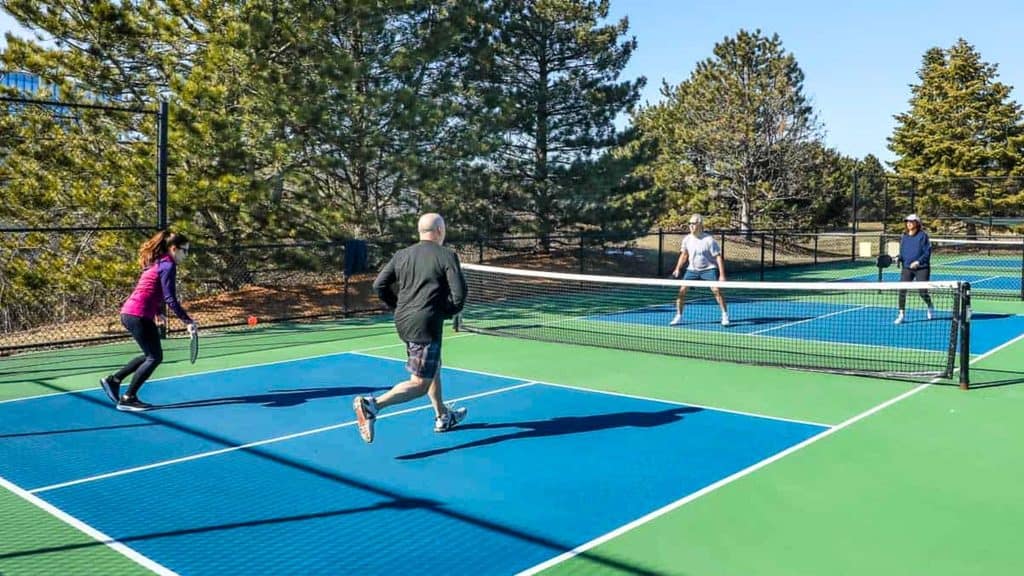
Record numbers of Americans went outside last year, yet they still went less often than before. Seniors are adding outdoor participants by the hundreds of thousands, and kids are showing up in growing numbers, yet the overall frequency of those trips keeps falling. Pickleball is the one exception, with more people going outside to play it than for just about any other reason.
National Play Outside Day falls on the first Saturday of every month, with the next observance on Saturday, Oct. 3. For a country that built an entire identity around national parks, open trails and the romance of fresh air, the idea that Americans are participating in outdoor recreation at record levels while going less frequently is worth sitting with. The pandemic expanded the outdoor participant base dramatically, and for many people the habit did not stick.
More participants, fewer trips
A record 183.2 million Americans participated in outdoor recreation in 2025, representing 59% of the population ages 6 and older and the highest total ever recorded. The number buried directly beneath that headline is the more interesting one. The average participant now takes five fewer outings per year than in 2019. More Americans than ever are counted as outdoor-recreation participants. They are just going less often.
The wrong generation is staying home
Kids ages 6 to 12 grew 5% to 22.6 million outdoor participants in 2025, while adults 65 and older added 800,000 in a single year. Core outdoor participants, defined as the most frequent outdoor participants in the data, fell by 3.6 million in 2025. Participation is broader than ever and shallower than it has been in years. The 65-and-older group has added more than 12 million participants since 2016, a pace that suggests something more than a casual turn toward fresh air.
For many older adults, the outdoors became a fixture during the pandemic years and held. The generation that grew up being told to go outside and then spent decades indoors is now, in retirement, the one actually doing it.
Pickleball figured out what gyms didn’t
Pickleball had 24.3 million American players in 2025, up 479% since 2020, making it the fastest-growing sport in the country for five straight years. Its core players, defined as those who play eight or more times per year, grew from 1.4 million in 2020 to 7.48 million in 2025. While overall outdoor recreation has a frequency problem, pickleball’s most engaged players grew more than fivefold in five years.
The basic rules are easy for beginners to learn, the courts are short and players show up with other people and keep score. Being outside with no reason to return feels like a blank afternoon with nowhere to go, but a structured game on a short court gives people a reason to be outdoors.
2 hours outside is enough
Two hours a week spent in natural settings is associated with significantly better self-reported health and well-being, according to a study of nearly 20,000 adults in England. The researchers found similar associations whether those two hours came in a single visit or were spread across shorter trips during the week.
The authors describe 120 minutes as a possible threshold and note that more longitudinal research is needed. But the direction of the finding is consistent: regular time in nature at that level is associated with better outcomes than none at all. The bar is considerably lower than most people’s mental picture of what going outside requires.
Outside is already close enough
Getting outside does not require gear, a calendar entry or a particular occasion. A backyard works, and so does the nearest green space or the block around the corner. The most memorable outdoor moments are often unplanned. Someone steps out of the hotel and keeps walking, or sits on a park bench longer than makes practical sense. Travelers figure this out faster than most because the reset happens by necessity.
A new city strips away the routines that make staying inside feel reasonable, and suddenly a walk after dinner becomes the obvious thing to do. Back home, the same impulse is available and rarely taken. The nearest park has not moved, and the light on a Wednesday afternoon is the same.
The frequency problem nobody is solving
The outdoor industry built its participant base to an all-time high, and the next challenge is getting people to go outside. OIA tracks this as a frequency issue, one where the base is wider than ever, and the average visit rate is lower than before 2020.
Research consistently links regular time outside to measurable differences in how people feel. Most people already believe the case for it. The task now is making it easier to go back than to skip it, and the first Saturday of every month is as good a place to start as any.
Mandy is a luxury travel, fine dining and bucket-list-adventure journalist with expert insight from 47 countries. She uncovers unforgettable experiences around the world and brings them to life through immersive storytelling that blends indulgence, culture and discovery, and shares them with a global audience as co-founder of Food Drink Life. Her articles appear on MSN and through the Associated Press wire in major U.S. outlets, including NBC, the Daily News, Boston Herald, the Chicago Sun-Times and many more.