
St. Patrick’s Day turns American kitchens and pubs foamy and festive, with Guinness as the unofficial flavor of the celebration. The iconic Irish stout long poured behind the bar also moves into home cooking, trading the pint glass for the pot as the holiday arrives. From slow-simmered stews to rich gravies and even desserts, Guinness works as a flavor enhancer in hearty Irish dishes just as much as a drink raised for the celebration.
This post may contain affiliate link(s). As an Amazon Associate, I earn from qualifying purchases. See Disclosures.
Guinness quenches thirst during St. Patrick’s Day celebrations, but it also stands out in the cooking pot. Its roasted barley edge, gentle hop bite and soft malt sweetness bring balance to rich ingredients, giving the dark stout a reputation for keeping Irish food traditions well represented far beyond Ireland’s shores.
Guinness origins and expansion
Few beer names carry the global recognition of Guinness, a dark stout known for its roasted flavor and dense foam created by nitrogen. The beer traces its origins to 1759, when Arthur Guinness began brewing at the St. James’s Gate Brewery in Dublin. He secured the property with a 9,000-year lease, establishing a brewing operation that still runs at the same site today.
The Guinness story also extends beyond beer production and into Dublin’s civic life. Arthur Guinness supported local schools and served in public roles within the city, setting a pattern of community involvement that continued through later generations of the family. Family members contributed to major public efforts in Dublin, including the restoration of St. Patrick’s Cathedral, support for hospitals and universities and housing projects built for working families. They also donated St. Stephen’s Green to the public so the park could remain open for everyone to enjoy.
As the brewery grew, production at St. James’s Gate expanded beyond Ireland, and shipments began moving overseas. One of the earliest recorded exports reached the United States in 1817, when eight barrels arrived in South Carolina. The beer shipped at that time was a porter rather than the stout recognized today, an early step in the brand’s presence in the American market.
Stout tradition on St. Patrick’s Day
St. Patrick’s Day began as a religious observance honoring Saint Patrick, the missionary credited with bringing Christianity to Ireland. Over time, the date expanded into an international celebration of Irish heritage featuring parades, festive gatherings and traditional foods across many U.S. cities.
One beverage closely tied to the occasion is Guinness, which is strongly associated with Ireland and often appears alongside classic Irish dishes during the celebration. Irish pubs around the world have long poured the dark stout during the holiday, and more than 13 million pints are typically consumed worldwide on St. Patrick’s Day.
The classic pub pouring tradition
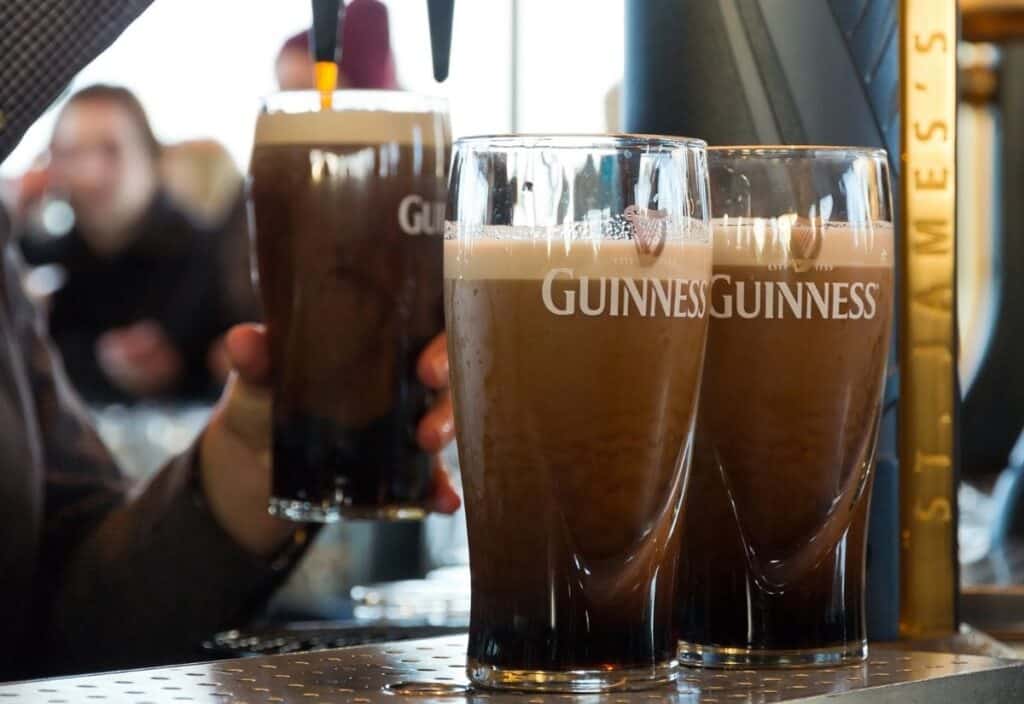
Guinness remains closely tied to pub traditions, especially through the careful method used to serve it on draft. Bartenders typically pour the stout in two stages so the nitrogen bubbles settle and form the thick foam head that sits above the dark beer. The process begins with a clean, dry glass held at an angle while the stout flows until the glass reaches roughly three-quarters full. After a short pause that allows the beer to settle and the creamy head to build, the bartender fills the glass to the rim with a straight pour. The full routine takes about 119.5 seconds, and many pubs treat it as a hallmark of proper service.
During St. Patrick’s Day celebrations in the U.S., the stout also appears beyond the pint glass. Many drinkers use it in cocktails, desserts and savory dishes during the holiday, keeping the beer present in both bar culture and home kitchens.
Irish flavors reach American kitchens
Guinness has become a familiar ingredient in American kitchens, especially around St. Patrick’s Day, when many cooks bring the stout into everyday recipes. The beer first gained attention in cooking as chefs used it to tenderize meat during long cooking and deepen the taste of gravies and sauces. Its roasted barley flavor and mild bitterness help balance rich foods, which makes it a natural match for hearty meat dishes and even certain desserts.
Several recipes appear regularly on restaurant menus and in home kitchens, such as Guinness stew. It remains one of the best-known Irish-style dishes, built around slow-cooked beef, vegetables and stout. Other favorites include shepherd’s pie prepared with stout in the meat filling, bangers and mash topped with onion gravy made with the beer, and cheddar soup enriched with a stout base.
Long-cooked dishes benefit from the beer’s depth during braising, such as lamb shanks often cooked slowly with stout, onions and root vegetables until tender, creating a savory sauce. Sweet dishes, including sticky toffee pudding flavored with stout and served with warm toffee sauce, also make use of the ingredient.
Tradition poured into cooking
Irish immigrants carried pub dishes and stout traditions with them as they settled in the U.S., bringing familiar flavors from Irish kitchens and taverns into new communities. Over time, shared customs around food and drink helped those traditions take hold beyond pubs and into American homes. Each St. Patrick’s Day, stout finds its way into stews, pies and desserts, placing an Irish brewing heritage at the center of the holiday table.
Jennifer Allen is a retired professional chef and long-time writer. Her work appears in dozens of publications, including MSN, Yahoo, The Washington Post and The Seattle Times. These days, she’s busy in the kitchen developing recipes and traveling the world, and you can find all her best creations at Cook What You Love.