
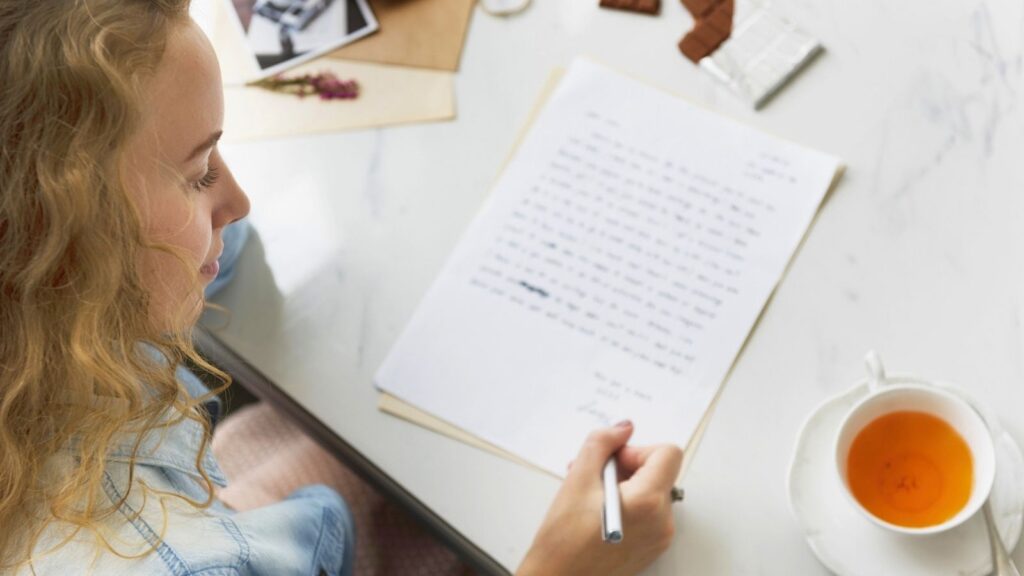
Younger Americans pick up pens again, trading quick texts for handwritten letters as screen fatigue reshapes how they communicate. Handwritten notes, mailed cards and pen pal exchanges reappear in everyday use, with social platforms filled with videos that show both the process and the meaning behind sending mail.
This post may contain affiliate link(s). As an Amazon Associate, I earn from qualifying purchases. See Disclosures.
About 81% of Gen Z say they want an easier way to disconnect from their devices, a sign of fatigue with constant digital interaction. That demand influences how people communicate, with some turning to handwritten letters as a more focused, offline alternative to messaging apps and social feeds.
Constant digital messaging reduces engagement
A steady stream of notifications and messages across multiple platforms has changed how people interact, often pushing conversations into short replies or reactions that disappear into ongoing threads. Users move between apps, divide their attention and process messages in fragments rather than in full, leaving little space for sustained interaction.
Speed defines digital communication, with messages arriving instantly and expecting fast responses, which limits time for reflection or depth. Many people say they want interaction that feels more complete and less connected with constant alerts, a preference that extends beyond communication itself. About 78% of Americans say they would choose a fully in-person social life over a digital-only one, indicating demand for more direct and authentic experiences.
Handwritten letters create a more personal connection
Handwritten letters introduce a level of effort that digital messages rarely match, requiring time, attention and physical presence. That process turns communication into a deliberate act rather than a quick exchange, giving both the sender and the recipient a more focused experience.
A letter stands on its own rather than competing with incoming notifications or being left unread in a crowded message thread. The format allows a single message to carry through without interruption, while handwriting adds individuality through variation in style, spacing and tone. Unlike digital messages, letters can be kept, revisited or displayed without relying on a device, which adds to their staying power.
Visual design becomes part of the message
For many people, the presentation of a letter carries as much meaning as the words inside it, turning the act of writing into a creative process. Senders often plan the visual layout before sealing the envelope, treating each piece as something to be assembled rather than simply written.
Envelopes feature drawings, layered stickers or themed layouts, while address sections include stylized lettering, spacing and color choices. Inside, paper, ink and inserts often follow a coordinated palette, with prints or small notes arranged to match the overall design. This approach turns mail into a tactile, visual experience where the act of creating the letter becomes part of the communication itself.
Online communities revive pen pal exchanges
Younger users are organizing pen pal exchanges through digital spaces, using online communities to connect participants across cities and countries. These groups create structured exchanges that extend beyond immediate social circles and make it easier to maintain ongoing correspondence.
Platforms such as TikTok and Instagram feature videos that document outgoing and incoming mail, from preparing envelopes to opening letters, which makes the process visible and accessible. Participants use letters for casual updates, reflections and ongoing conversations rather than urgent communication, building connections over time through a slower, more deliberate format.
Postal systems continue to support personal mail use
Postal systems continue to support personal mail through standardized services and global delivery networks, allowing individuals to send letters across regions and borders with relative ease. Established formats and stamp programs keep the process familiar, even as package delivery dominates overall mail volume, ensuring that personal correspondence remains accessible even at a smaller scale.
Slower communication finds a place in digital routines
Physical mail stands apart in a landscape shaped by speed and constant connectivity, offering a format that requires time and attention in a way digital messages do not. The effort involved in writing and sending a letter gives it weight, making each exchange feel more intentional and complete.
Younger users have not replaced digital communication but have added a slower format alongside it, using handwritten letters when they want a different kind of interaction. That contrast keeps handwritten communication relevant, not as a replacement for digital tools, but as a deliberate alternative within them.
Zuzana Paar is the creator of Sustainable Life Ideas, a lifestyle blog dedicated to simple, intentional and eco-friendly living. With a global perspective shaped by years abroad, she shares everyday tips, thoughtful routines and creative ways to live more sustainably, without the overwhelm.