
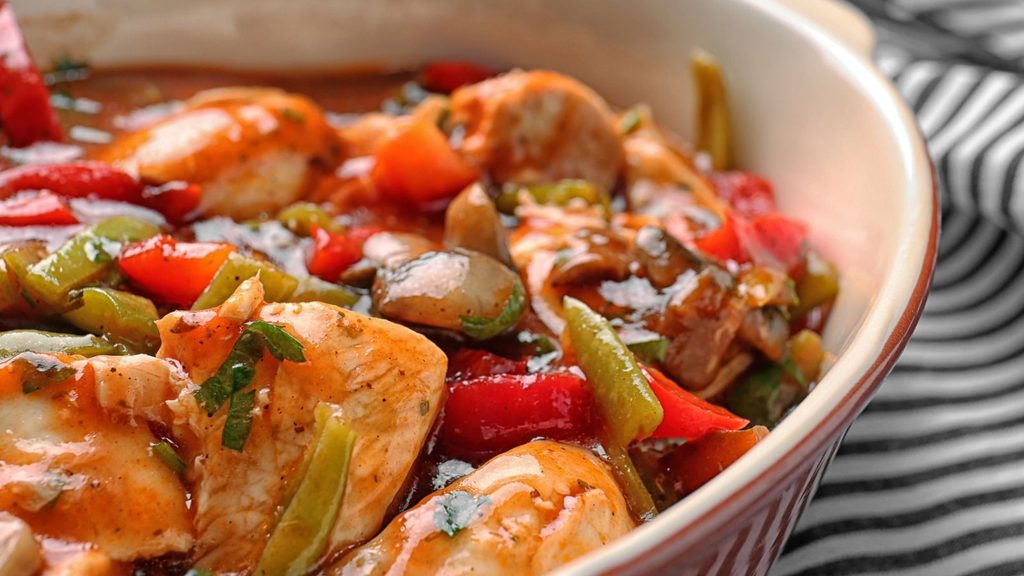
The chicken cacciatore on American tables is a distinctly American version of a dish that Italy itself never settled on a recipe for. Italian immigrants rebuilt their cooking from what American pantries could supply, and what came out of those kitchens became its own distinct tradition rather than a replica of anything made back home. Oct. 15, National Chicken Cacciatore Day, celebrates as much what those immigrants built here as what they brought.
Between the 1880s and 1920s, millions left the Italian south for the ports. Centuries of rural poverty, limited land and difficult economic conditions had pushed people to seek work abroad. They arrived in America with recipes inside their memories, but with few written instructions.
They could not carry the ingredients those recipes required. The tomatoes, wines, herbs and vegetables that structured the cooking back home were not always available, affordable or the same as what the American market offered. What arrived at the American stove was built from memory and from whatever was actually available.
A month that fits
Congress designated October 1989 as Italian-American Heritage and Culture Month, an observance that has continued every October since. Oct. 15, widely recognized in food-holiday calendars as National Chicken Cacciatore Day, sits in the middle of it. The two occasions share a month because they share a subject.
The south accounted for the great majority of Italian immigration to America, and over two-thirds of those arriving from the Mezzogiorno were contadini, rural farmers and peasants. They built their kitchens under those conditions, and those conditions shaped the food they cooked.
Italy never settled on a recipe
In Italy, cacciatore takes different forms from region to region and family to family. Northern versions often favor white wine, while southern versions more often use red. Tomatoes, mushrooms, olives, peppers and herbs all appear in different regional and family versions.
Cacciatore means hunter-style, and versions exist using chicken, rabbit and other meats. The dish has never had one canonical recipe, which is why it takes so many distinct forms across the country.
The ingredients that didn’t make the trip
Availability, price, local ingredients and American tastes drove what changed. Tomatoes became central to many American versions, particularly those built around the red sauce that became a hallmark of Italian-American cooking. What went in and what dropped out reflected the ingredients American markets offered and the cooking traditions that took hold here.
Bell peppers and the pasta underneath
Bell peppers became especially prominent in Italian-American versions of chicken cacciatore, even though Italian recipes vary widely in whether they include them. In Italy, cacciatore is generally served as a second course, alongside bread, potatoes or polenta rather than pasta. Serving it over pasta is strongly associated with Italian-American cooking rather than with any Italian regional tradition.
The changes include things the American version added that Italian versions don’t always share, and things Italian versions use that the American dish left behind. The two traditions share a name and a cooking method, but the ingredients and presentation can differ considerably.
Two dishes, one name
In Rome, one well-known preparation uses white wine and white wine vinegar instead of tomatoes, with no bell peppers or pasta. The result is brighter and sharper than the tomato-heavy version many Americans know. Other central and southern Italian versions do include tomatoes, olives or capers.
The variability across Italy is part of the story. Cacciatore was never a single recipe so much as a broad approach to braising meat with whatever aromatics, wine and vegetables were at hand. That flexibility is one reason Italian immigrants could adapt it as freely as they did when the ingredients around them changed. The two traditions share a name and a cooking method. What separates them is everything that happened in between.
An American original
For much of the 20th century, American food culture often treated Italian-American cooking as a rough draft, the food the immigrants made before they could do it properly. Red sauce, braised dishes and heavy Sunday tables were the provincial cousins of the refined Italian cuisine that American food culture eventually decided was the real thing. In that telling, you ate chicken cacciatore before you knew better.
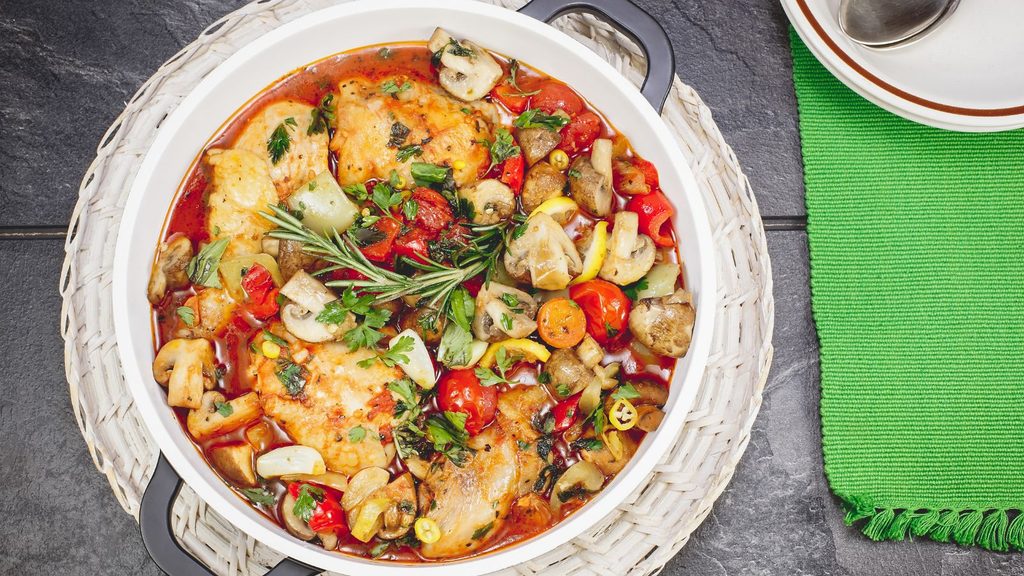
Italian-American cooking is one version of a story repeated across immigrant communities throughout America, each building a cuisine from whatever the new country offered and producing something the source country does not cook and does not recognize as its own. The distance between what left Italy and what arrived on American tables is not a failure of memory or technique. It is what happens when food moves. Chicken cacciatore, in its American form, was assembled here, from what was here. The dish earned the occasion.
Jennifer Allen is a retired professional chef and long-time writer. Her work appears in dozens of publications, including MSN, Yahoo, The Washington Post and The Seattle Times. These days, she’s busy in the kitchen developing recipes and traveling the world, and you can find all her best creations at Cook What You Love.