
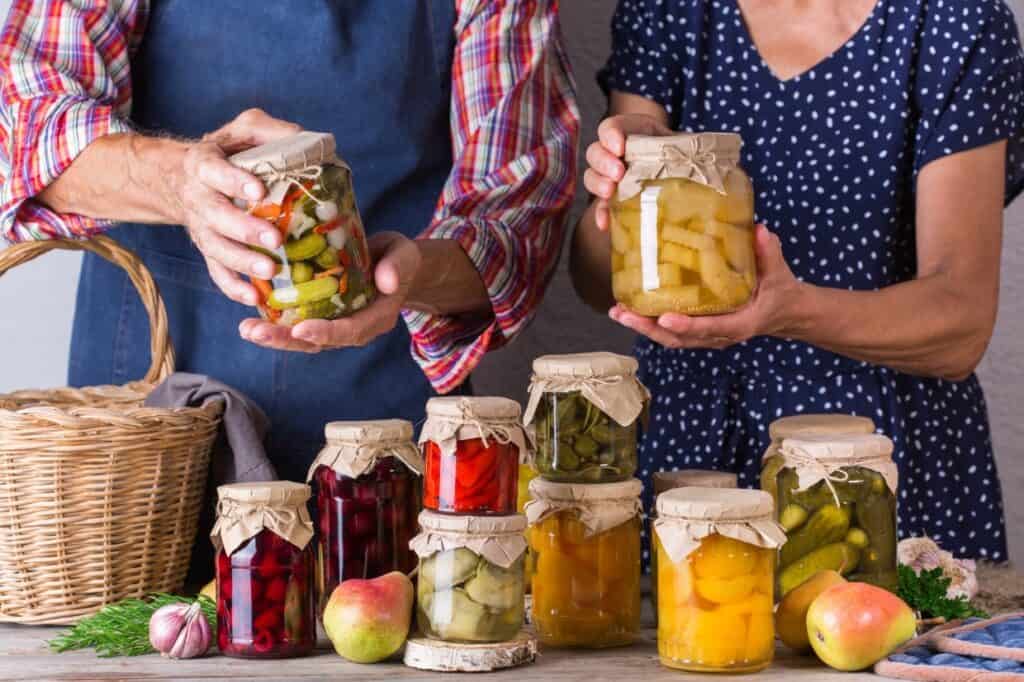
Across the United States, more kitchens are becoming hubs of preservation as food prices rise and seasonal dishes gain attention. National data shows steady food inflation in recent months, keeping budgets tight and making every ingredient matter. In this climate, preserving for beginners is booming, and with jars lining shelves and fermentation crocks bubbling, the practice shifts from a niche hobby to an everyday habit.
This post may contain affiliate link(s). As an Amazon Associate, I earn from qualifying purchases. See Disclosures.
More families are changing their weekly cooking routine, incorporating preserving into meal planning, just like grocery shopping or preparing ingredients. They see it as a way to take advantage of seasonal produce while keeping pantry staples stocked throughout the year.
Why preserving feels fresh again
More people are turning to food preservation methods at home, and broader economic trends push this shift. In July 2025, the U.S. annual inflation was at 2.7%, unchanged from June, while food inflation also remained at 2.9%. This shows ongoing pressure on grocery budgets and its impact on meal planning and affordability.
With prices still rising, households are adopting food preservation strategies such as canning, pickling and dehydration. These sustainable methods combine cost-consciousness and a renewed interest in self-sufficiency by promoting mindful ways to eat seasonally, reduce waste and maintain control over food quality and supply.
Canning without the drama
Canning is a classic method that involves cooking food, sealing it in jars and heating it to destroy microbes. High-acid foods, such as jam or pickles, can be safely processed using a water bath canner, while low-acid foods require a pressure canner to reach safe temperatures. These distinctions are crucial to prevent foodborne illnesses and ensure that the preserved food remains safe over time.
Beyond the focus on safety, canning also helps keep nutritious meals affordable and available year-round. When jars are sealed correctly, they can be stored for months or even years. This long shelf life supports meal planning, keeps grocery costs in check and provides a reliable source of nutritious food.
Freezing that feels easy
Freezing is one of the simplest preservation methods and works well for a wide range of foods. It keeps food safe for months or more when stored at zero degrees Fahrenheit, stopping the growth of bacteria, yeasts and molds. This reliability makes freezing an accessible entry point for people new to preserving.
However, thousands of people each year question whether foods in their home freezers are still safe to eat. Much of this uncertainty stems from not knowing exactly how freezing prevents spoilage and slows microbial growth. To address these concerns, the U.S. Department of Agriculture provides a freezer storage chart that outlines recommended storage times for various foods, offering clear guidance for the safety and quality of what is being consumed.
Fermenting made accessible
Fermenting starts with clean jars, fresh produce, non-iodized salt and water, which together create the ideal environment for beneficial microbes to thrive. Fermentation is one of the most essential food preservation methods because it utilizes microorganisms, such as bacteria, fungi and yeasts, to transform raw ingredients into safe, flavorful and nutrient-rich foods.
This preservation method also plays a pivotal role in sustainability by reducing greenhouse gas emissions and conserving land and water resources. It enhances the digestibility and nutritional value of plant-based proteins, helps maintain balanced diets and aids nutrient absorption. Additionally, fermented plant foods containing probiotics promote gut health, diversify plant-based diets and support more sustainable agricultural systems.
A step-by-step plan for beginner preservers
Think of this plan as a friendly kitchen companion walking you through the process. Start by choosing a single method to build focus and confidence. Freezing is often the easiest starting point, while water bath canning works well for jams, pickles or chutneys. Using recipes from trusted organizations also ensures food safety and consistent flavors. Tested recipes account for acidity, cooking times and storage, reducing the spoilage risks and ensuring each jar or batch is safe.
Having the right tools makes preserving more efficient and less stressful. Sturdy glass jars, quality lids and food-safe containers for fermenting are worth the investment. These items are reusable for years, making them both practical and sustainable. Be sure to sterilize jars, wash produce thoroughly and work on sanitized surfaces to prevent contamination. Good hygiene and sanitation habits lead to better results and fewer failed batches.
When fermenting, visual checks, smell and taste are essential for safety. Cloudiness, bubbling and a tangy aroma are normal signs of a healthy fermentation. If something smells rotten, looks moldy or tastes unpleasant, it’s safer to discard it. Once confident with simpler methods, beginners can explore pressure canning, dehydrating or practice advanced fermenting techniques that expand the possibilities for preserving seasonal produce.
From pantry shelves to dinner plates
Rising food costs and changing climate patterns are pushing more people to see home preservation as more than a nostalgic hobby. With a few core techniques, seasonal harvests can become reliable, year-round staples that retain both flavor and nutrition. For households watching their budgets and seeking control over ingredients, those jars, freezer bags and crocks offer a practical way to keep nutritious, affordable meals on the table.
Mandy Applegate is the creator behind Splash of Taste and seven other high-profile food and travel blogs. She’s also the co-founder of Food Drink Life Inc., a unique and highly rewarding collaborative blogger project. Her articles appear frequently on major online news sites, and she always has her eyes open to spot the next big trend.