
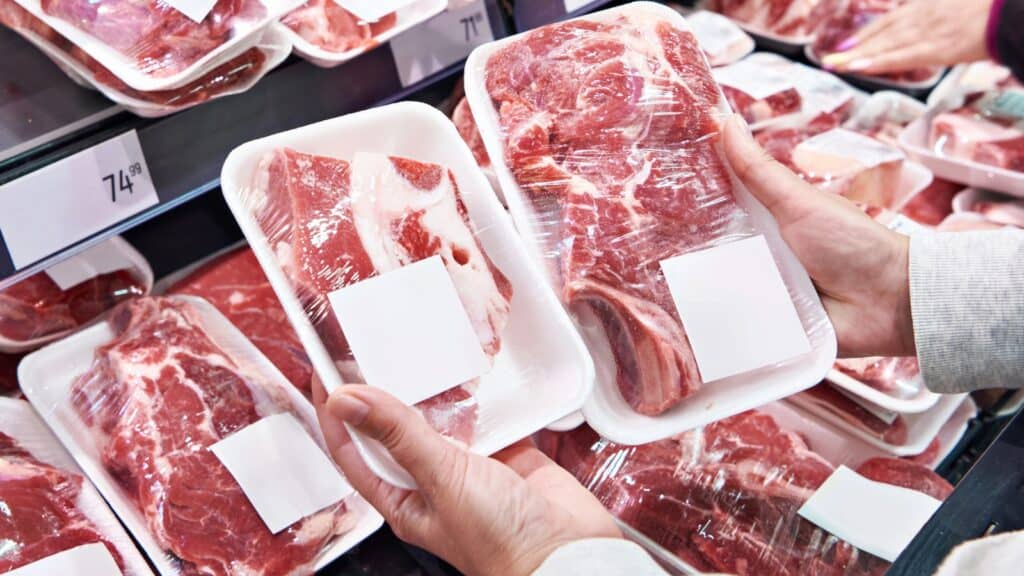
Ground beef crossed $7 a pound this spring and shows no signs of coming back down. A federal antitrust probe into the four companies that process 85% of American beef launched this week, layered over a cattle supply shortage that has been building for years and won’t resolve quickly under any scenario.
This post may contain affiliate link(s). As an Amazon Associate, I earn from qualifying purchases. See Disclosures.
The issues go well beyond the antitrust investigation. Meanwhile, replacement proteins that cook differently have been sitting in grocery stores the whole time.
The numbers behind the crisis
The United States cattle herd is the smallest it has been since 1951. According to the USDA’s January 2026 Cattle Report, the national inventory dropped to 86.2 million head as of January 1, 2026, continuing a seven-year decline driven by prolonged drought, high feed costs and reduced grazing land. Rebuilding a herd takes years. The economics of restocking, with high input costs and uncertain margins, make it slower still.
The Justice Department confirmed it is reviewing more than 3 million documents and interviewing industry participants as part of an active antitrust investigation into the beef market, according to a May 2026 press conference. Acting Attorney General Todd Blanche urged whistleblowers to come forward, noting the four largest beef processors control more than 85% of the U.S. processing market. Whether that produces any relief at the grocery store is an open question, and the supply problem runs on its own timeline regardless.
Learning from around the world
The proteins that show up in working-class home cooking around the world, in street food, in the meals that feed the most people on the least money, are rarely beef or eggs. They are dal, miso, black-eyed peas cooked low and slow with whatever aromatics are on hand or tofu pressed and pan-fried until the outside is lacquered and the inside is still soft. These are not substitutes for something better, but are just what people cook.
American food culture spent decades treating plant proteins as a sacrifice, something made when families couldn’t afford the real thing. That framing was always wrong about the food and who was eating it.
Mujaddara, the lentil-and-rice dish that appears in medieval Arabic cookbooks, has been a weeknight staple in Lebanese and Syrian households for centuries. Dal tadka has been feeding families across the Indian subcontinent for longer than most Western cuisines have existed as distinct traditions. Ethiopian Azifa, a green lentil salad dressed with mustard and jalapeno, predates the current conversation about protein costs by several thousand years. None of these dishes was designed around the absence of meat. They were designed around the presence of something excellent.
The actual math
Ground beef is running close to $7 a pound for standard ground and over $8 for lean and extra lean, according to Bureau of Labor Statistics data. Dried lentils, canned chickpeas, tofu and tempeh all cost a fraction of that, and most of them are kept for months in a pantry or fridge. According to Bloomberg’s reporting on the cattle supply chain, the beef herd won’t recover to pre-drought levels before 2027 at the earliest, so that gap is unlikely to close anytime soon.
What actually works in the kitchen
The practical question is not whether to cook these proteins but how. Lentils need aromatics cooked down before they go in, and they want acid at the end. A squeeze of lemon or a splash of vinegar lifts what can otherwise sit flat. Skip that step, and the pot tastes fine. Add it, and it tastes like something.
Tofu needs a dry surface and enough heat to actually crust. Press the water out, heat the pan and then leave it alone for a few minutes. Moving it too soon is where most people lose the texture, but done right, it’s the foundation of dishes like gochujang tofu, where the crust is what lets the sauce grip.
If roasting, chickpeas need to be very dry and very hot, or they steam instead of crisping. Pat them dry after draining, spread them with room between each one and roast at 425 degrees for about 25 minutes.
Where this goes
The antitrust investigation is still early. Criminal cases move slowly, and price relief at the grocery store, if it comes at all, won’t come fast. The supply problem, the drought and the slow pace of herd rebuilding don’t respond to legal timelines. Beef will likely stay expensive through 2026 and into 2027. A pot of dal costs about $2 to make, feeds four people and takes 40 minutes.
Shruthi Baskaran-Makanju is a food and travel writer and a global food systems expert based in Seattle. She has lived in or traveled extensively to over 60 countries, and shares stories and recipes inspired by those travels on Urban Farmie.