
Overcooked meat happens even to the best of us. It doesn’t mean dinner is ruined, but it does mean the plan needs to change. Here’s how to save the meal and make that dry cut worth putting on the plate.
This post may contain affiliate link(s). As an Amazon Associate, I earn from qualifying purchases. See Disclosures.
First, identify the problem you’re dealing with
Before you try to fix anything, it helps to figure out what went wrong. Some meat is dry but still tender, which usually means the moisture cooked out, but the fibers haven’t tightened too much. Other times, it’s both dry and tough, which is a bigger challenge and calls for a different approach.
This distinction matters because adding liquid won’t soften meat that’s already tightened up. Pay attention to how it feels when you cut into it and chew it. If it slices easily but tastes chalky, you can focus on adding moisture and fat. If it’s resisting the knife and your teeth, you’re likely better off changing how it’s served instead of trying to fix what can’t really be fixed.
Add moisture the right way
If the meat is dry but still tender, adding a little moisture can help bring it back to life. Slice it first, then spoon warm broth or stock over the pieces so it absorbs what it needs without turning soggy. Covering the meat for a minute will give the liquid time to settle into the meat rather than running off.
Gentle steam can work well, too, if the heat is kept to a low temperature. Wrap sliced meat in foil with a small splash of liquid and warm it slowly to avoid any further cooking.
Add fat back
When the moisture in meat has gone, fat can make a bigger difference than you might expect. A little butter or olive oil will add richness and help each bite feel less dry, even if the meat itself hasn’t changed much. This works especially well with lean cuts such as chicken breast, pork loin and most cuts of turkey.
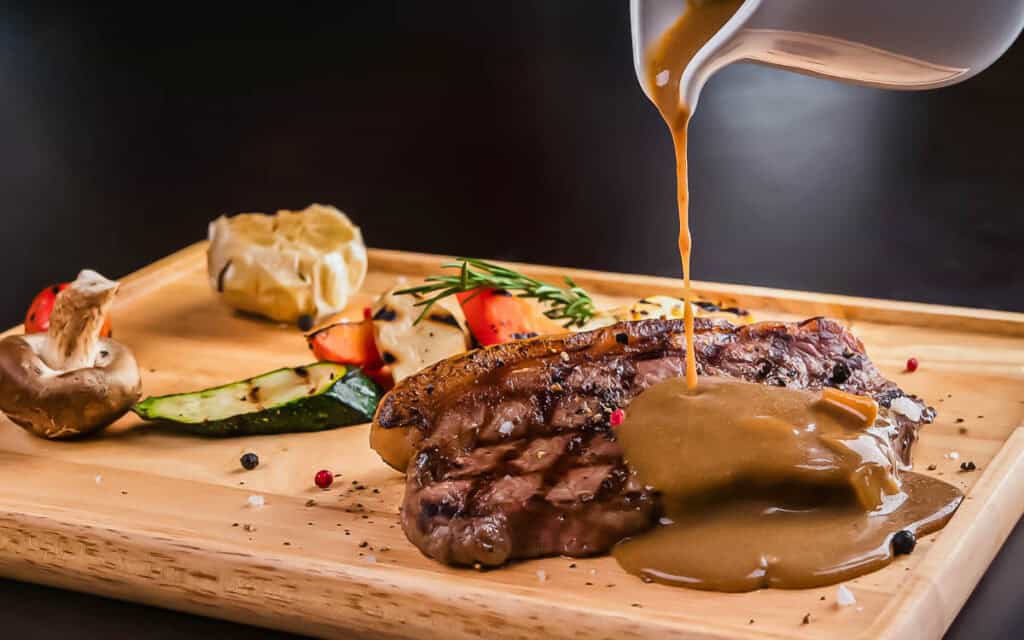
Pan sauces are another easy fix. A quick sauce made from stock, wine or even a splash of pasta water can coat the meat and soften the overall texture. The key with a pan sauce solution is to keep it light so the meat still tastes like itself rather than getting buried under sauce.
Slice it differently to change the texture
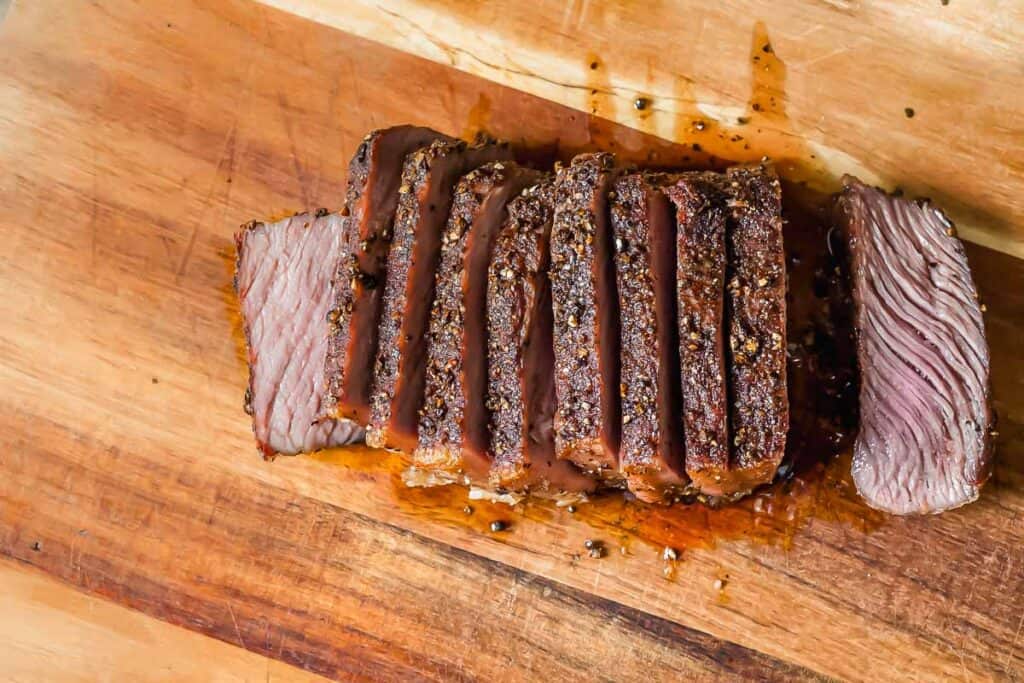
How you cut overcooked meat matters more than most realize. Thick slices will leave long muscle fibers intact, which makes dry meat feel even tougher. Cutting thin slices against the grain shortens those fibers and makes each bite easier to chew.
In some cases, shredding works better than slicing. Pulled chicken or pork can hide dryness far better than thick pieces on a plate, and gives you more options for how to use it.
Use gentle heat for warming
Once meat is overcooked, high heat will only make things worse. The goal is to warm it just enough to serve without driving out what little moisture is left. Low heat and a lid or foil to hold in moisture make the biggest difference in this step.
A covered skillet on the lowest setting or a foil-wrapped pan in a low oven both work well. Adding a small splash of broth before covering helps protect the meat as it warms. Watch it closely and pull it as soon as it’s heated through, as even a few extra minutes can undo all your efforts.
Turn it into something else
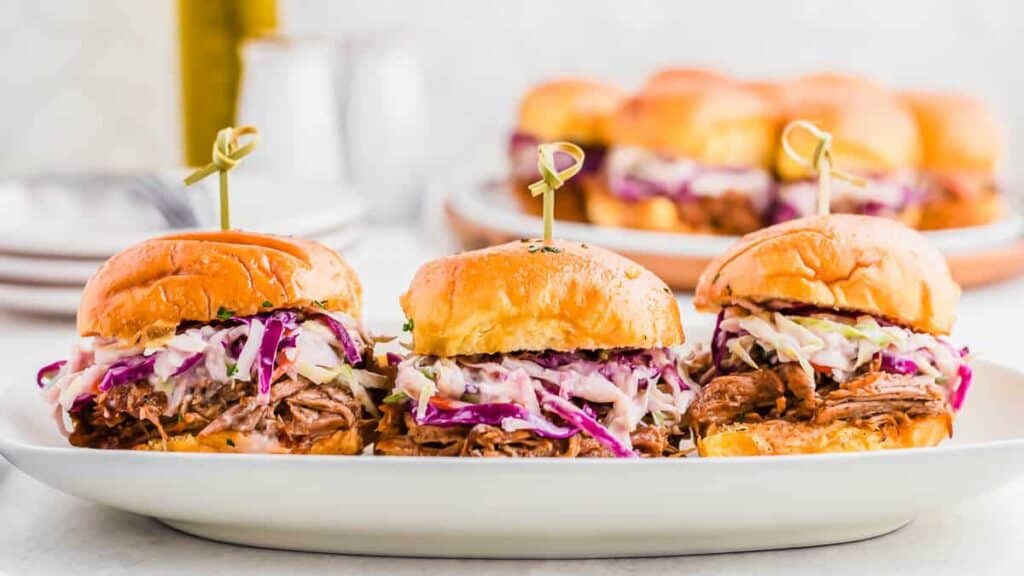
Sometimes the smartest move is knowing when to pivot altogether. Chopping or shredding overcooked meat changes how you experience the texture and makes dryness far less noticeable. This is often the best option when the meat is tough and dry.
Soups, stews and brothy bowls can give meat a second life by surrounding it with moisture rather than expecting it to stand on its own. Tacos, wraps and sandwiches work for the same reason, especially when paired with a sauce or dressing. The meat doesn’t need to be perfect when it’s part of something bigger.
Protein-specific fixes at a glance
Different meats respond better to different fixes, so it helps to adjust your approach instead of treating them all the same.
Chicken
Dry chicken benefits the most from added moisture and fat. Slice or shred it, like Casey Rooney from Get On My Plate does before she warms it gently with broth. The shredded and rehydrated meat can then be folded into soups, used in tacos or added to salads.
Beef
For steaks or roasts, thin slicing against the grain makes the biggest difference. A light pan sauce or compound butter can help soften each bite without masking the flavor of the meat.
Pork
Pork dries out quickly once overcooked, especially lean cuts like loin or tenderloin. Shredding works well here, especially for sandwiches, grain bowls or anything with a bit of sauce.
Turkey
Turkey behaves a lot like chicken, but it can dry out faster. Adding warm stock and serving it sliced with gravy or tucked into soups and casseroles usually works better than reheating it on its own.
What not to do
When meat is already dry, a few common mistakes will make it worse. Microwaving it uncovered almost always puts the nail in the coffin and will leave you with rubbery edges and hot spots. Reheating the same meat over and over dries it out a little more each time, even if you add liquid along the way.
It’s also easy to go too far with sauce. Piling it on won’t fix the texture and usually just hides the meat flavor instead of helping it.
Make the best of it
Overcooked meat doesn’t need to end up in the trash. Sometimes all it needs is a little moisture or fat, and other times it might mean changing your approach altogether. Either way, you can still end up with a meal worth eating.
Gina Matsoukas is the writer, photographer and recipe creator of Running to the Kitchen. Focusing on healthy, seasonal, whole-food recipes, her work has been featured in various online and print publications, including Food Network, Prevention Magazine and Women’s Health. Gina lives in central New York, where she enjoys an active outdoor life.