
Rhubarb is back in the kitchen, and it’s not just headed for pie this time. Fresh supply is picking up this spring, and cooks are working it into syrups, drinks and a wider mix of desserts to keep rhubarb in rotation while it lasts.
This post may contain affiliate link(s). As an Amazon Associate, I earn from qualifying purchases. See Disclosures.
The global rhubarb market is projected to reach about $476.46 million by 2034, growing at an annual rate of 4.6% from 2026. That demand lines up with rhubarb’s punch in the kitchen, where its sharp acidity cuts through rich mixes, its color adds a bright pink contrast and a small amount goes a long way as a bold flavor accent.
Rhubarb kicks off the spring season
The global rhubarb market reached about $318.96 million in 2025, pointing to steady demand across food and beverage use. Its annual return follows a clear seasonal cycle, with harvests beginning in April or May and continuing through the warmer months, depending on location. That timing places it among the first fresh ingredients to appear after winter.
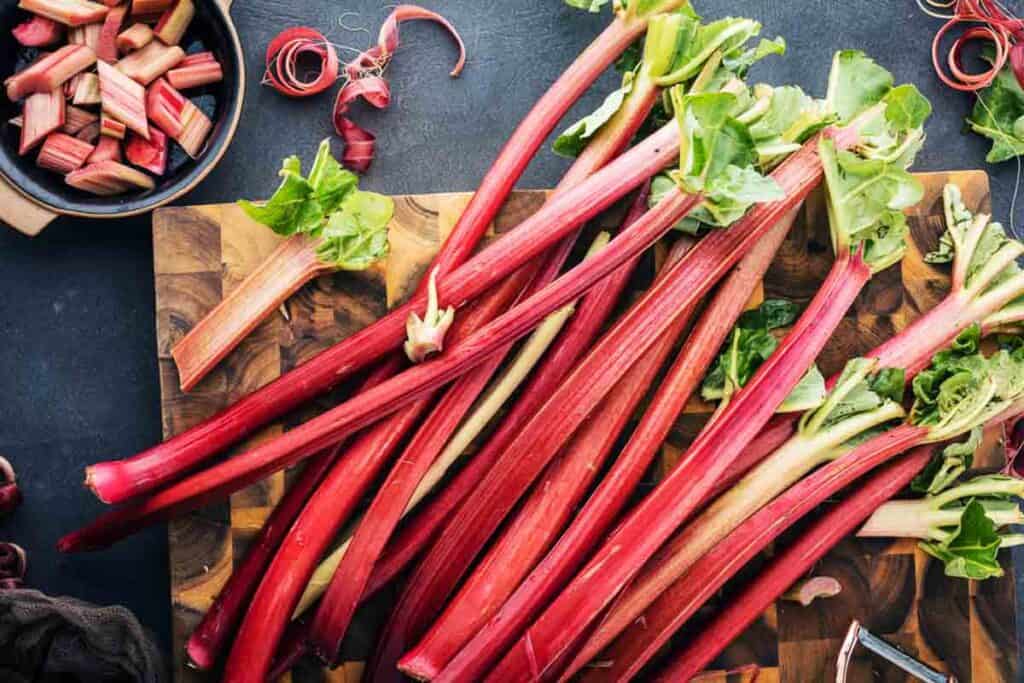
Rhubarb comes from the plant’s stalk, which is the only part used in cooking. These stalks usually measure about 8-16 inches and range from pale pink to deep red, with some green or yellow varieties. They have a firm texture similar to celery, but the taste carries a sharp tang that often requires sugar to balance.
Freshness becomes a factor once rhubarb reaches the kitchen, as its high amount of moisture content means it can lose texture quickly if not kept cold. Most stores sell it fresh rather than processed, so it works best when prepared soon after purchase, before the stalks soften or dry out.
Desserts feature more rhubarb
Rhubarb appears in a wider range of desserts beyond traditional pies, including chilled and quick-set dishes that reduce preparation time and favor lighter textures. Cooks incorporate smaller amounts into whipped and aerated desserts, where the tart flavor adds contrast without weighing down the dish. Low-effort options, such as rhubarb dump cake, offer a fast way to use the ingredient without specialized techniques.
In many recipes, rhubarb serves as a finishing element, added near the end to bring color and contrast and often paired with lower sugar levels so its natural sharpness balances sweetness. This approach carries into plated desserts, where components are prepared separately and assembled at serving, as well as single-portion servings designed for individual use. Adjustments are still made for its strong bite, with sugar levels increased when needed to maintain balance.
Syrups and drinks expand uses
Syrup-based preparation allows rhubarb to be used consistently across a range of drinks. Cooking it into a liquid form supports batch production and maintains a consistent flavor across servings. Rhubarb simple syrup usually goes into sodas, lemonades and dessert toppings, increasing its presence on menus.
“Rhubarb season is fleeting, so I love to make a rhubarb simple syrup that I can freeze for later if I don’t use it all. It starts by simmering chopped rhubarb in water to extract juice and flavor, then straining out the solids. From there, mix the warm rhubarb juice with equal parts sugar to make a syrup that works in drinks from lemonade to cocktails. Rhubarb lends its earthy tart flavor to drinks in the best way,” says Susannah Brinkley Henry of Feast + West. “If you’re sensitive to sour flavors, be sure to use the reddest rhubarb stalks you can find for a sweeter syrup. The more green they are, the more acidic and puckery rhubarb will be,” she adds.
Many bars and cafes now feature rhubarb in both alcoholic and nonalcoholic drinks, including spritz-style options and gin-based recipes. They often pair it with herbs or citrus to balance its sharpness and keep drinks approachable. This preparation focuses on menu versatility, allowing the ingredient to appear across multiple beverage formats.
Preserved rhubarb fills off-season gaps
Rhubarb’s short harvest window leads kitchens to rely on storage methods that extend availability beyond peak months. Freezing remains a common approach, with airtight containers or vacuum sealing used to protect texture and flavor. Many cooks also prepare larger batches during the season, setting aside portions for later recipes.
Other methods rely on shelf-stable options, with rhubarb often turned into jams and preserves. Small-batch strawberry rhubarb jam is a common option, which allows cooks to preserve the fruit in manageable quantities without large-scale preparation. Rhubarb also works well pickled as a savory alternative that holds up over time, following guidance from food safety and extension programs for proper handling and storage.
Seasonal ingredients drive menu planning
Rhubarb’s wider use shows a shift in how kitchens approach seasonal ingredients, treating them as flexible components, not short-lived features. That approach supports tighter cost control while allowing menus to adapt throughout the season. With steady growth ahead, rhubarb is likely to remain part of ongoing menu planning rather than a once-a-year addition.
Mandy Applegate is the creator behind Splash of Taste and seven other high-profile food and travel blogs. She’s also the co-founder of Food Drink Life Inc., a unique and highly rewarding collaborative blogger project. Her articles appear frequently on major online news sites, and she always has her eyes open to spot the next big trend.