
A growing number of travelers choose to spend the night in buildings that were, not so long ago, functioning prisons, working breweries, active railway stations and centuries-old abbeys that earned their character the hard way and now offer it to guests. Expedia Group’s Unpack ’26 report named this “salvaged stays,” its standout hotel trend this year, and the search data behind it makes clear the interest is real.
The salvaged-stays trend has been building quietly for years, and Unpack ’26 data confirms it has arrived. Travelers increasingly treat the building itself as the destination, choosing hotels that carry decades of history over the polished anonymity of new construction. Higher construction costs and financing challenges have encouraged more adaptive-reuse projects in some markets, and search data suggests demand for them is nowhere near satisfied.
From holding cells to hotel rooms
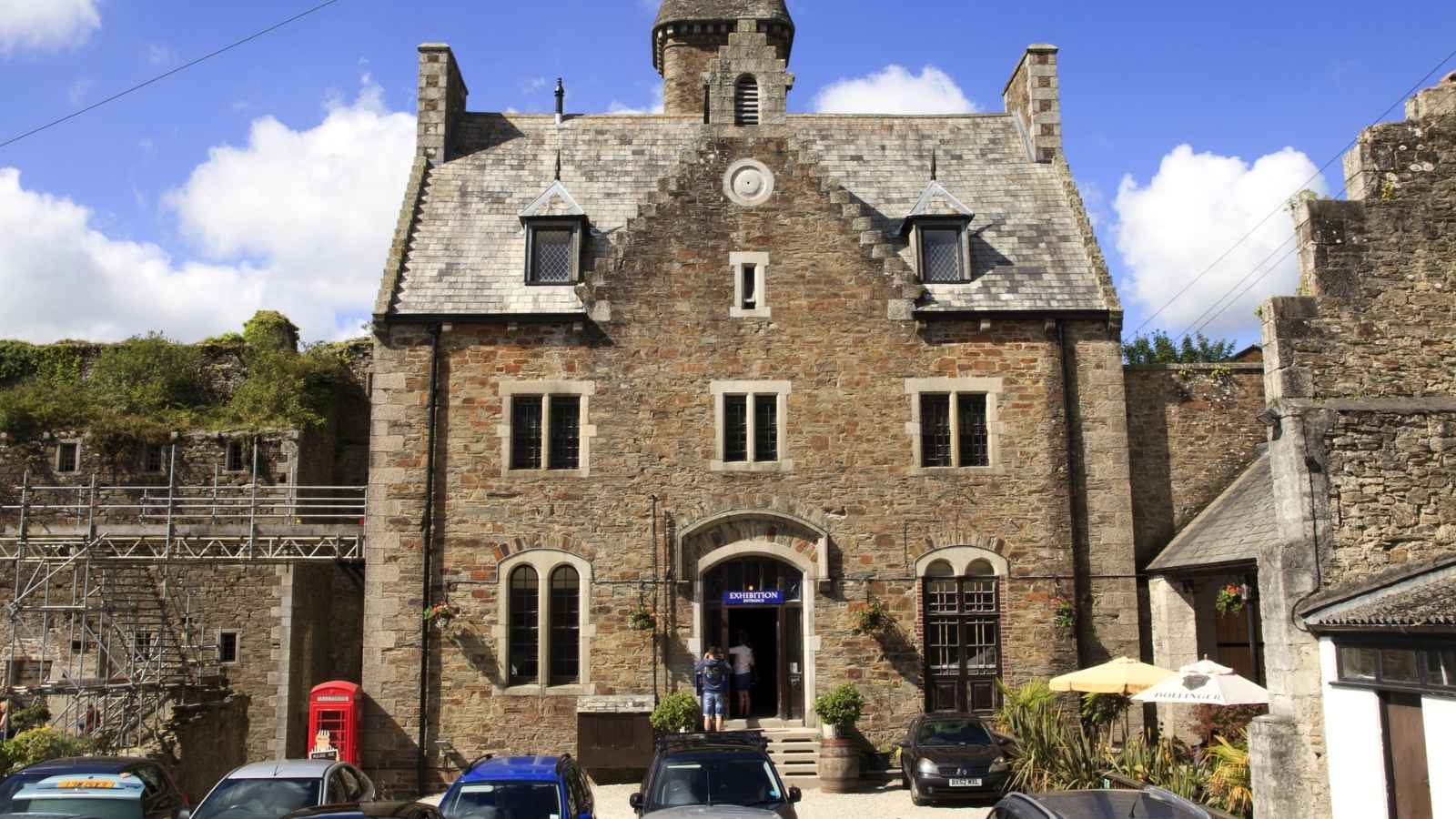
Bodmin Jail Hotel in Cornwall, United Kingdom, occupies a Grade II-listed Georgian prison built in 1779. The jail held 55 executions, the last in 1909, and did not close until 1927. A $92 million restoration converted the structure into 70 rooms, each assembled from three former cells, with original stone walls, barred windows and inmate graffiti preserved. Guests book the Prisoner, Warden or Governor Experience: tiered stays that lean into the building’s history and make no effort to hide it.
In New York City, New York, Nine Orchard Hotel occupies the 1912 Jarmulowsky Bank on the Lower East Side, restored using original blueprints and archival photographs. The Swan Room cocktail lounge sits in the former teller hall, its pink Tennessee marble floors and vaulted coffered ceiling intact. Both properties feature on the Hotels.com salvaged stays list, with Bodmin recording +110% year-over-year growth and Nine Orchard up +23%.
Platforms with a second departure
Railway stations were built to move people through, not linger. The most extraordinary ones now give people a reason to stay. Union Station Nashville Yards, a Romanesque Revival terminal opened in 1900 on the L&N Railroad, earned back-to-back spots on the Historic Hotels of America Best of Adaptive Reuse list in 2024 and 2025. Its soaring barrel-vaulted ceiling and original stained-glass windows remain the lobby’s focal point.
In the Aragonese Pyrenees, Canfranc Estación occupies what was once one of Europe’s largest international railway stations. The 790-foot Beaux-Arts structure was inaugurated by King Alfonso XIII in 1928 and stood abandoned for over 50 years after a bridge collapse severed its cross-border rail link with France. The hotel’s 104 rooms retain the building’s Art Deco detailing, and a Michelin-starred restaurant now operates where passengers once waited for trains.
Sacred ground, colonial walls
Few hotels put guests inside a UNESCO World Heritage site after dark. Fontevraud L’Ermitage in France’s Loire Valley does. The hotel’s 54 rooms occupy the former nuns’ dormitory inside the Royal Abbey of Fontevraud, a 12th-century complex where Eleanor of Aquitaine and Richard the Lionheart are buried. Guests receive after-hours access to the abbey grounds until midnight, when the site belongs entirely to them.
In Paraty, Brazil, Sandi Hotel occupies a restored historic property in the town’s UNESCO-listed center. The building previously served as the Brazilian Mint and later housed a school. UNESCO added Paraty and Ilha Grande to its World Heritage List in 2019, recognizing the area’s combination of historic architecture, Atlantic Forest landscapes and coastal ecosystems. Searches for Sandi Hotel increased 72% year over year, making it one of the fastest-rising salvaged-stay destinations in the dataset.
Workhorse buildings worth checking into
The most searched property on the entire Hotels.com list was not a palace or a prison. It was a school. Hotel Seiryu Kyoto Kiyomizu occupies the 1933 building of Kiyomizu Elementary School, funded by community donations, closed in 2011 and reopened in 2020 as a 48-room luxury hotel steps from the UNESCO World Heritage Kiyomizu-dera Temple. Former classrooms are now guest rooms; the auditorium is a lounge with a direct sightline to Yasaka Pagoda. It recorded the highest year-over-year search growth on the list, at +194%.
Sydney’s The Old Clare Hotel spans two former structures: the Carlton & United Breweries administration headquarters and the County Clare pub, a neighborhood institution since 1940. The CUB Suite occupies the brewery’s original boardroom, its heritage timber panelling, chandelier and ceiling intact. The Old Clare’s rooftop pool now sits above what was one of Australia’s longest-running brewery sites, a conversion that feels entirely in keeping with the building’s history of feeding and sustaining a neighborhood.
What a generic hotel can never manufacture
The salvaged stays surge points to a growing demand for accommodations that cannot be duplicated in another city or replicated by another brand. Generic hotels, however well appointed, cannot manufacture the kind of history that comes from generations of a building’s actual use. The properties drawing the most search growth right now are not winning guests over with amenities alone. They offer a story that existed long before the hotel did, and there are only so many of those left.
Mandy is a luxury travel, fine dining and bucket-list-adventure journalist with expert insight from 46 countries. She uncovers unforgettable experiences around the world and brings them to life through immersive storytelling that blends indulgence, culture and discovery, and shares them with a global audience as co-founder of Food Drink Life. Her articles appear on MSN and through the Associated Press wire in major U.S. outlets, including NBC, the Daily News, Boston Herald, the Chicago Sun-Times and many more.