
Slow cookers are excellent for easy meals, hands-off cooking and tender results. But a few common slow cooker mistakes can cancel all that simplicity. Luckily, you can prevent these issues with minor tweaks and achieve an excellent taste on a reliable schedule.
This post may contain affiliate link(s). As an Amazon Associate, I earn from qualifying purchases. See Disclosures.
Most slow cooker disasters trace back to timing issues and temperature control. Small decisions at the start determine whether your dinner is rich and tender or watery and bland.
Skipping the sear
Throwing raw meat directly into your slow cooker may seem like a time-saver. And sometimes it is, but sometimes it’s not.
Check your recipe first. Some dishes work fine with raw meat, especially if they use cuts with enough fat or if the recipe builds flavor in other ways. But when a slow cooker recipe calls for searing, there’s a reason.
When unseared meat hits the pot, it releases water, which creates steam, which dilutes your sauce and flattens the flavor. You end up with something that tastes like it came from a hospital cafeteria.
A quick sear triggers the Maillard reaction, which is the same process that gives a burger its distinctive flavor, rather than making it taste like boiled beef. Those browned bits dissolve into your sauce, giving it actual depth.
Skip the sear, and your beef stew tastes flat. You’ll spend 20 minutes adding salt and tomato paste and simmering uncovered, trying to fix a problem that five minutes of searing could have prevented.
Lifting the lid
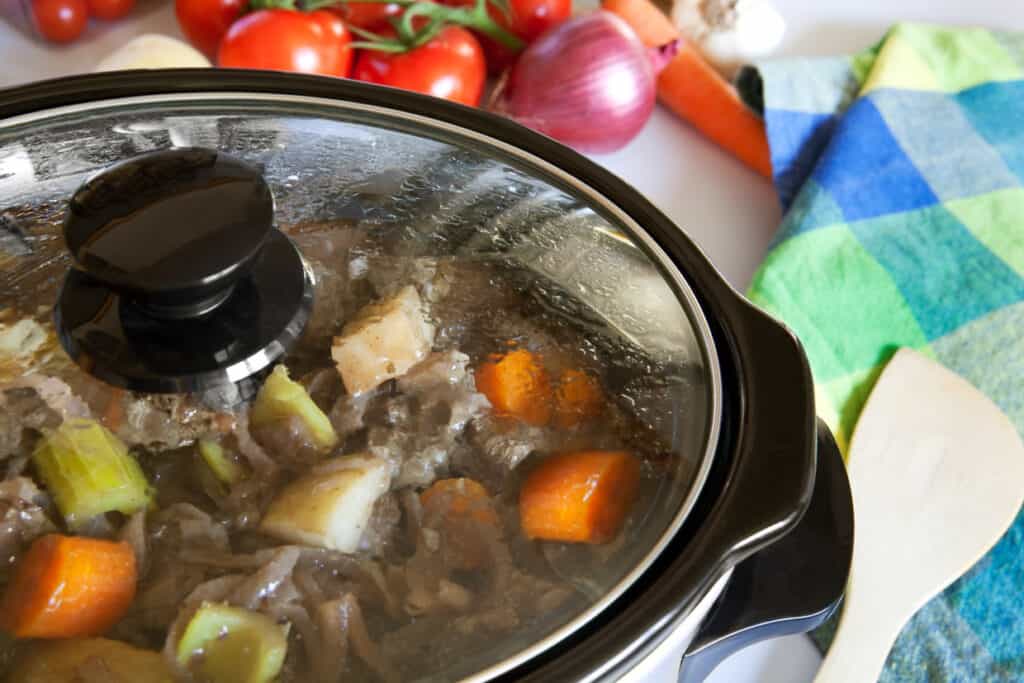
Slow cookers work by trapping steam. That steam keeps the temperature steady and the food moist. But every time you lift the lid, you release that steam.
Lifting the lid causes the temperature to drop and the simmer to stop. Your cooker has to spend the next half hour regaining its previous temperature. This isn’t a minor setback. Lift the lid three times during an eight-hour cook and you’ve added an hour. Your pork roast, which was supposed to be ready at 6 p.m., is still cooking at 7 p.m.
The temperature swings can also create other problems, such as beans that remain hard while the sauce becomes thin. So you stir to fix it, which means lifting the lid again. Now you’re stuck in a cycle that makes everything worse.
The fix is simple: don’t open it. Set your timer, walk away and let the trapped heat do its job. As Bella Bucchiotti, a food blogger at xoxoBella, explains, “Trust the process. Set it, forget it and let the slow cooker work its magic.”
If you absolutely must check, do it once near the end of the cooking process. Then close the lid and leave it alone.
Incorrect fill levels
Fill level is critical in a slow cooker. Add too much food and nothing cooks properly; add too little and everything burns. The target is for the slow cooker to be half to two-thirds full. For soups or other dishes with a lot of liquid, you can fill the container up to three-quarters full. Any more than that and you’re asking for problems.
Overfilling the cooker prevents it from circulating heat. Everything floats, nothing gets tender and the temperature never stays consistent.
Underfill, and it runs too hot. You’ll see a burnt ring around the crock even with liquid in the pot, and your pot roast comes out tough and dry on the edges. There’s not enough mass to buffer the heat.
A slow cooker needs mass to hold a steady simmer. It also requires space for steam to circulate, allowing you to achieve tender results without standing over the pot. Measure your ingredients before adding them. It takes 30 seconds and saves hours of fixing mistakes later.
Adding dairy too early
Drop cream or cheese into your slow cooker at the start, and it will look fine for hours. Then you lift the lid during dinner and find a separated, grainy mess.
Dairy can’t handle eight hours of low, steady heat. The proteins tighten, and the fat separates. You end up with a thin, gritty sauce that tastes off, no matter how much you stir.
The fix is to wait until the end of the cook time. Your chicken, vegetables and broth can cook all day. But wait and add the milk, cream, sour cream, yogurt and cheese at the end, when the heat is gentle and controlled.
Additionally, some dairy products are better suited to heat than others. Heavy cream is more stable than milk or half-and-half because of its higher fat content. Evaporated milk also holds up well. Cream cheese works if you cube it and drop it on top, then stir it in at the end of cook time. Your sauce will be smooth, rich and actually edible.

Using frozen ingredients
Frozen ingredients can seem like an easy win for busy nights, but they’re not. They create safety problems with meat and turn your sauce into diluted mush.
Tossing frozen chicken breasts into your slow cooker seems convenient, but it’s also unsafe. Slow cookers heat gradually, so frozen meat sits between 40 and 140 degrees Fahrenheit, the danger zone for bacterial growth, for hours.
Food safety experts are clear: thaw your meat first. Move it from freezer to refrigerator the night before, or seal it in plastic and submerge it in cold water for a few hours.
Frozen vegetables carry ice and trapped water. When that ice melts in your slow cooker, it cools the simmer and floods your sauce, so you end up with bland, watery stew.
If you must use frozen vegetables, rinse them off to remove the ice glaze and pat them dry. This removes surface water without the need for thawing. Then cut your added liquid by a third to compensate for what they’ll still release.
Fixing mistakes
These five mistakes account for the majority of slow cooker disasters. Fix them and your dinner shows up on time with deep flavor and tender meat. No more watery stew, no more 7 p.m. surprises and no more trying to fix problems you created at breakfast.
Anne Jolly is a writer and creator of the Upstate Ramblings blog, which explores America’s unique food culture. Her work on culinary trends and food traditions has appeared in major publications, including MSN, Fortune, The Mercury News, The Seattle Times, St. Louis Post-Dispatch and Education Week. When not writing, she experiments with new recipes and discovers local food gems in upstate New York.