
Most kitchen drawers are filled with gadgets that sound great in theory but are rarely used, but the bench scraper is different. This simple flat piece of metal or plastic costs under $15, and once you start using it, you’ll reach for it constantly. It handles jobs you’ve been doing inefficiently with knives or your hands, and it also makes cleanup faster.
This post may contain affiliate link(s). As an Amazon Associate, I earn from qualifying purchases. See Disclosures.
What is a bench scraper?
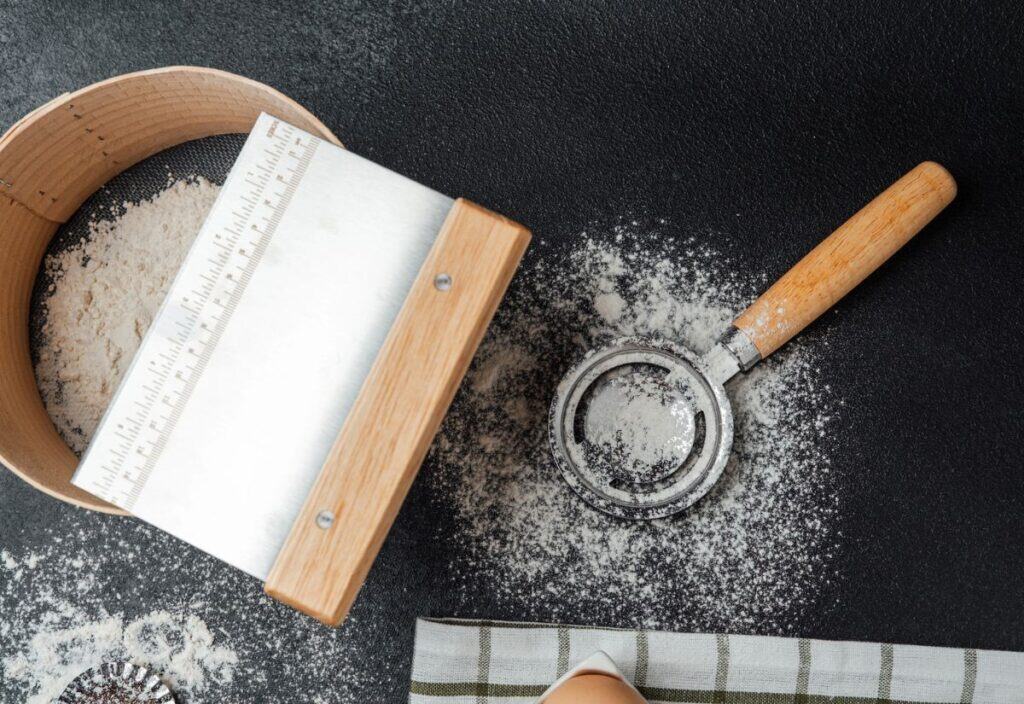
A bench scraper is a rectangular blade with a handle on one edge. Metal versions measure approximately 6 inches wide by 4 inches tall, featuring a straight, sharp edge. Plastic scrapers, sometimes called bowl scrapers, are smaller, curved and flexible so they fit better against the walls of mixing bowls.
You’ll see them called bench scrapers, dough scrapers, pastry scrapers or bowl scrapers, depending on who’s talking and what they’re using it for. Professional bakers consider them essential, but most home cooks have never tried one.
Keeping your work surface clean
This is probably where you’ll use the bench scraper most often. After chopping vegetables, mincing garlic or working with flour, you have bits scattered everywhere. The bench scraper clears your cutting board or counter in one or two passes, gathering everything so you can dump it in the trash or compost.
It’s faster than wiping with a towel because the rigid edge actually catches everything, rather than just pushing it around. Hold a bowl at the edge of the counter and use the scraper to slide the chopped ingredients straight in. No more losing half your minced garlic on the floor.
Dried dough, caramelized sugar or burnt-on food comes off prep surfaces more easily with a metal scraper than with scrubbing. The straight edge gets under stuck bits and pops them loose without scratching your counters. Just angle it slightly and use firm pressure.
Moving chopped ingredients efficiently
Say you are making a big pot of soul-warming butternut squash soup. Once you have a pile of chopped vegetables on your board, the bench scraper scoops it all up in one motion. You can scrape everything into a bowl or pan without fumbling with your knife or trying to cup it in your hands.
The scraper can also handle some cutting. Chocolate bars, cold butter, cheese blocks and cooked potatoes all cut cleanly with a rocking motion. It’s faster than a knife for these jobs, and you get better control over portion sizes.
It works well for smashing garlic cloves to peel them, crushing peppercorns or coarse salt, and breaking up ground meat in a pan. The rigid blade gives you more leverage than a spoon, and plastic versions won’t scratch non-stick pans.
Why it beats a knife for working with dough
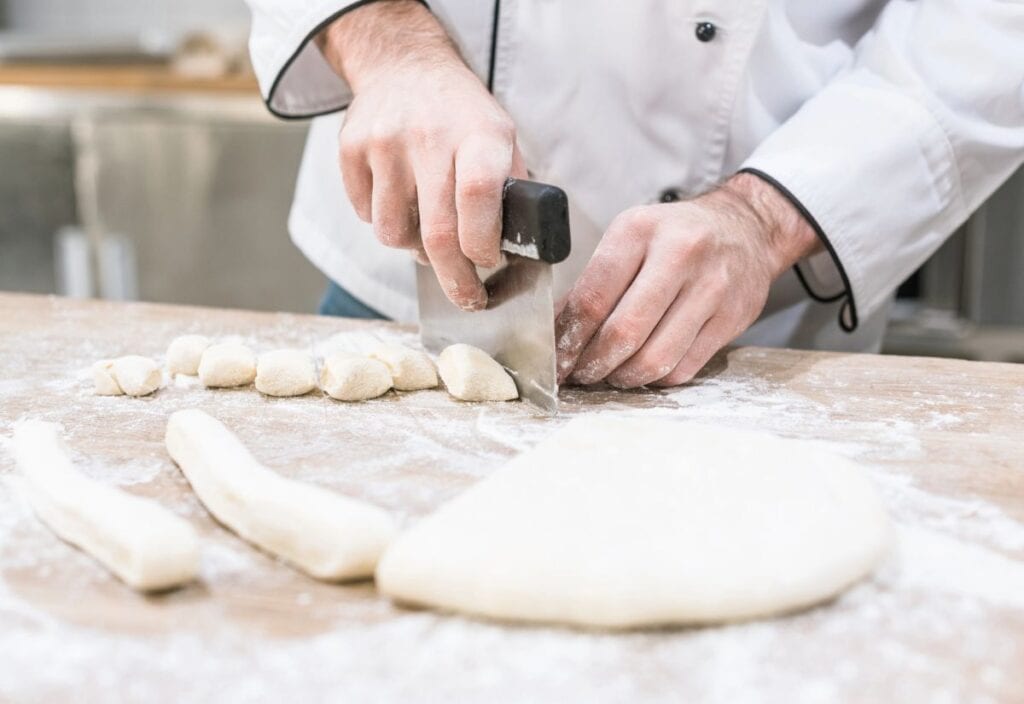
When you’re handling bread dough, pizza dough or pastry, a bench scraper works better than a knife. The wide blade cuts cleanly without dragging or tearing, allowing you to divide dough into equal portions efficiently and making quick work of portioning out dough for items like pretzel knots or rolls.
Sticky dough is easier to handle with a scraper. Bread dough, especially, gets tacky, and your hands or a knife just make a bigger mess. The metal blade slides underneath, lifts the whole piece and moves it where you need it without everything sticking to you.
The scraper provides leverage for folding and shaping dough during the stretch-and-fold process. You can work it without warming it up with your hands, which keeps butter-based pastries flaky and bread doughs at the right temperature during rising.
Which type to get
Metal bench scrapers can handle most cooking and cleaning jobs when used on the correct surfaces. Look for stainless steel with a comfortable handle. The blade should flex a little but not bend easily. Avoid thin, cheap metal versions, as they can warp easily, making them inefficient. Some have ruler markings along one edge, which can help measure portions or maintain consistency with your chopping skills.
Plastic bowl scrapers excel for other uses and are key for baking. They’re gentler on non-stick cookware and flexible enough to get every bit of batter out of mixing bowls. They also work well for smoothing frosting or spreading thick batters into pans. I keep a small plastic scraper in the top rack of my dishwasher and use it to scrape food from dishes and utensils before loading.
Some scrapers have offset handles that keep your knuckles off the counter, while others have straight handles. If you are new to working with scrapers, start with a basic, straight-handle metal version. They’re cheap enough to add other types later if you find you need them.
There are many attractive options with wooden handles, but keep in mind that, like any other wooden kitchen tool, these scrapers require hand-washing. If you prefer to let your dishwasher do most of the cleaning, opt for solid metal or plastic that is dishwasher safe.
Taking care of it
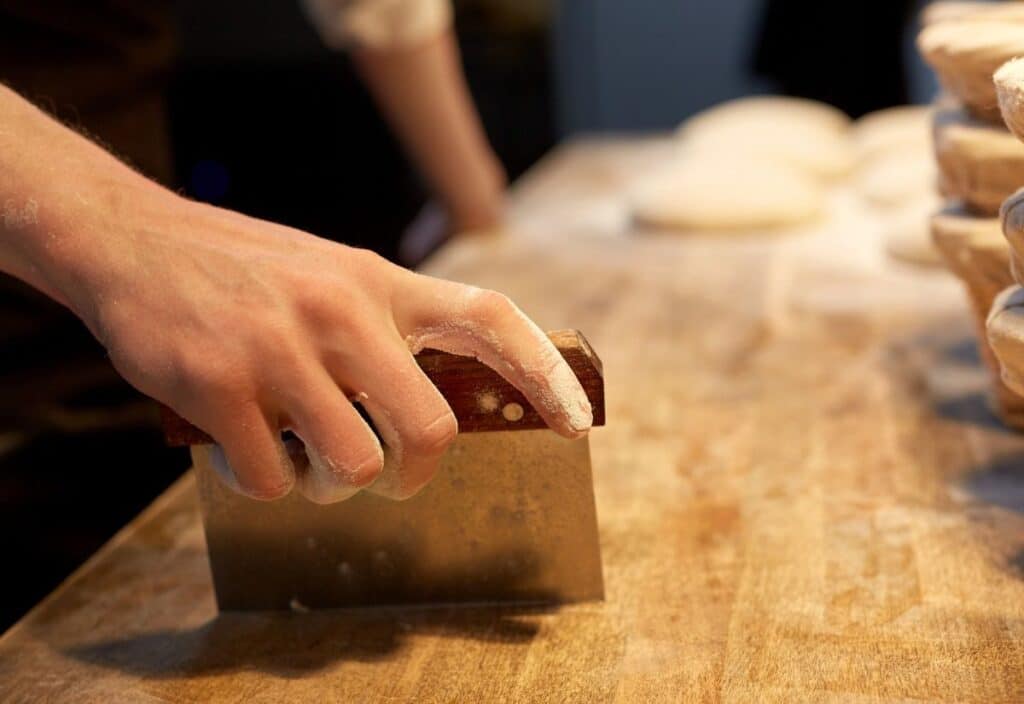
Metal bench scrapers can last a lifetime if they are properly cared for. Wash by hand or throw them in the dishwasher. Dry them if you hand-wash to avoid water spots, though stainless steel won’t rust even if you let it air dry.
Keep your scraper in a location where you can easily access it, preferably with your other kitchen knives. If it’s accessible near your main work area, you’ll use it frequently. Hang it on a magnetic strip or hook it near your cutting boards.
Cheap plastic scrapers can warp or melt if they get hot, so keep them away from the stove. They can also stain from exposure to colorful foods, but that shouldn’t affect their ability to function. Alternatively, there are many high-quality heat-proof versions on the market, which hold up better in the long term.
Why it’s essential
The bench scraper seems too basic to matter much until you start using it, and then you realize you’re grabbing it constantly. Chopping vegetables? Use it to clear the board between ingredients. Making bread? Portion the dough and clean up the flour. Cooking dinner? Scrape the pan and transfer the chopped stuff.
It speeds things up by addressing small inefficiencies, such as diverting food waste to the trash, facilitating faster cleanup and making ingredient transfer more effortless. The scraper handles each job better than whatever workaround you’ve been using, and it costs less than lunch out.
For anyone who regularly cooks or bakes, the bench scraper earns its spot better than most specialty gadgets. It’s simple, well-designed and makes your work easier without any learning curve.
Renee N Gardner is the creator behind Renee Nicole’s Kitchen, a recipe blog based on seasonal ingredients, dedicated to helping home cooks build their kitchen confidence to become home chefs. When Renee isn’t writing, developing recipes or photographing food, you’ll find her in the garden, traveling or enjoying the outdoors with her husband, son and two dogs.