
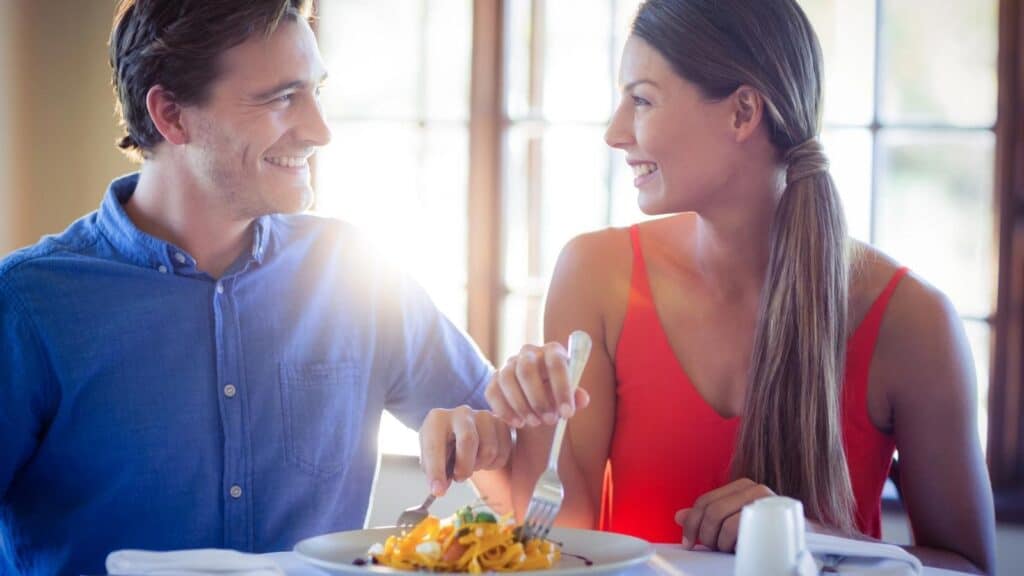
At many sit-down restaurants, sharing one main course is no longer an odd request. Couples, friends and families split entrees more often as they look for ways to keep the total in check. Higher restaurant prices, tighter value calculations and weaker traffic across much of the industry point to the same behavior: diners still want to eat out, but many cut back on what they order.
This post may contain affiliate link(s). As an Amazon Associate, I earn from qualifying purchases. See Disclosures.
Higher prices force diners to trim their orders instead of skipping eating out altogether. Food away from home rose 3.9% in February 2026, while tipping expectations have also moved up from an 18% pandemic-era benchmark in 2020 to a projected 24% to 25% range in 2026. For many diners, the adjustment now happens within the order, where one entree for two can feel like the easiest way to control spending.
Menu prices change the order
The price gap between eating at home and eating out remains central to the story. Full-service meals rose 4.6% over the year ended February 2026, while limited-service meals rose 3.2%, according to the Bureau of Labor Statistics. With the overall consumer price index up 2.4% over the same period, sit-down restaurant prices continue to rise faster than inflation overall.
The cost of a full-service restaurant meal extends well beyond the entree price listed on the menu, since tax and the expected tip can drive the final amount higher than diners anticipate. In that context, sharing an entree becomes one of the more direct ways diners respond to a more expensive meal.
Dining out still matters nationally
Restaurant meals still carry national scale even as tighter household budgets force more careful choices at the table. The National Restaurant Association projects $1.55 trillion in restaurant and foodservice sales in 2026, with real gains of 1.3%, and says industry employment will reach 15.8 million jobs. The association comprises more than 1 million restaurant and foodservice outlets, which places the split-entree habit inside one of the country’s largest consumer sectors rather than a narrow dining niche.
Recent sales data show the same trend, with eating and drinking places posting $99.8 billion in January 2026, up 3.9% from a year earlier. After adjusting for menu-price inflation, however, real sales at those businesses slipped 0.1% from January 2025, which suggests restaurant spending is holding up even as diners grow more selective once they sit down.
Diners keep the meal but trim the check
Consumer research suggests demand for restaurants remains intact even as value plays a larger role in what people order. OpenTable’s 2026 dining trends report states that dining out rose 8% year over year; 55% of Americans think they will spend more on restaurant meals in 2026, and respondents expect to go out to eat an average of 10 times per month. Those numbers suggest households remain interested in dining out, even as cost plays a larger role in ordering decisions.
The same OpenTable findings show how diners now define a worthwhile meal out, with half of Americans choosing casual, affordable meals as the most appealing dining experiences in January 2026, while 51% want more happy hour and value promotions. Another 61% said dining out in 2026 would feel more like a special treat than a regular habit, which suggests price has become a bigger part of the decision before the order is even placed.
For couples, friends and families, splitting an entree fits neatly into that mindset. The goal is not always to skip the restaurant but to keep the outing manageable once everyone is seated and the prices are in front of them.
Restaurants adjust to smaller orders
Operators deal with their own version of the same pressure; January data from the National Restaurant Association showed that 55% reported lower customer traffic, extending the industry’s net traffic decline to 12 straight months. Sales were mixed as well, with 43% of operators reporting higher same-store sales from a year earlier and 45% reporting lower sales, a combination that makes check mix more important even when guests still come through the door.
As traffic remains uneven and diners pay closer attention to price, restaurants place more emphasis on shareable sides, split-plate policies, add-ons and flexible portions. Diners want better value, and operators need each table to spend enough to support sales.
The split entree economy settles in
Dining out still holds a place in household budgets, but the order itself now involves more negotiation than it once did. As diners look for ways to keep the outing without paying the full check, the split entree becomes less of an exception and more of a lasting feature of the restaurant economy.
Zuzana Paar is the visionary behind five inspiring websites: Amazing Travel Life, Low Carb No Carb, Best Clean Eating, Tiny Batch Cooking and Sustainable Life Ideas. As a content creator, recipe developer, blogger and photographer, Zuzana shares her diverse skills through breathtaking travel adventures, healthy recipes and eco-friendly living tips. Her work inspires readers to live their best, healthiest and most sustainable lives.